

How To Make A Bug Fossil Playdough Tray For Kids
May 6, 2026
All activities on this site require adult supervision. When using this website, you agree to our terms of use. This post may contain affiliate links. I am an Amazon Associate, a Walmart partner, and a member of other affiliate programs and I earn a commission on qualifying purchases at no extra cost to you. Please read our disclosure policy for details.
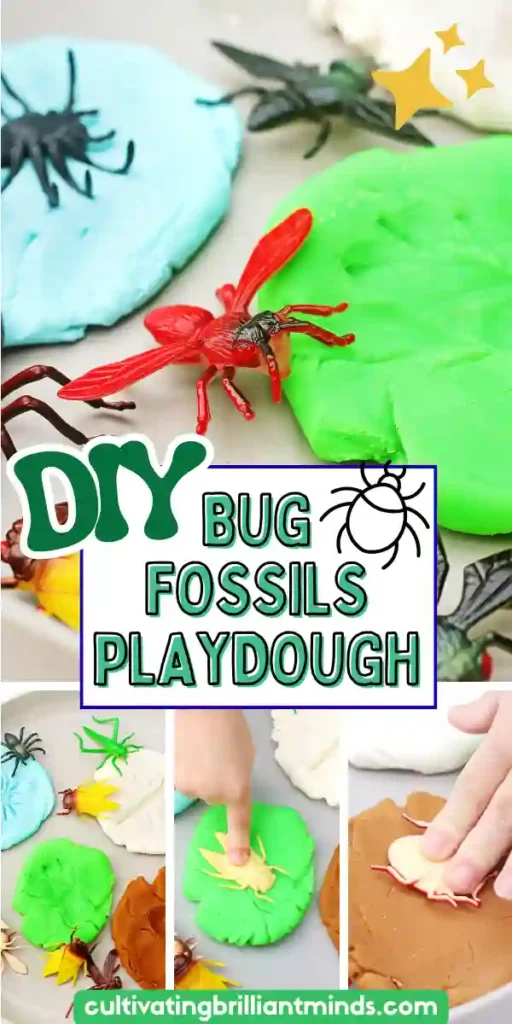
This time of year brings buzzing gardens, crawling critters, and endless curiosity about the tiny creatures found outdoors. A bug fossil playdough tray taps into that seasonal interest while blending sensory play, early science concepts, and creative exploration. This preschool insect activity invites children to press toy insects into soft dough, creating fossil-style impressions that prompt discussion about things like nature, time, and observation.
Designed as a playdough tray for kids, this activity works well for preschoolers and early elementary learners. It encourages imaginative thinking while supporting fine motor development. As a bug activity for kids, it fits naturally into spring themed activities and insect units.
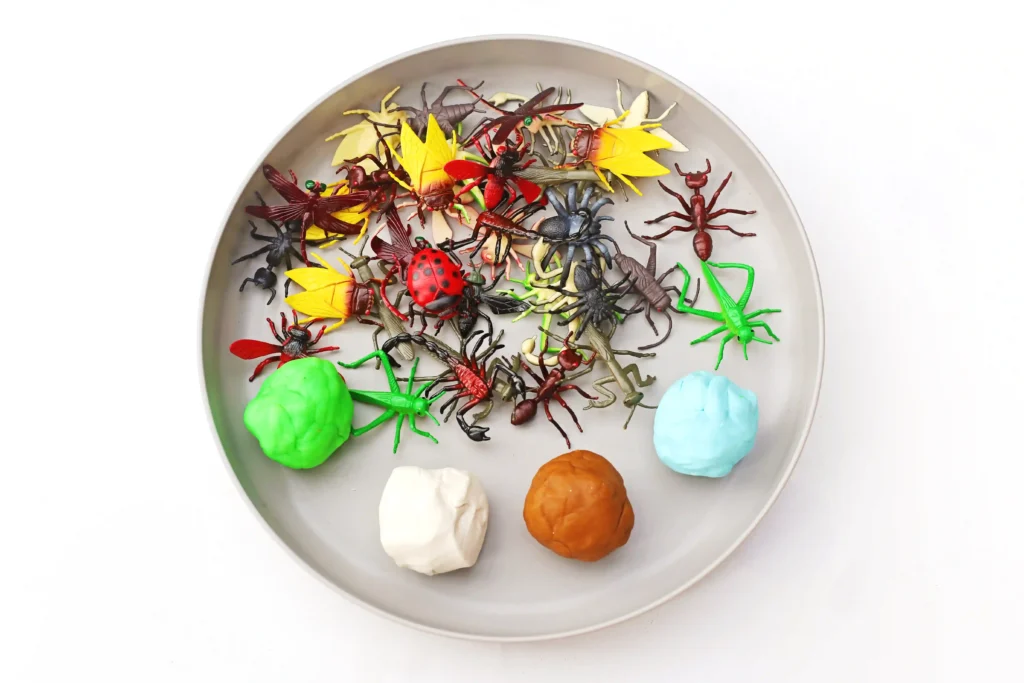
What You’ll Need For This Bug Fossil Playdough Tray
This insect sensory activity uses simple materials that are easy to set up and reuse. Each item supports both sensory engagement and learning.
Using a tray helps define the workspace and keeps materials contained, making this an ideal playdough tray for kids during center time or quiet play.
How to Set Up a Bug Playdough Tray
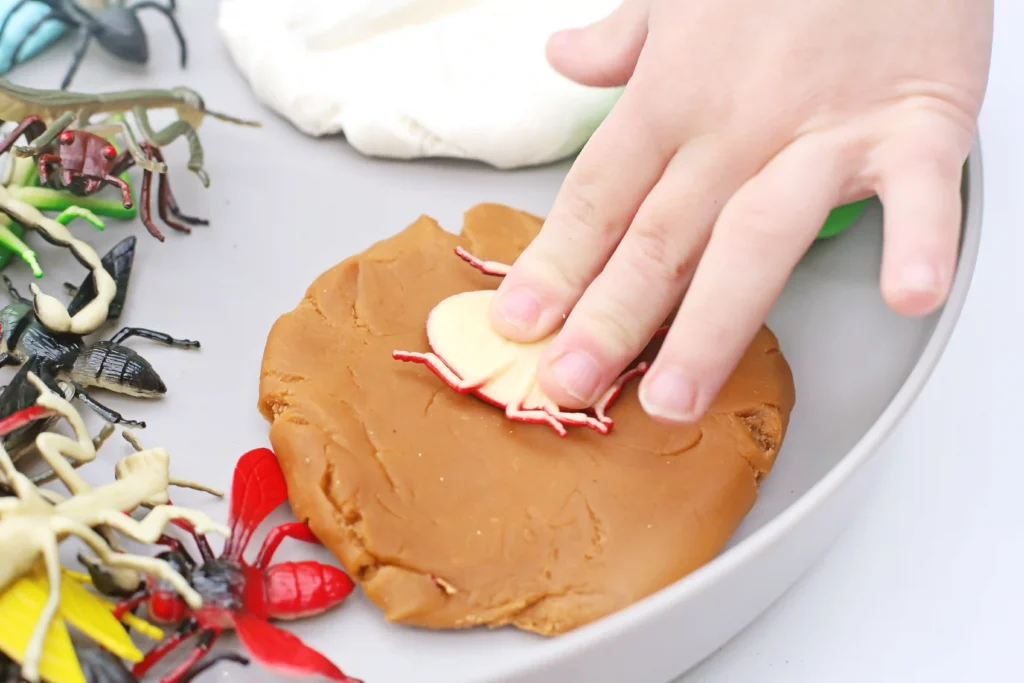
Begin by placing a generous layer of playdough on the tray and smoothing it slightly. The dough should be thick enough to hold deep impressions without tearing. Set out several toy bugs nearby so children can choose which insects to explore.
For best fossil impressions, place the bug upside down before pressing it into the playdough. Turning the bug over allows the raised details on the underside, such as legs, wings, and body segments, to press more clearly into the dough. Taking a moment to examine the bug’s shape and texture before pressing encourages close observation and supports early science skills while naturally pacing the activity.
Optional tools like magnifying glasses and brushes can be added to extend the insect sensory activity and encourage more detailed exploration.
How Kids Play With Bug Fossil Playdough
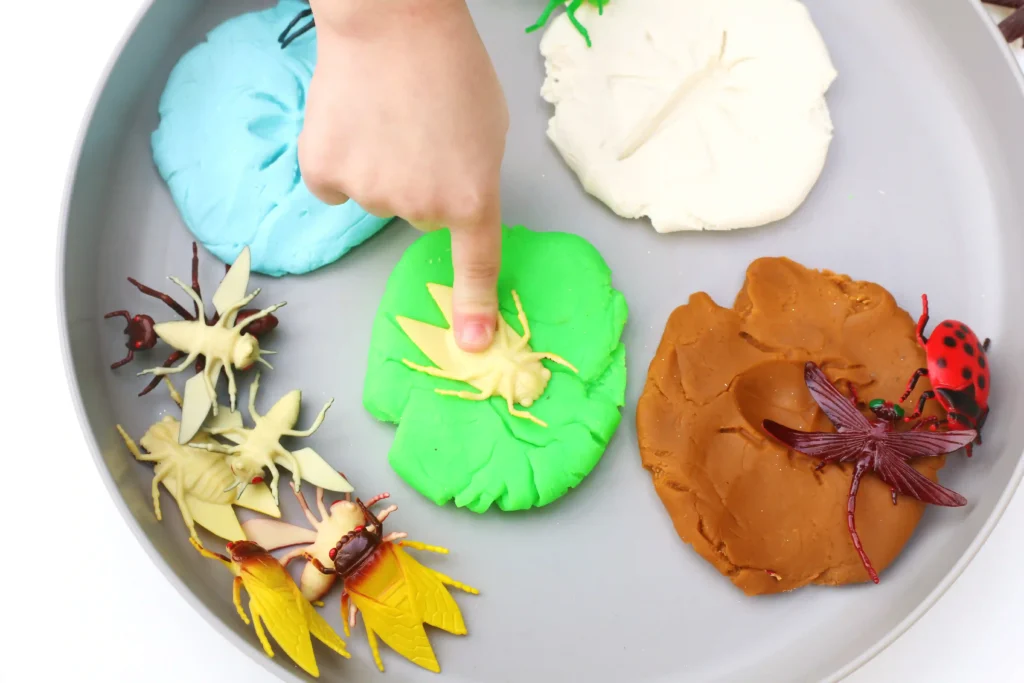
Children select a toy bug, study its features, and then press it firmly into the playdough. The pressure creates a detailed imprint that resembles a fossil. Once the bug is lifted away, the impression can be examined, traced, or compared with the original insect.
Children enjoy repeating the process with different bugs, noticing how each fossil looks unique. Encourage kids to line up several impressions to compare sizes and shapes.
This playdough activity often leads to imaginative extensions, such as pretending the tray is an archaeological dig or a prehistoric insect site uncovered during spring exploration.
Learning Benefits of This preschool insect Activity for Kids
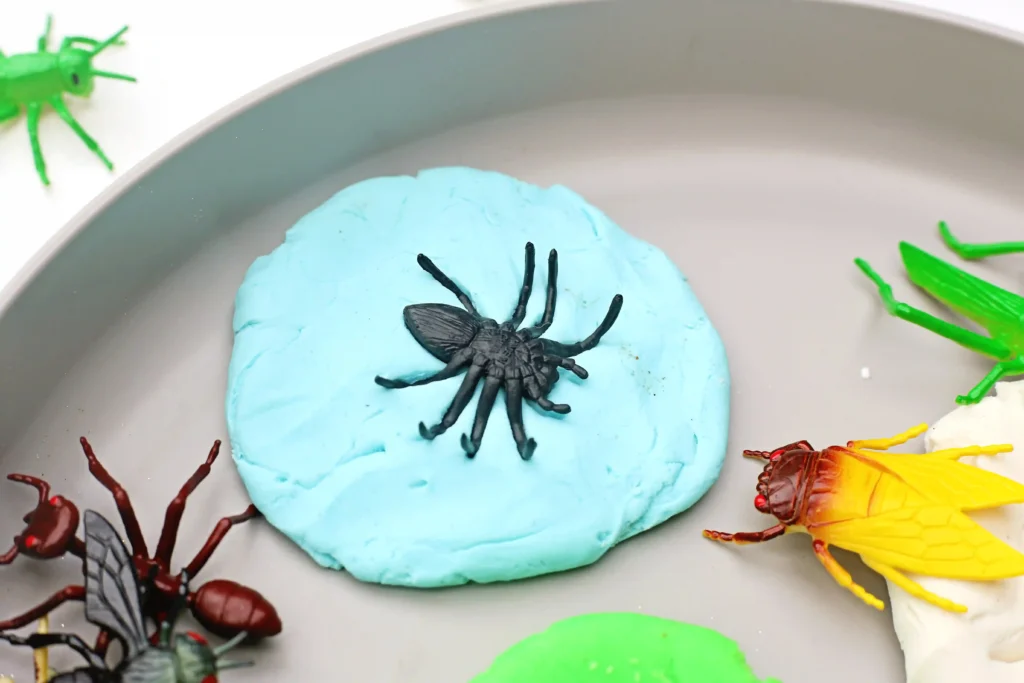
The bug fossil playdough tray supports multiple areas of development while remaining open-ended and engaging.
Fine Motor Skills
Pressing bugs into dough strengthens hand muscles and supports coordination. Lifting bugs carefully without disturbing the fossil impression encourages controlled movements.
Sensory Exploration
The soft texture of playdough paired with firm plastic bugs creates sensory contrast. It is a strong spring sensory activity option for children who enjoy tactile play.
Science and Observation Skills
Studying bugs before and after pressing them into the dough encourages careful observation. Children begin noticing details such as wing patterns, leg placement, and body segments.
Early STEM Concepts
This activity introduces ideas related to fossils, imprints, cause and effect, and natural science. Pressing harder or softer leads to different results, building simple experimentation skills.
Creative Thinking
Each fossil impression tells a visual story. Children may imagine when the bug lived, where it was found, or what happened before it was preserved.
Connecting Bug Fossils to Learning Themes
It is a natural time to explore insects, gardens, and outdoor life cycles. This bug activity for kids pairs well with books about insects, nature walks, or simple science discussions about living and nonliving things.
Teachers and caregivers can connect the tray to topics such as:
- Insects found in gardens and yards
- Differences between insects and other animals
- How fossils form over long periods of time
- Comparing real bugs with toy models
The activity can also complement spring units focused on earth science or nature observation without requiring complex explanations.
Why Playdough Trays Work So Well for Sensory Learning
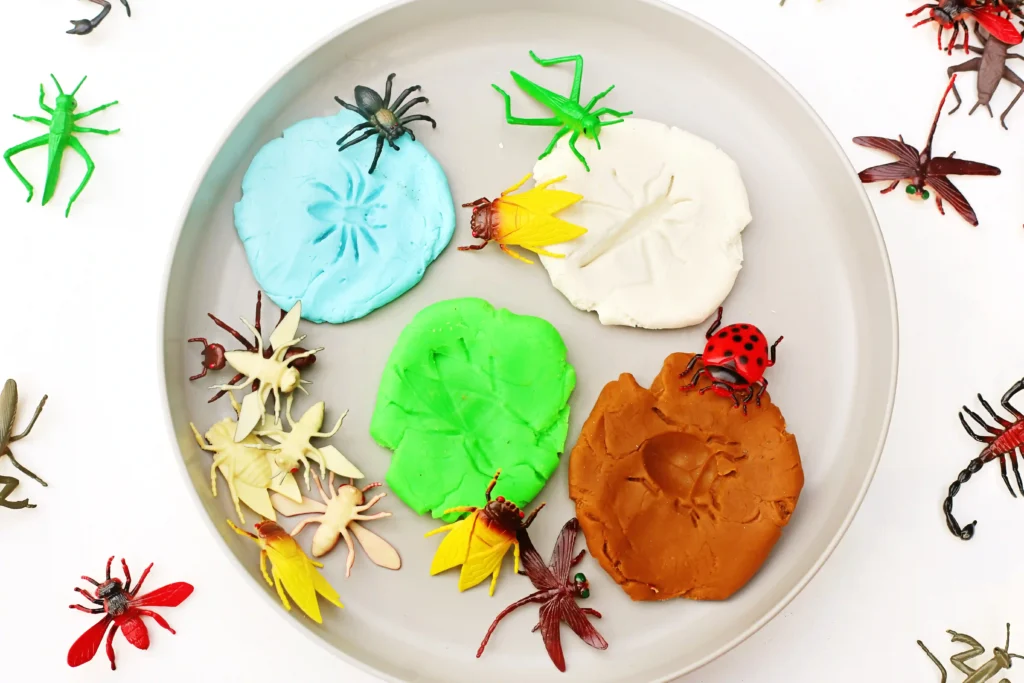
A playdough tray for kids provides structure without limiting creativity. The materials in the tray invite exploration at each child’s comfort level. Playdough is forgiving, allowing repeated attempts, changes, and experimentation.
Unlike worksheets or crafts with fixed outcomes, this playdough activity adapts easily to different ages. Younger children may focus on pressing and lifting, while older children may compare impressions or add storytelling elements.
Extending the Bug Fossil Playdough Activity
To extend learning, additional challenges can be introduced:
- Match fossil impressions to the correct toy bug
- Create a pattern using different bug fossils
- Use a toothpick to trace over fossil details
- Compare insect fossils to pictures of real fossils
These extensions deepen engagement while keeping the activity flexible and child-led.
Bug Fossil Playdough Tray as a Sensory Activity for Kids
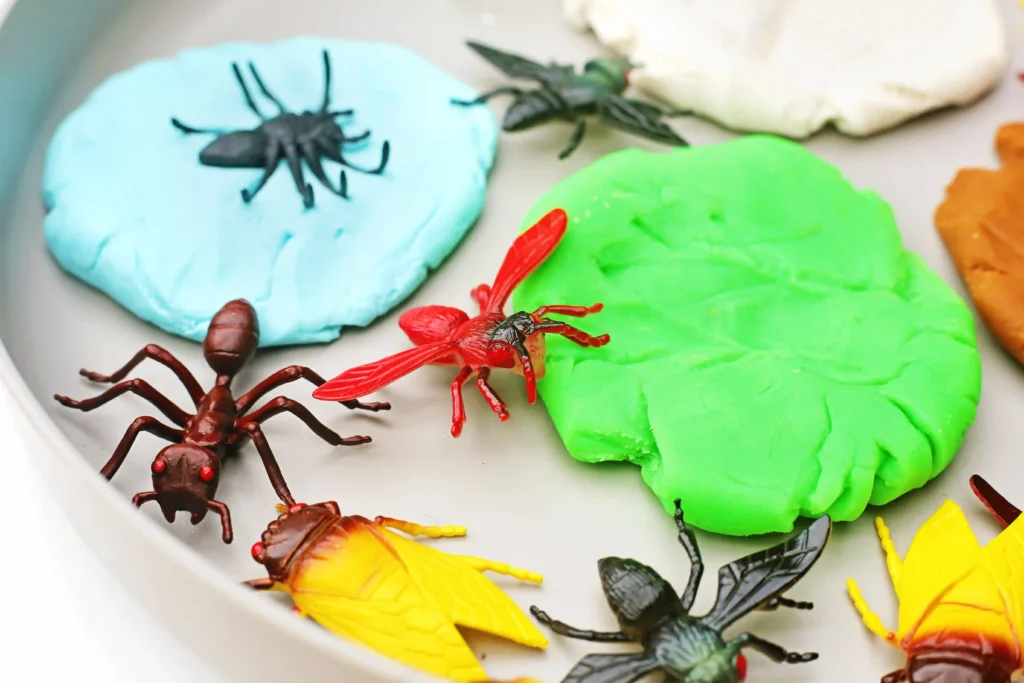
A bug fossil playdough tray offers a simple yet meaningful way to explore insects, textures, and early science concepts during the spring season. This spring sensory activity blends creativity, observation, and fine motor practice through repeated pressing, lifting, and examining. As a playdough tray for kids, it supports open-ended exploration and creative play.
By combining toy bugs with playdough, this bug activity for kids encourages curiosity about the natural world and introduces foundational ideas about fossils and impressions. The flexible setup allows children to explore at their own pace, making this playdough activity a valuable addition to seasonal learning plans that focus on sensory engagement and discovery.
Playdough Activities for Kids
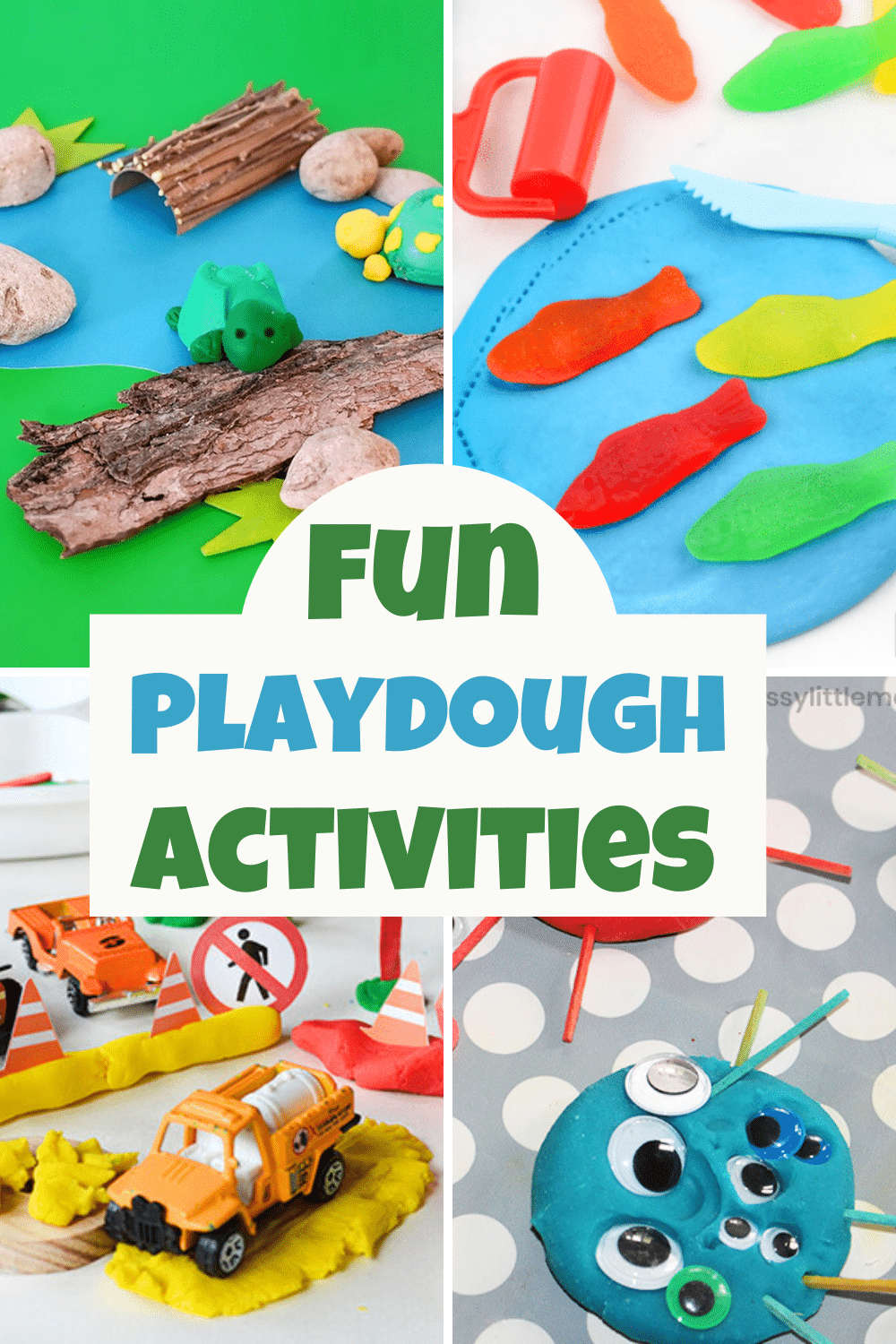
Fun Playdough Activities for Kids– This list of playdough activities for kids is full of hands-on and engaging fun! From pretend play ice cream playdough shops to glow in the dark playdough, this list has something for everyone!
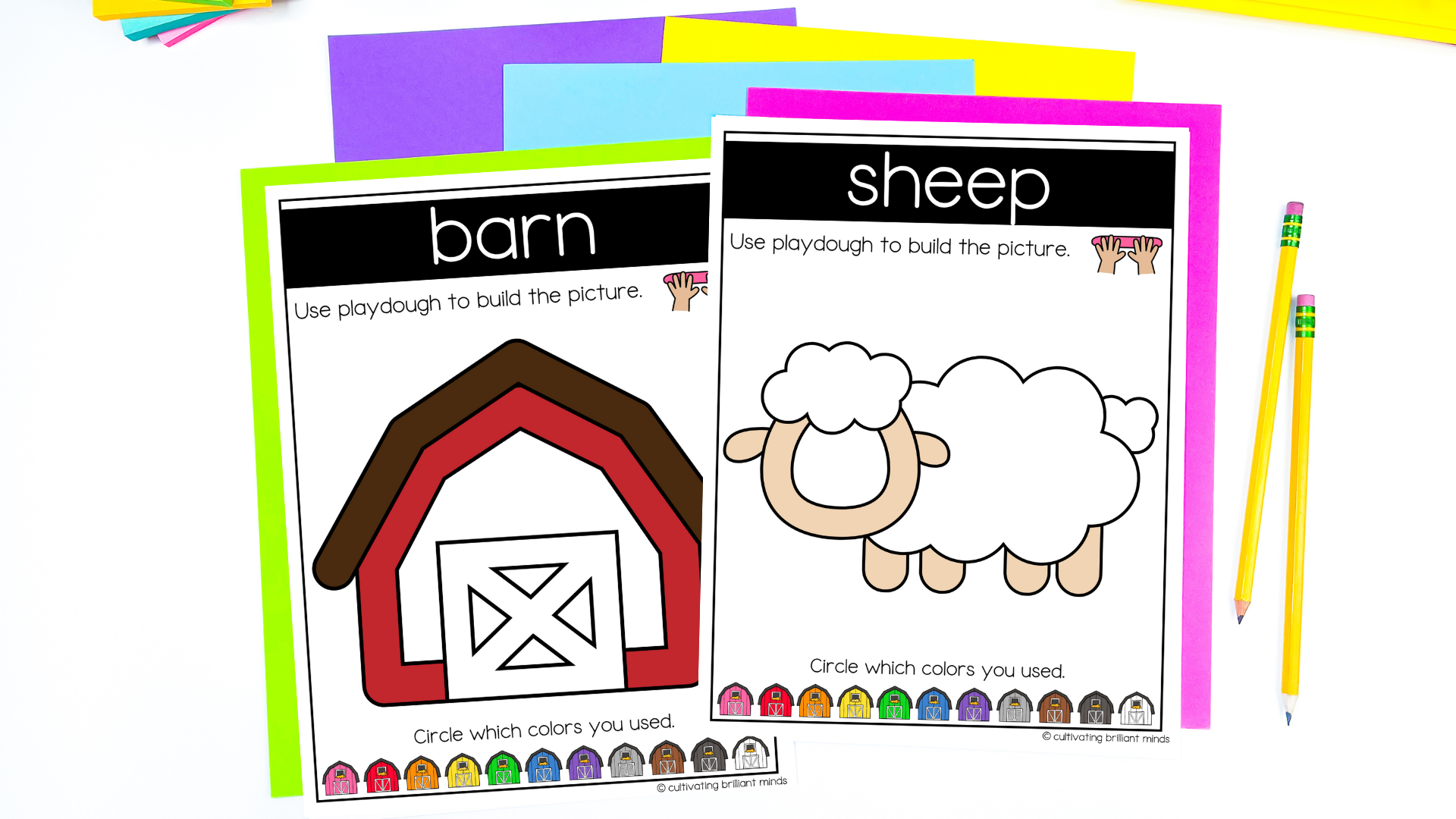
Farm-Themed Playdough Mats– Grab these free playdough mats and learn all about how playdough mats support kids’ development through fine motor skills and creativity.
Activities for Preschool
Print
How To Make A Bug Fossil Playdough Tray For Kids
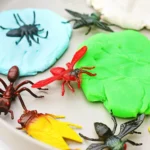
Tiny bugs, big impressions in this bug fossil playdough tray! Press toy insects upside down into playdough as a spring sensory activity and hands-on discovery.
- Prep Time: 5 minutes
- Total Time: 5 minutes
- Category: Activities, DIY, Sensory Activities
- Method: Assembly
Materials
● Playdough (store-bought or homemade, any natural or spring-inspired color)
● Plastic toy bugs with raised details
● Tray, baking sheet, or shallow container
● Optional: magnifying glass
● Optional: toothpick or wooden skewer for detail work
Instructions
Begin by placing a generous layer of playdough on the tray and smoothing it slightly. The dough should be thick enough to hold deep impressions without tearing. Set out several toy bugs nearby so children can choose which insects to explore.
For best fossil impressions, place the bug upside down before pressing it into the playdough. Turning the bug over allows the raised details on the underside, such as legs, wings, and body segments, to press more clearly into the dough. Taking a moment to examine the bug’s shape and texture before pressing encourages close observation and supports early science skills while naturally pacing the activity.
Optional tools like magnifying glasses and brushes can be added to extend the insect sensory activity and encourage more detailed exploration.




![green chocolate bark decorated to look like ]frankenstein](https://cultivatingbrilliantminds.com/wp-content/uploads/2026/09/IMG_5704-2-200x300.webp "Frankenstein Bark - Cultivating Brilliant Minds")

Leave a Reply