

How To Make A Spring Sensory Activity With Flowers
March 27, 2026

Spring comes with blooming gardens, soft grass underfoot, and endless opportunities for nature sensory play. A frozen flowers spring sensory activity makes simple outdoor materials into an engaging spring sensory play experience. Flowers trapped inside ice pucks create a miniature nature rescue mission where children work to melt the ice and free the blooms.
This flower activity for kids blends science exploration, sensory input, and fine motor development. As warm water drips across the icy surface, petals slowly emerge like tiny treasures preserved in time. The process invites curiosity, patience, and careful observation.
Perfect for toddlers, preschoolers, and early elementary learners, this spring activity for kids combines nature sensory play, science, and hands-on interaction in one simple setup.
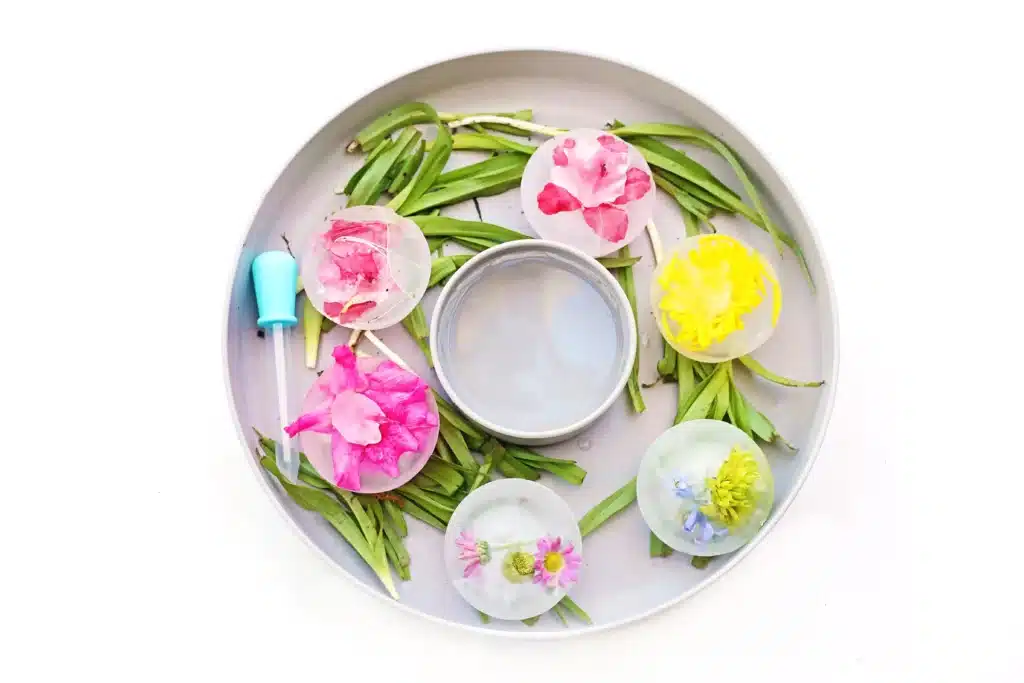
What You’ll Need For This Spring Sensory Activity
A few everyday materials create the entire setup. Many items can be collected outdoors.
How to Prepare the Frozen Flowers Spring Sensory Activity
Preparation takes only a few minutes, though the freezing process requires several hours.
Step 1: Collect Flowers
Gather small flowers from a garden or yard. Petals, tiny blossoms, and delicate stems work especially well. Varied colors and shapes create interesting designs.
Join the List
Subscribe
Step 2: Arrange the Flowers
Place one or two flowers inside each mold or cup. Press the blooms gently toward the bottom so the petals remain visible.
Step 3: Add Water
Fill each mold with water until the flowers are fully submerged.
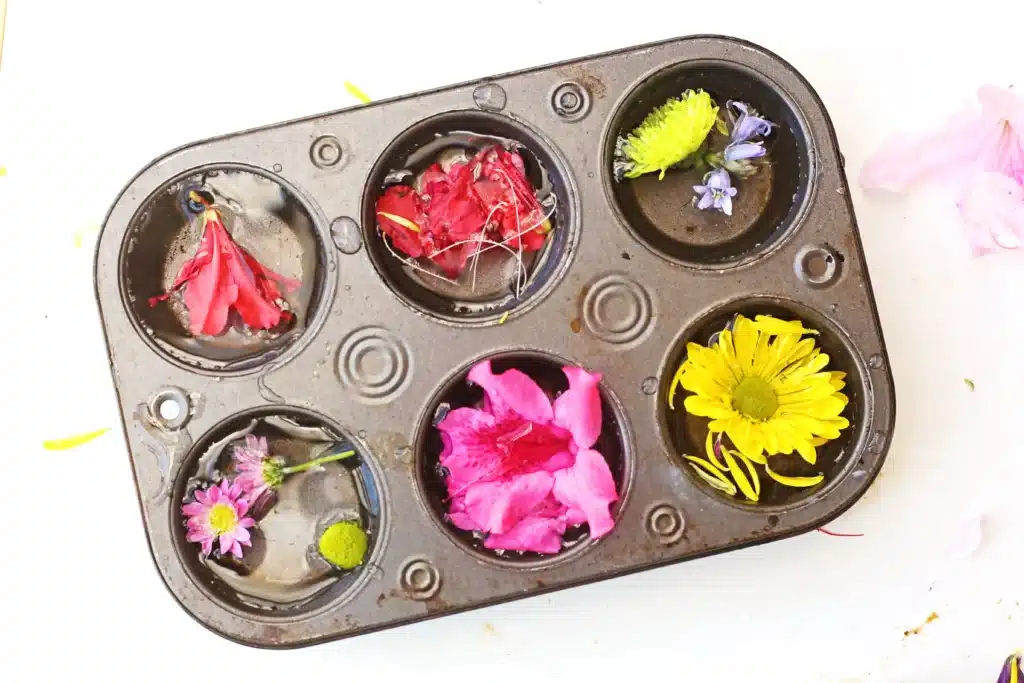
Step 4: Freeze
Place molds in the freezer for several hours or overnight. Once frozen solid, remove the ice blocks from the molds.
Setting Up the Spring Sensory Play Tray
An inviting setup encourages curiosity.
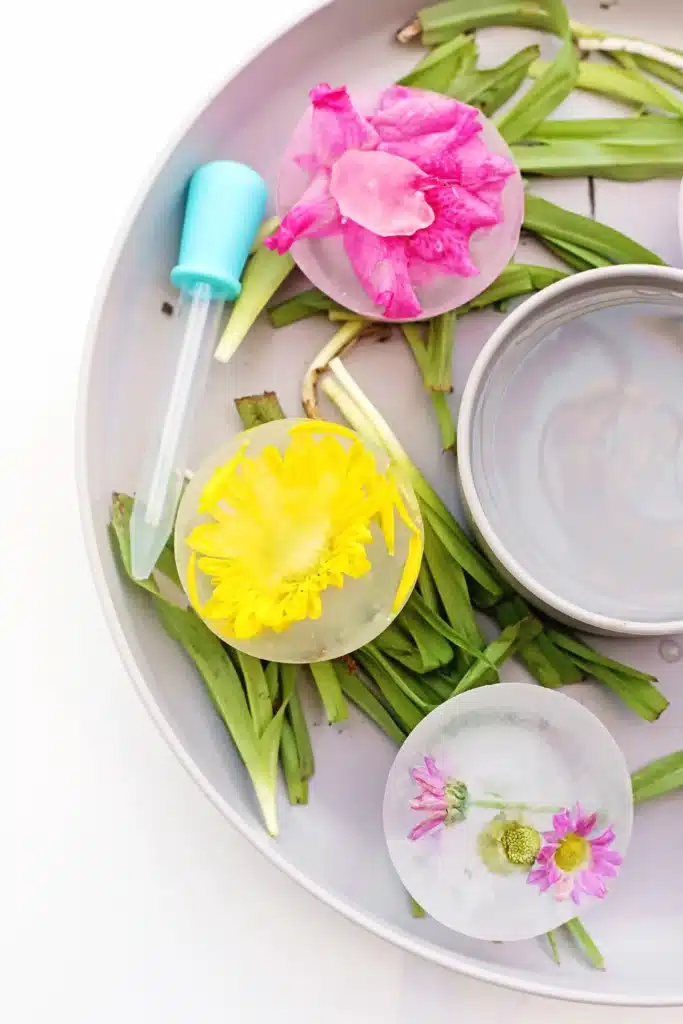
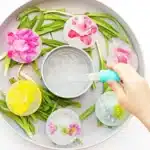
- Spread grass clippings across the bottom of a tray or shallow sensory bin.
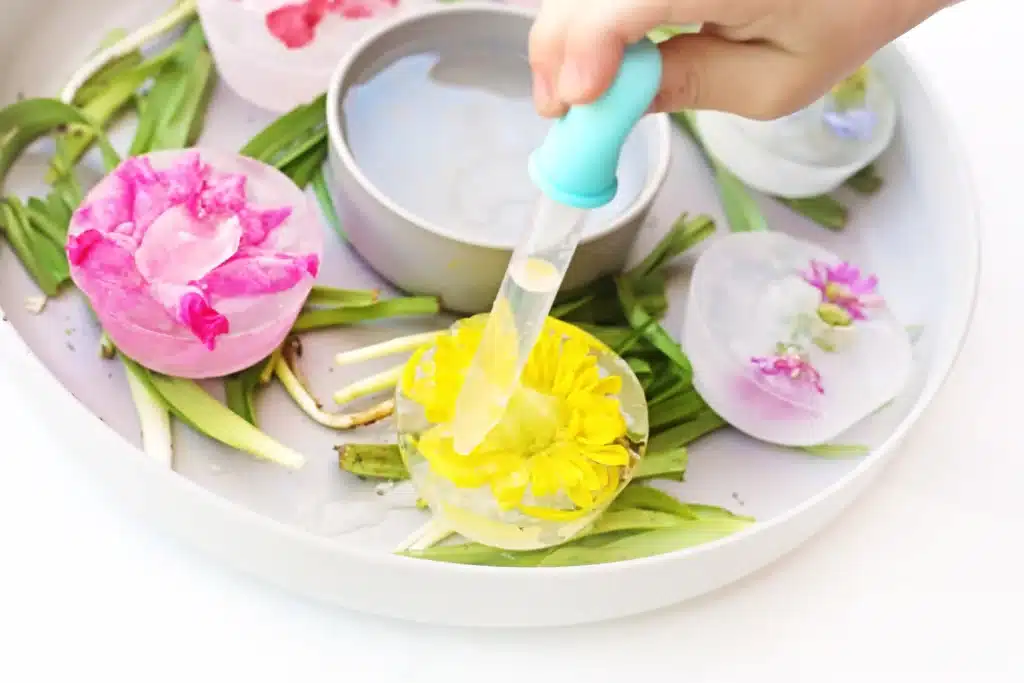
- Arrange the frozen flower blocks on top of the grass.
- Place a small bowl of warm water in the center.
- Add droppers or pipettes beside the bowl.
The grass creates a soft natural base that reinforces the spring theme. Once the materials are arranged, the sensory tray is ready for exploration.
How Kids Play With the Frozen Flowers Sensory Activity
Children interact with the frozen flowers through observation, experimentation, and gentle problem-solving.
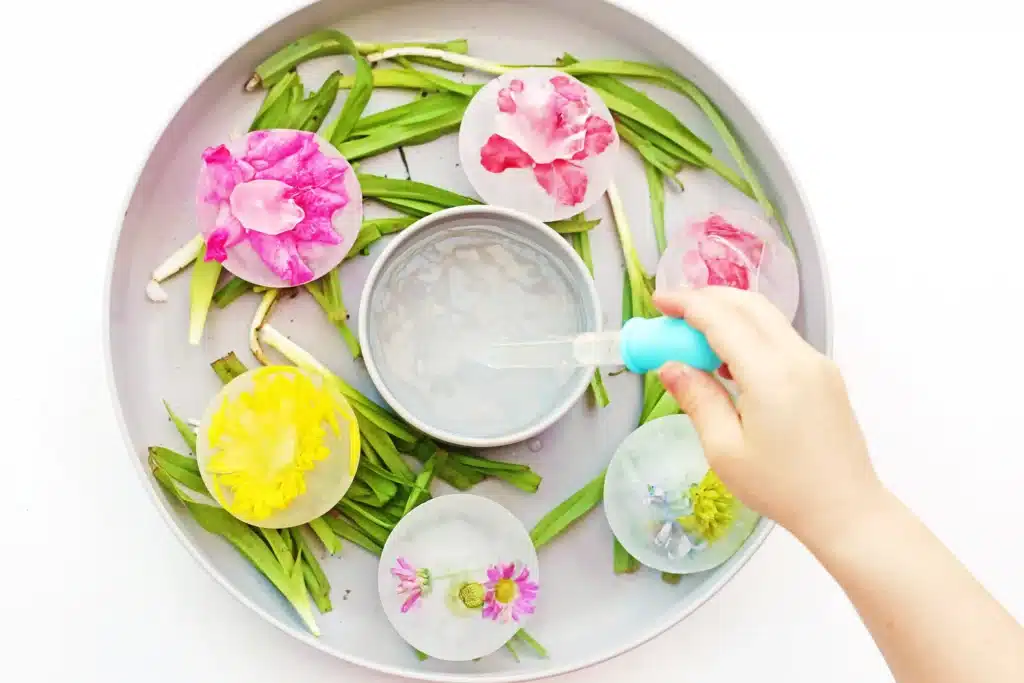
Dripping Warm Water
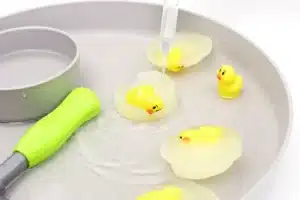
Children fill the dropper with warm water and drip or squirt it onto the ice blocks. As they do, the water melts sections of ice, gradually revealing petals hidden inside.
Investigating the Flowers
As the ice melts, the flowers start to emerge. Children can examine shapes, colors, and textures.
Freeing the Blooms
The goal is rescuing the flowers from the frozen blocks. Kids can focus on one flower at a time or rotate between several.
Observing the Melting Process
Watching ice change from solid to liquid introduces early science concepts, such as thermodynamics. Children notice how warm water speeds up the melting process.
Nature Exploration
Once freed, the flowers can be rearranged across the grass tray or sorted by color and type.
Why Frozen Flowers Create an Excellent Spring Sensory Activity for Kids
Beyond just visual appeal, the frozen flowers sensory activity supports multiple developmental areas.
Fine Motor Development
Using droppers strengthens small hand muscles required for writing and drawing. Squeezing the dropper requires control and coordination.
Early Science Learning
Melting ice introduces children to basic scientific ideas such as:
- Temperature differences
- States of matter
- Cause and effect
- Observation and experimentation
Sensory Exploration
The activity engages several senses at once.
- Touch: cold ice and soft petals
- Sight: colorful flowers trapped in clear ice
- Smell: natural fragrance from real flowers
This sensory combination keeps children focused and engaged.
Nature Connection
Using real flowers and grass helps children connect with the natural world. Outdoor materials encourage curiosity about plants and seasonal changes.
Focus and Patience
Melting the ice requires time and persistence. The slow process encourages careful attention rather than quick results.
Expanding the Spring Sensory Play Experience
Once the basic activity is complete, additional exploration ideas can extend learning.
- Compare melting speed in sunlight versus shade
- Use cold water versus warm water to observe differences
- Sort rescued flowers by size or color
- Press petals into paper to create nature art
- Examine flowers with a magnifying glass
Each variation deepens engagement with nature and science.
Why This Spring Sensory Activity for Kids Works So Well
Frozen flower blocks transform ordinary materials into an intriguing sensory experience. The combination of ice, flowers, and water creates a peaceful, focused activity that invites careful observation.
Children remain engaged while slowly revealing each hidden bloom. The frozen flowers sensory activity blends spring sensory play, early science exploration, and nature in a single hands-on experience.
A tray of frozen flowers quietly turns a simple afternoon into a small garden adventure.
This post may contain affiliate links, please read our disclosure policy for details.
Books To Read After Your Spring Sensory Activity
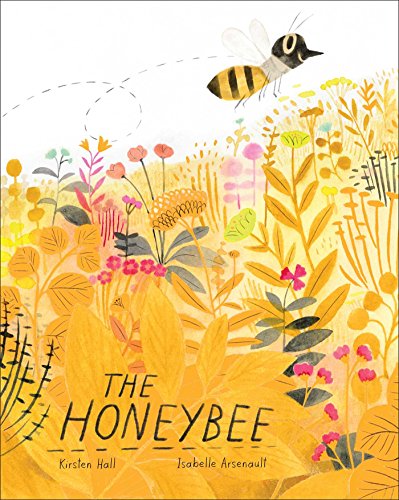
One of my all time favorite spring books is Have You Ever Seen A Flower? by Shawn Harris. The bright, vibrant colors are a feast for you eyes and the story is beautiful. And, check out more of my favorite spring books:









How To Make A Spring Sensory Activity With Flowers
Frozen flowers trapped in ice turn spring sensory play into a hands-on science discovery as children melt the ice and uncover colorful blooms.
- Total Time25 minutes + freeze time
- Yield1 sensory tray 1x
Materials
- Fresh spring flowers
- Muffin tin or ice cube tray
- Water
- Tray or sensory bin
- Grass clippings
- Small bowl of warm water
- Eye droppers or pipettes
Instructions
Step 1: Collect Flowers
Gather small flowers from a garden or yard. Petals, tiny blossoms, and delicate stems work especially well. Varied colors and shapes create interesting designs.
Step 2: Arrange the Flowers
Place one or two flowers inside each mold or cup. Press the blooms gently toward the bottom so the petals remain visible.
Step 3: Add Water
Fill each mold with water until the flowers are fully submerged.
Step 4: Freeze
Place molds in the freezer for several hours or overnight. Once frozen solid, remove the ice blocks from the molds.
- Prep Time: 5 minutes + freeze time
- Category: Activities, DIY, Spring
- Method: Step-by-Step





Leave a Reply