

How To Make A Spring Flowers Potion Sensory Activity
March 21, 2026

Spring brings blooming gardens, perfumed breezes, and an increase to outdoor play. A spring flowers potion sensory activity lets kids transform those newly blooming signs of life into a magical hands-on experience. Flower petals, leaves, and water are combined inside small potion bottles as children mix garden potions, fairy elixirs, and nature soups. The spring sensory activity invites curiosity while encouraging imaginative storytelling.
The best thing about a flower sensory activity like this is that it uses backyard materials to make a tiny nature laboratory. Every petal, leaf, and stem becomes an ingredient in a pretend potion, patiently waiting to be perfected.
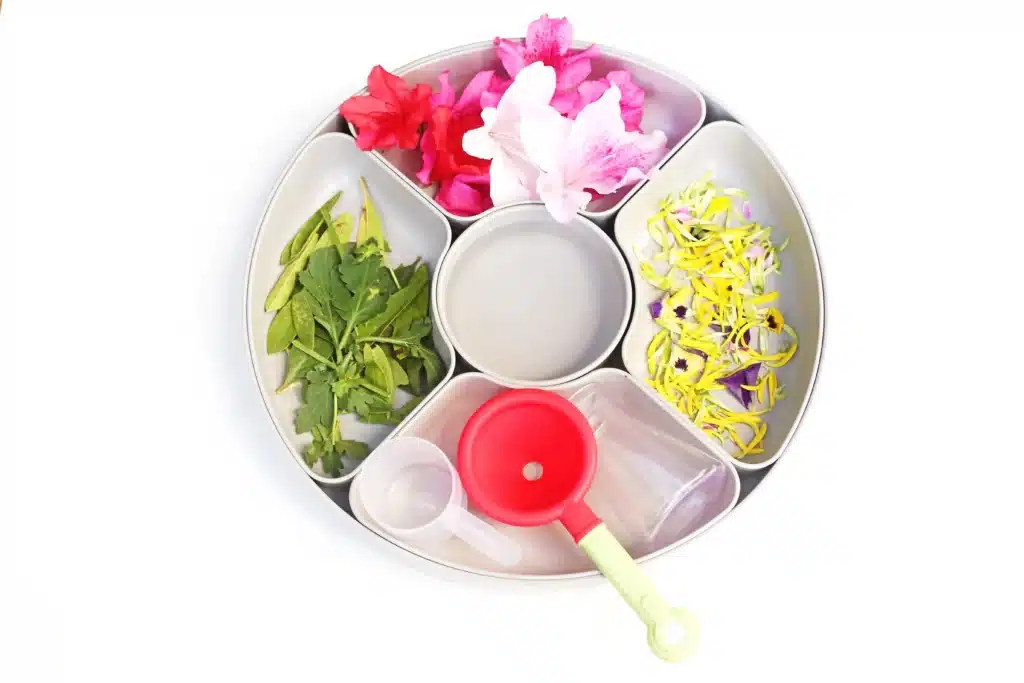
What You’ll Need For This Spring Sensory Activity:
Gather simple natural materials and a few small tools to create this spring sensory play idea.
Clear bottles allow children to see layers of petals and leaves forming the colorful spring potions. A segmented tray keeps supplies organized while inviting kids to explore each section and discover new magical ingredients.
Step-by-Step Instructions for the Spring Flowers Potion Sensory Activity
Setting up this spring nature activity for kids takes only a few minutes.
1. Place flower petals, leaves, and plant pieces into separate sections of a divided tray.
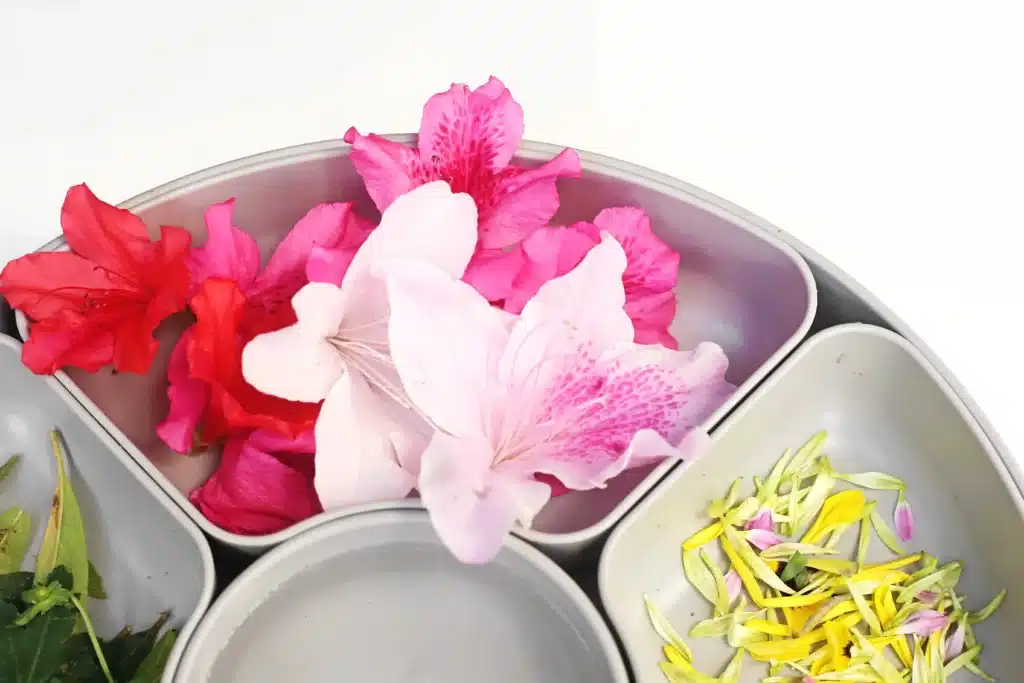
2. Add in some small jars or bottles.
Join the List
Subscribe
3. Fill the center part of the tray with water.
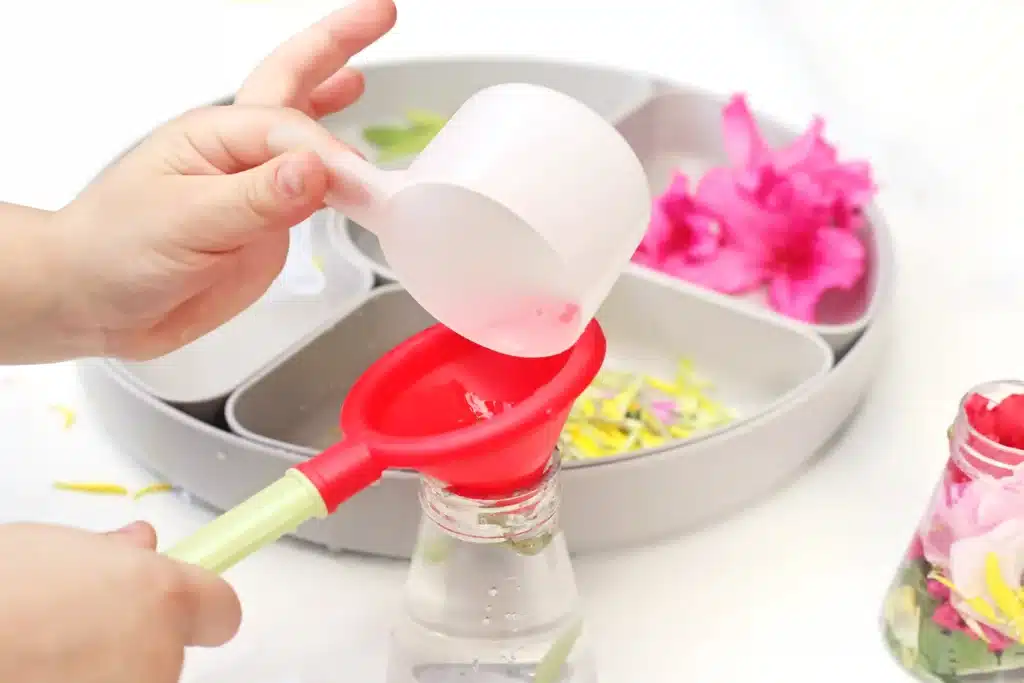
4. Set out a funnel, scoop, and/or spoon to help transfer ingredients.
5. Invite children to begin creating flower potions.
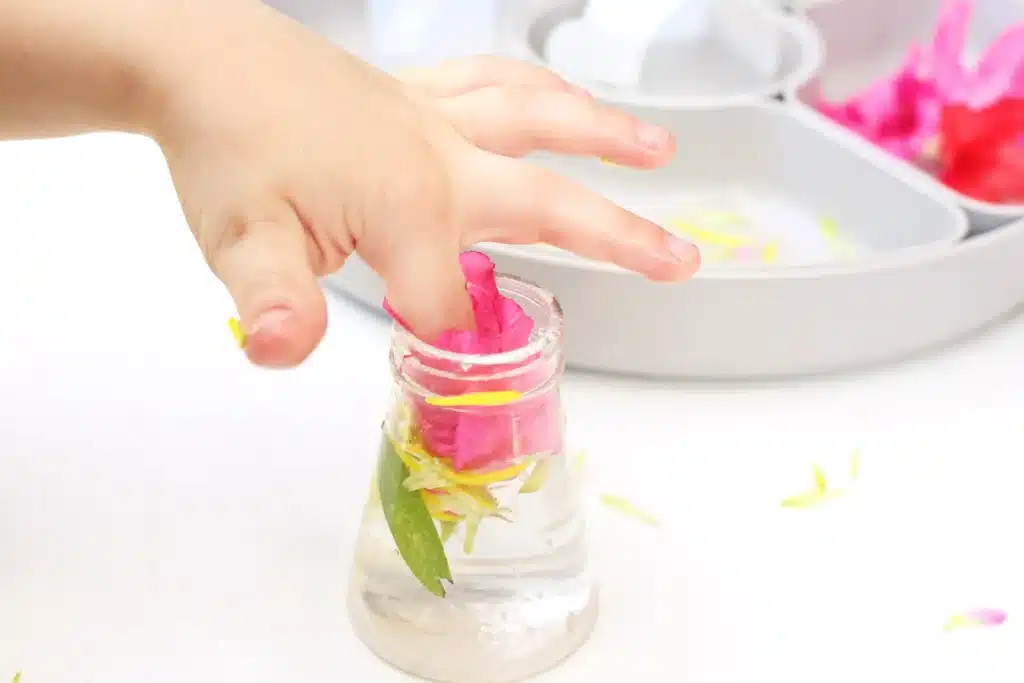
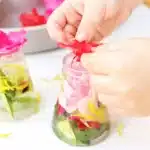
Kids can scoop petals, drop leaves into potion bottles, and pour water over the ingredients. A funnel helps guide water into narrow-necked bottles while encouraging fine motor skill development.
How Kids Play and Explore with this Flower Sensory Activity
The open-ended setup encourages exploration and storytelling. Kids can:
- Scoop petals into jars and pour water to create colorful mixtures.
- Layer leaves, petals, and stems to form garden potions.
- Use funnels to guide water into bottles.
- Shake jars to watch petals swirl through water.
- Pretend to mix fairy potions, nature soup, or magical flower tea.
- Compare which petals float and which sink.
- Experiment with layering different colors of petals.
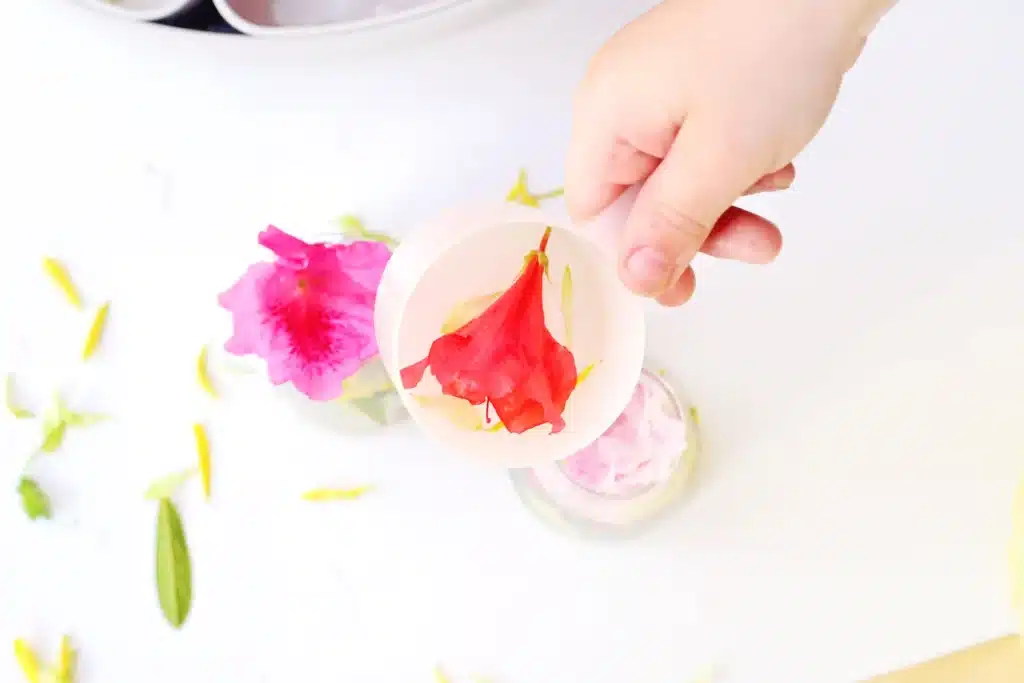
Creativity naturally flows from this spring nature activity for kids. A jar filled with yellow petals could be a sunshine potion. Pink ones might represent fairy nectar. Leaves could be dragon herbs or magical forest finds.
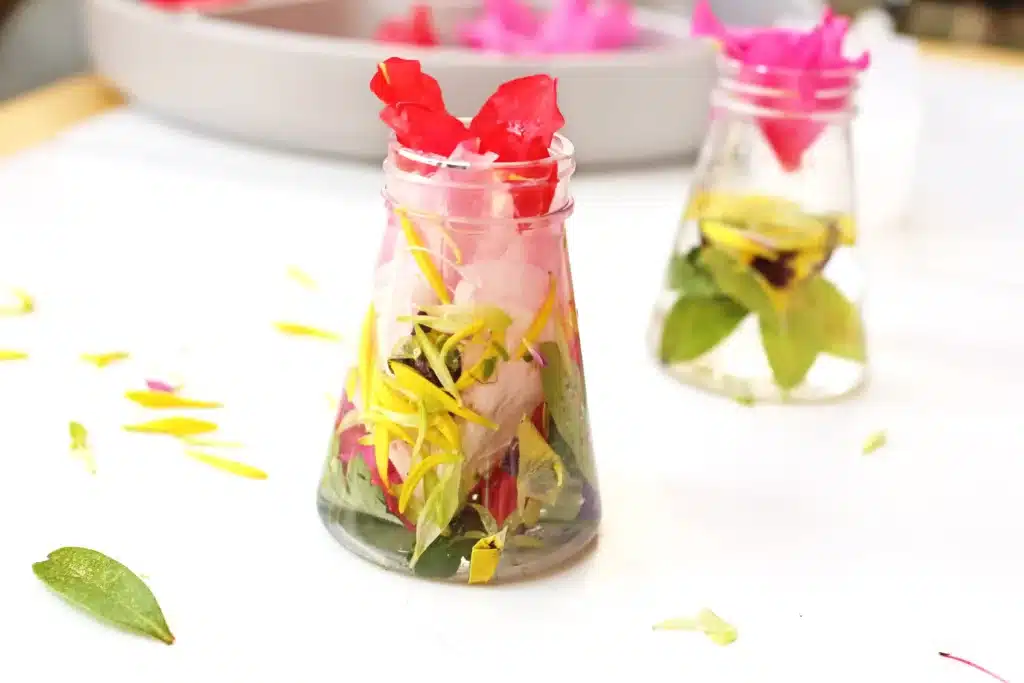
The spring sensory play idea expands as children observe textures, colors, and movement inside each jar. Floating petals drift slowly while heavier leaves sink toward the bottom. Each container is its own small science experiment.
Benefits of the Spring Flowers Potion Sensory Activity
A flower sensory activity like this supports several areas of early childhood development.
Sensory Exploration
Petals feel soft and delicate to the touch, while leaves offer a slightly textured surface. Water adds another sensory element as children pour, splash, and swirl ingredients inside jars. The spring nature activity for kids engages sight, touch, and movement.
Fine Motor Development
Scooping petals, placing leaves into bottles, and pouring water strengthen hand coordination. Small tools such as funnels and scoops encourage controlled movements and motor precision.
Creativity and Imagination
This spring flowers potion sensory activity can also prompt imaginative storytelling. Kids invent magical ingredients, fairy brews, and garden experiments. Each jar represents a unique creation shaped by a child’s imagination.
Nature Connection
Collecting petals and leaves introduces children to seasonal plants and outdoor exploration. Flower petals provide nature sensory activity materials that invite curiosity about gardens, trees, and plant life.
Early Science Learning
Water and plant materials create simple science observations. Children can observe floating petals, sinking leaves, color mixing, and layered ingredients. These discoveries encourage curiosity about the natural world.
Focus and Calm
Pouring, scooping, and watching petals drift through water encourages concentration. This focus can help children settle into a calm rhythm while building their potion jars.
Spring Nature Activity for Kids: Create Flower Potions with Leaves and Petals
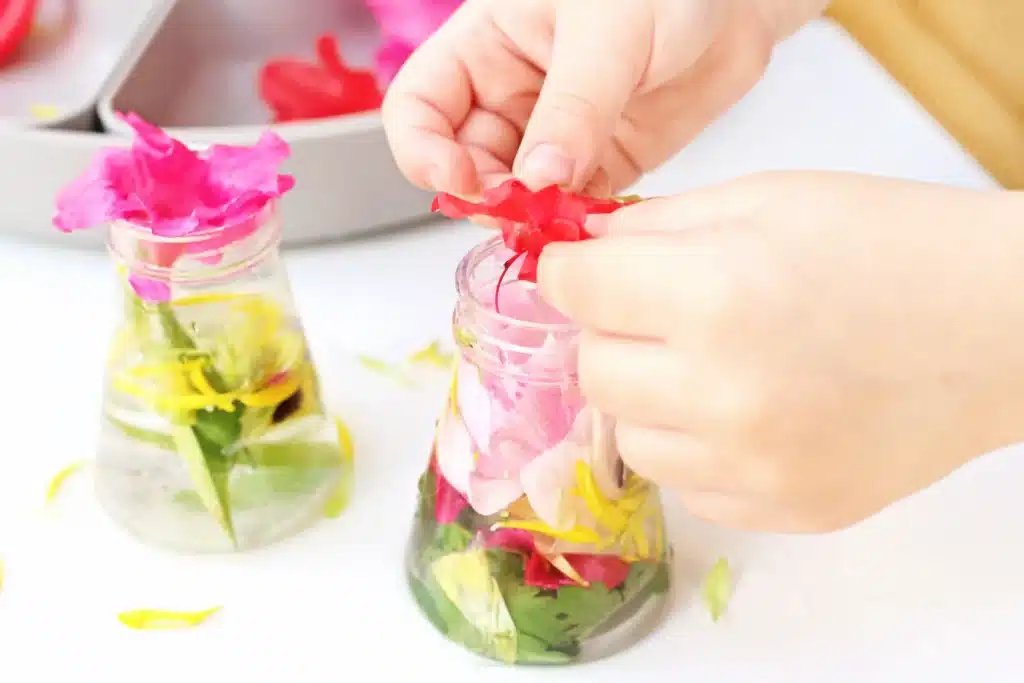
This spring flowers potion sensory activity uses simple garden materials for an imaginative exploration of nature, color, and movement. Flower petals, leafy greens, and clear water combine inside small jars to form magical-looking mixtures inspired by the garden. As petals swirl and leaves drift, children observe natural patterns while pretending to create fairy potions or garden elixirs.
Through this spring sensory play idea, children experience nature through touch, sight, and movement while strengthening fine motor skills and creative thinking. Jars are filled with swirling petals and leafy layers as young potion makers invent magical mixtures inspired by blooming spring gardens.
Spring Books To Read
This post may contain affiliate links, please read our disclosure policy for details.
One of my all time favorite spring books is Have You Ever Seen A Flower? by Shawn Harris. The bright, vibrant colors are a feast for you eyes and the story is beautiful. And, check out more of my favorite spring books:








How To Make A Spring Flowers Potion Sensory Activity
Flower petals swirl through water as kids create magical garden potions in this spring sensory activity that blends imagination, nature, and sensory play.
- Total Time25 minutes (or more depending on play time)
Materials
- Fresh flowers
- Small leaves or herbs
- Water
- Small clear potion bottles or jars
- A divided or sorting tray
- Measuring scoop or spoon
- Funnel
- Small cups for pouring
Instructions
- Place flower petals, leaves, and plant pieces into separate sections of a divided tray.
- Add in some small jars or bottles.
- Fill the center part of the tray with water.
- Set out a funnel, scoop, and/or spoon to help transfer ingredients.
- Invite children to begin creating flower potions.
- Prep Time: 5 minutes
- Category: Activities, DIY, Spring
- Method: Step-by-Step






Leave a Reply