

Gold Coin Catapults: A St. Patrick’s Day STEM Activity
January 23, 2026
This post may contain affiliate links. Please read our disclaimer policy for details.

Popsicle sticks, rubber bands, and a plastic spoon may look like ordinary craft supplies, but in the right configuration, they turn into something far more exciting. Gold coin catapults bring motion, problem-solving, and playful experimentation together in one hands-on build. Designed with a green and gold theme, this St. Patrick’s Day science activity blends engineering with imagination, inviting kids to launch “gold coins” while exploring cause and effect.
This post contains affiliate links. I earn a small commission if you choose to purchase, at no extra cost to you!
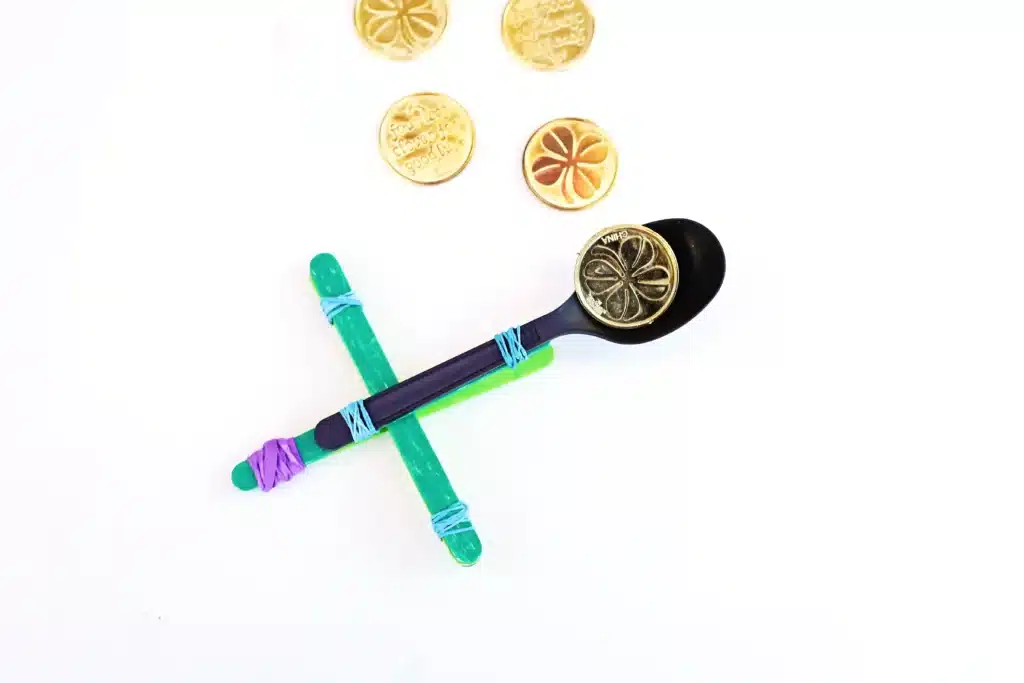
This St. Patrick’s Day STEM activity for kids adds energy to learning through movement. Popsicle sticks stack, flex, and snap into place, forming a simple machine that encourages curiosity and experimentation. Each launch is full of info about force, tension, and design choices.
Why Gold Coin Catapults Make a Great STEM Challenge for Kids
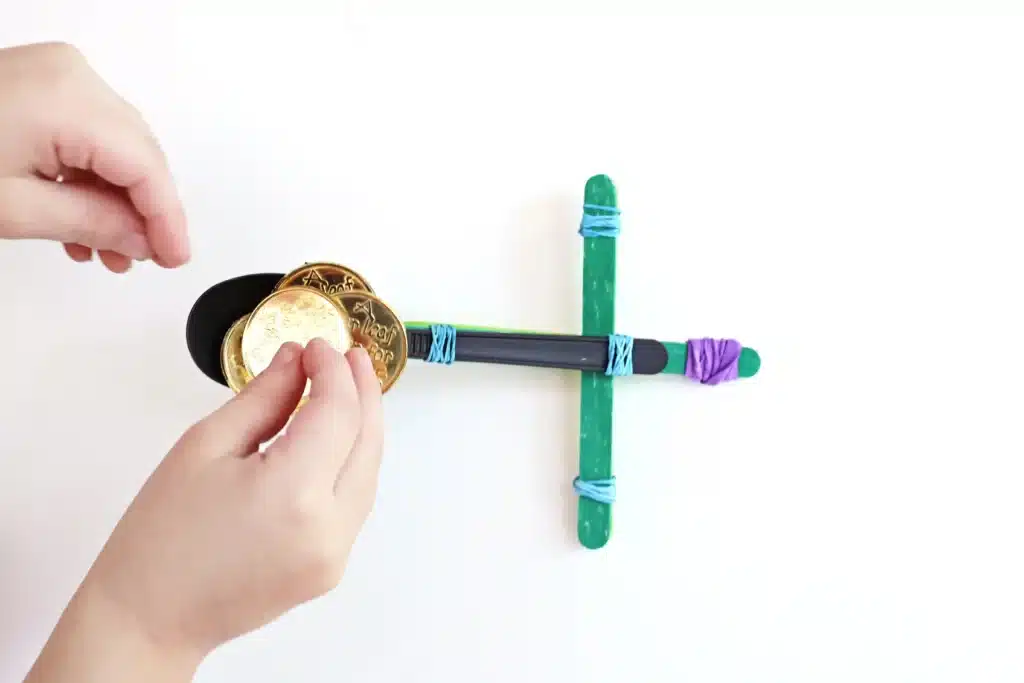
Catapults have a long history of fascinating kids. The moment tension releases and an object flies through the air, learning feels immediate and exciting. Gold coin catapults channel that excitement into a focused STEM challenge for kids that feels playful while still grounded in engineering concepts.
As a St. Patrick’s Day STEM activity, the theme adds motivation without overpowering the learning. Gold coins, green popsicle sticks, and the idea of treasure create a narrative that keeps interest high. The build invites testing, adjusting, and rethinking, all core elements of STEM learning.
This St. Patrick’s Day science activity also encourages patience. Rubber bands need to stretch evenly, sticks must align, and small adjustments change results dramatically. Every launch offers feedback and a motivation to try again.
Materials for a Popsicle Stick Catapult
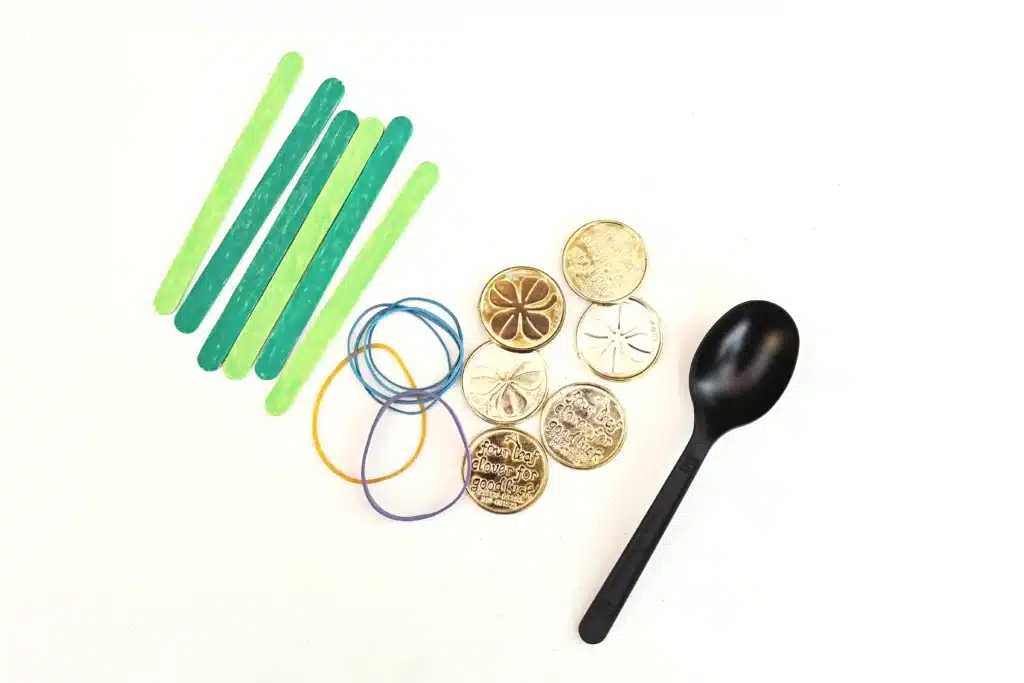
Gold coin catapults rely on simple materials that work well in classrooms or at home.
- Green popsicle sticks
- Rubber bands
- Plastic spoon
- Gold coins or lightweight round objects
The simplicity of the materials allows focus to stay on the build rather than the supplies. Popsicle sticks provide flexibility and strength, while rubber bands supply stored energy for launching.
Building the Base of a Popsicle Stick Catapult
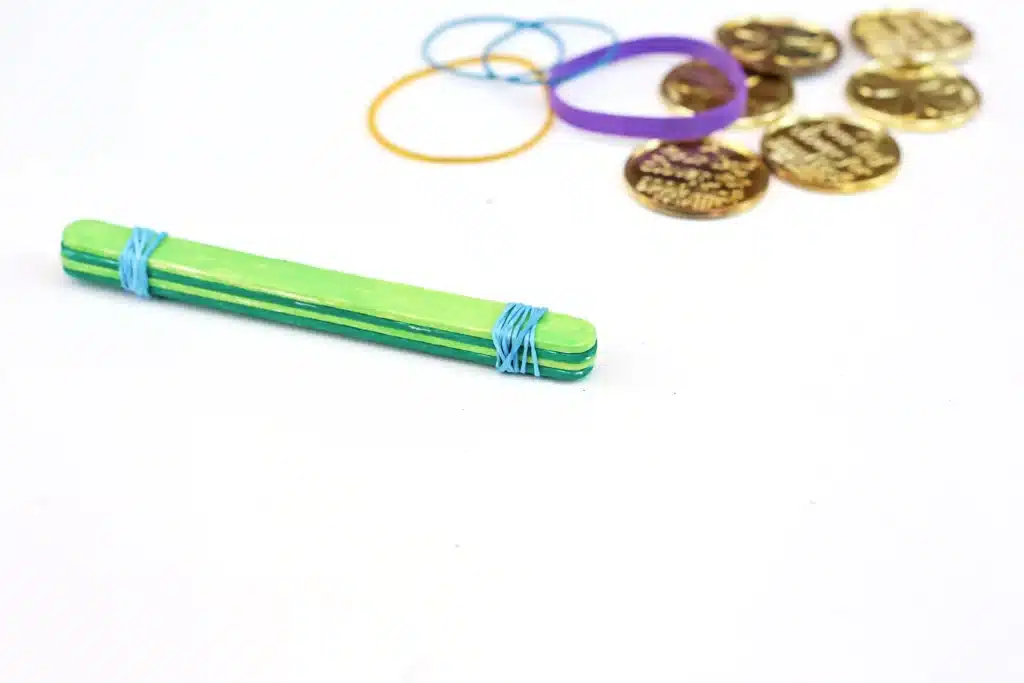
Start by stacking four green popsicle sticks neatly on top of one another. Line up the ends carefully so the stack stays even. Wrap a rubber band tightly around one end of the stack, then repeat on the other end. This creates a solid base that acts as the foundation of the simple STEM project.
The stacked sticks resist bending, making them ideal for anchoring the moving parts. This step introduces the idea of structural support, an important concept in any STEM challenge for kids.
Creating the Launch Arm
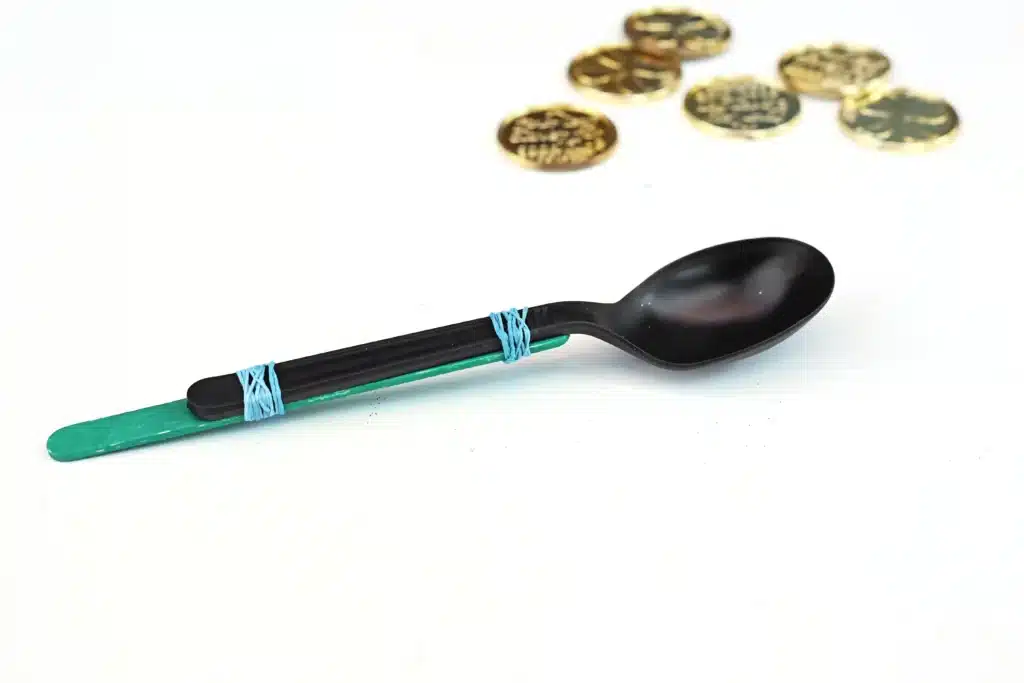
Take one additional green popsicle stick and place a plastic spoon on it. The handle of the spoon should align with the stick so the bowl hangs just off the end. Secure the spoon to the popsicle stick using rubber bands wrapped tightly around the handle and stick.
This combination forms the launch arm. The spoon holds the gold coin, while the popsicle stick transfers force when the arm flexes. The tighter the rubber bands, the more stable the connection.
Adding the Support Stick
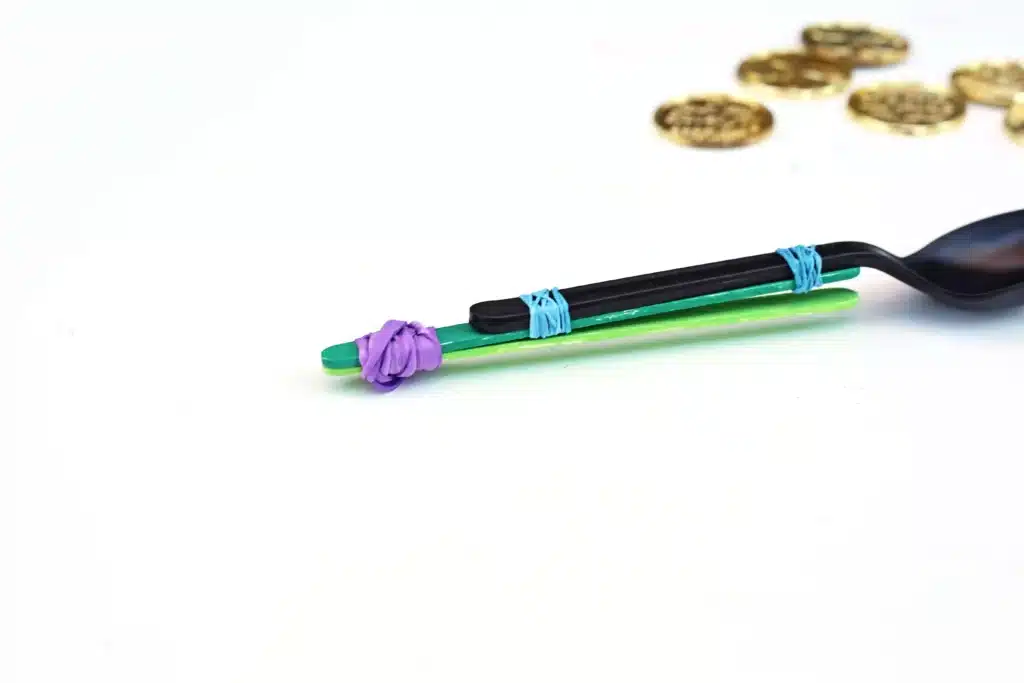
Place another green popsicle stick underneath the spoon-and-stick combination. This stick helps create a pivot point and adds strength to the launch arm. Secure this support stick with a rubber band at the non-spoon end.
This step adds complexity to the build, introducing the idea of leverage. Small changes in placement affect how far the gold coin travels, turning each adjustment into new data.
Assembling the Catapult
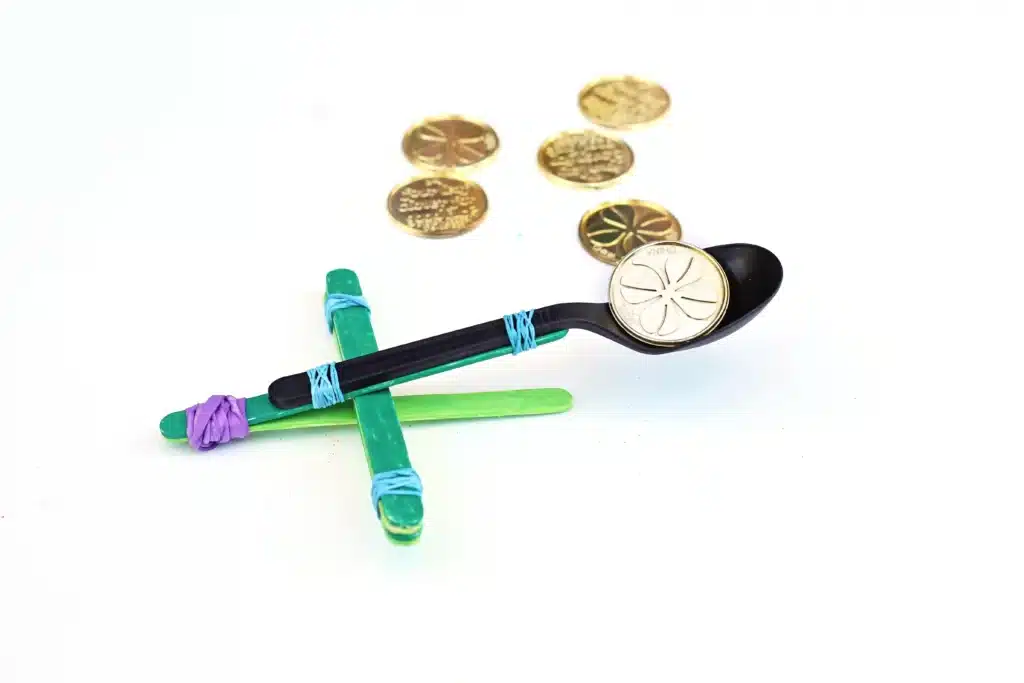
Slide the four-stick base in between the spoon-and-stick combination and the support stick. The base should sit snugly, creating tension between the layers. Adjust the placement until the catapult feels stable but flexible.
Once assembled, the popsicle stick catapult should spring slightly when pressed. This stored energy is what launches the gold coin forward and makes this catapult STEM activity exciting.
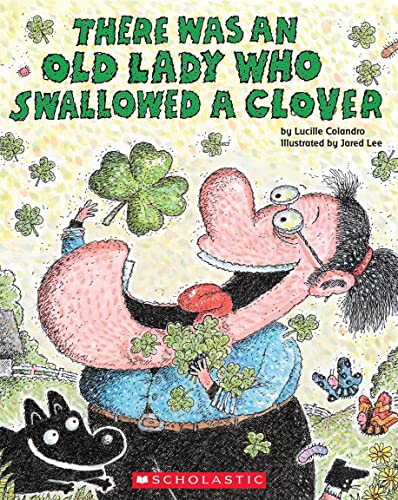
St. Patrick’s Day Books To Read After Launching Gold Coins


A St. Patrick’s Day STEM Activity Full of Exploration
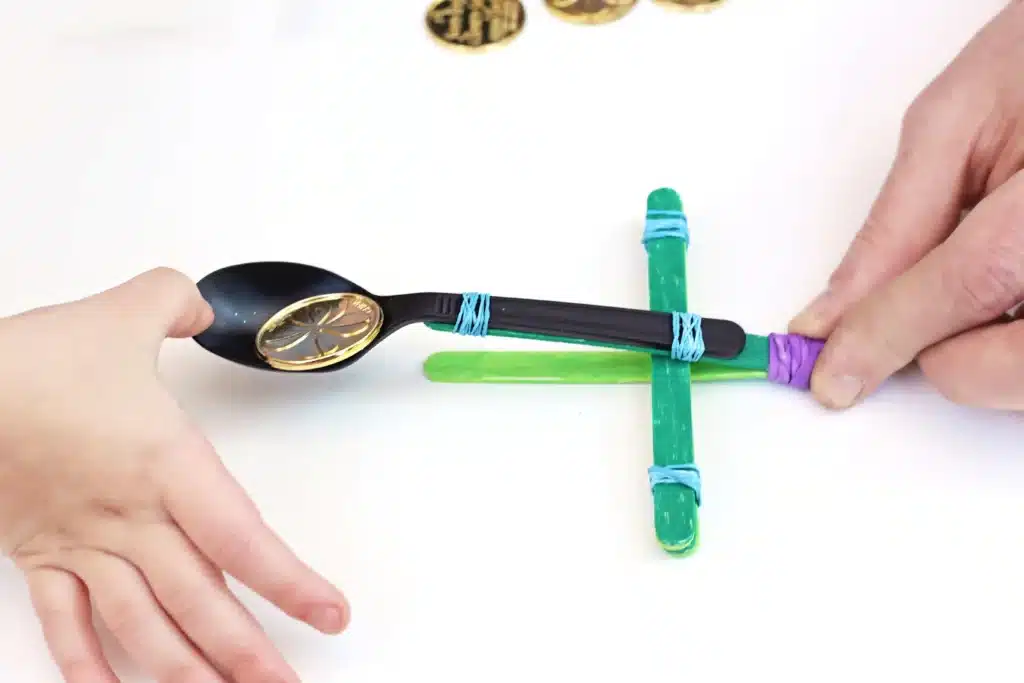
Gold coin catapults invite repeated testing. Place a gold coin into the spoon, press down gently, and release. Watch how far it travels. Then adjust the angle, the pressure, or the rubber band placement and try again.
This process turns the activity into a true STEM challenge for kids. Each launch encourages observation, prediction, and revision. Why did the coin travel farther this time? What happens if the spoon sits lower or higher?
The St. Patrick’s Day theme adds an extra layer of fun. Coins can represent hidden treasure, and targets can be labeled as pots of gold, hills, or rainbows.
Learning Concepts Behind the Fun
This popsicle stick catapult introduces core STEM ideas in an accessible way. Energy transfers from stored tension in the rubber bands to motion in the spoon. Force and distance connect clearly through repeated trials.
The activity also highlights engineering design. The catapult does not need to work perfectly on the first attempt. Adjustments and improvements are part of the process. This mindset supports resilience and creative problem-solving.
Fine motor skills develop as rubber bands stretch and sticks align. Spatial awareness grows as kids think about angles and placement.
Ideas for Extending the STEM Challenge for Kids
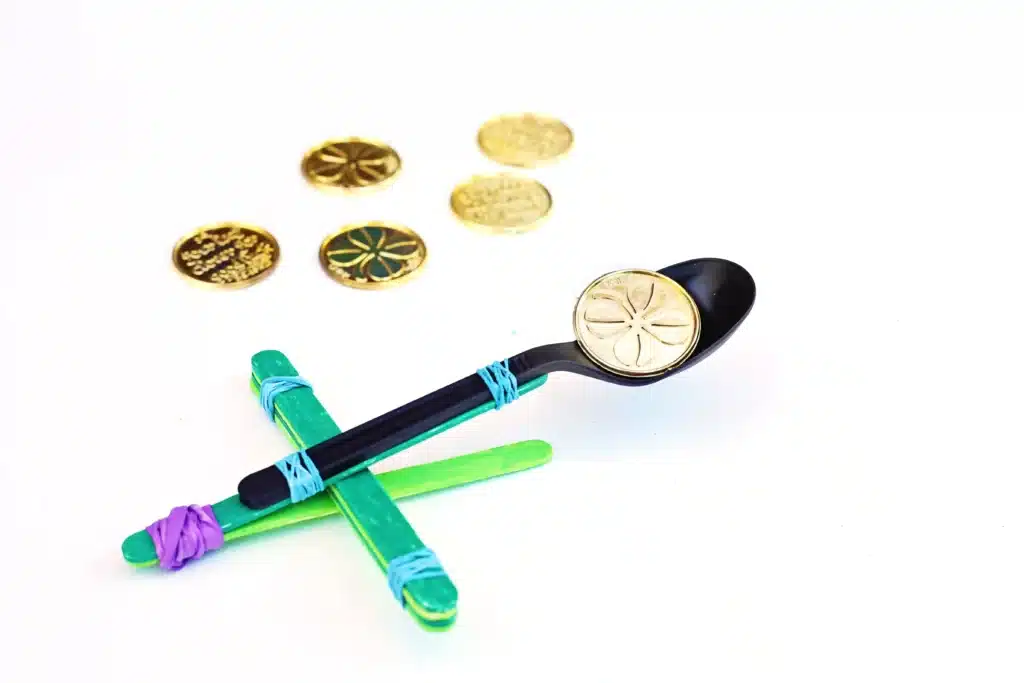
Once the basic catapult works, challenges can expand. Targets can be placed at different distances. Points can be awarded for accuracy rather than distance. Design changes can be encouraged, such as adding more sticks or adjusting the launch arm length.
This flexibility keeps the activity engaging and adaptable. The same core build supports multiple levels of exploration, making it ideal for mixed-age groups.
Why Gold Coin Catapults Stand Out
Gold coin catapults stand out because they blend motion, creativity, and learning into one experience. The build feels achievable, while the results feel exciting. Each launch offers immediate feedback and a reason to refine the design.
As a St. Patrick’s Day STEM activity for kids, this project adds meaning to the theme without distracting from learning goals. Popsicle sticks and rubber bands transform into tools for exploration, proving that simple materials can support deep thinking.
The popsicle stick catapult encourages curiosity, persistence, and joyful experimentation, all wrapped in a playful nod to St. Patrick’s Day.
More St. Patrick’s Day Fun!
- Lucky Charms Bark: A St. Patrick’s Day Recipe for Kids
 Lucky Charms bark brings rainbow magic to the dessert table. This St. Patrick’s Day treat for kids features creamy sweetness, bright cereal crunch, and a shimmering green finish that turns classroom parties and family celebrations into something unforgettable.
 - Lucky Charms Puppy Chow: A Magical St. Patrick’s Day Treat for KidsLucky Charms puppy chow is a sweet St. Patrick’s Day treat for kids with a crunchy coating and a touch of gold sparkle. It’s an easy no-bake party snack.
- The Best St. Patrick’s Day Craft: Leprechaun LookersMake these adorable leprechaun lookers – made with simple materials, this DIY St. Patrick’s Day craft will keep kids exploring for hours.
- Edible St. Patrick’s Day Sensory Bin: A Hands-On Sensory Exploration Through PlayThis edible St. Patrick’s Day sensory bin combines sensory play with cognitive development, making it a safe and beneficial St. Patrick’s Day activity for kids.
- The Best St. Patrick’s Day Treats for KidsCelebrate St. Patrick’s Day with a little extra sweetness! These 13 St. Patrick’s Day treats for kids are fun, colorful, and easy to make.
- The Best St. Patrick’s Day Snack: Lucky Charms Yogurt CloversLucky Charms yogurt lovers are a fun and easy treat for kids made with yogurt and cereal. They are perfect for St. Patrick’s Day snacks, classroom treats, or simple holiday fun.
- The Best St. Patrick’s Day Crafts for KidsA full list of fun and easy St. Patrick’s Day crafts for kids that are perfect for classrooms, preschool, and simple holiday crafting.
- The Best Easy Rainbow Art Projects for St. Patrick’s DayExplore fun rainbow art projects for St. Patrick’s Day, perfect for kids, classrooms, and easy holiday crafting.
- The Best Paper Plate Crafts for St. Patrick’s DayDiscover fun and easy paper plate crafts for St. Patrick’s Day, perfect for kids, classrooms, and simple holiday crafting.
- Printable St. Patrick’s Day Favor Tags: A Simple Rainbow Treat Idea for KidsThese St. Patrick’s Day gift ideas include printable favor tags paired with an easy rainbow treat made with Skittles and Rolos for holiday celebrations.
- The Best Rainbow Cloud Craft For KidsThis rainbow cloud craft is a fun and easy activity for kids, perfect for spring, weather lessons, and colorful classroom or at-home crafting.
- Pot of Gold Playdough Tray: A St. Patrick’s Day Sensory Activity for KidsA pot of gold playdough tray is a fun St. Patrick’s Day sensory activity for kids using yellow playdough, gold coins, rainbow pipe cleaners, and small pots.





Leave a Reply