

Easter Egg Tower STEM Project: An Easter STEM Challenge with Playdough
February 10, 2026

Building challenges bring abstract STEM concepts into clear focus, especially when the approach is open ended. The Easter egg tower STEM project blends engineering, creativity, and problem-solving into a single Easter STEM challenge that is accessible for preschool and early elementary learners. Using plastic Easter eggs and playdough, children explore balance, stability, and design while constructing tall towers or experimenting with arches and bridges.
This post contains affiliate links. I earn a small commission if you choose to purchase, at no extra cost to you!
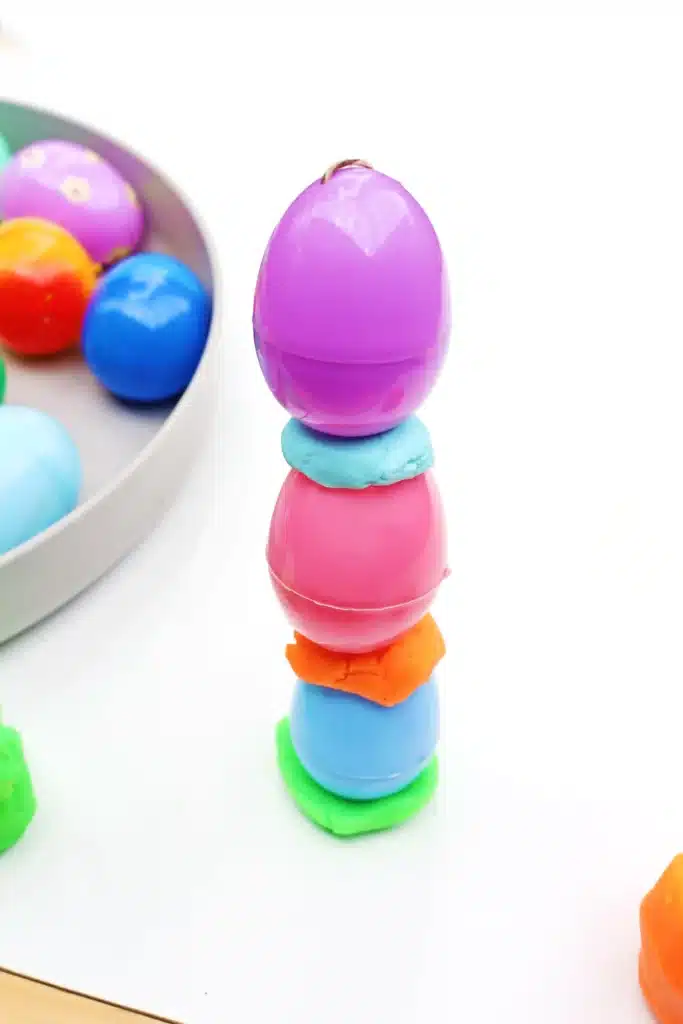
This Easter playdough activity encourages curiosity through trial and error. Each structure offers immediate feedback, by tipping, leaning, or standing strong. That natural cause-and-effect loop keeps engagement high and supports meaningful learning through play.
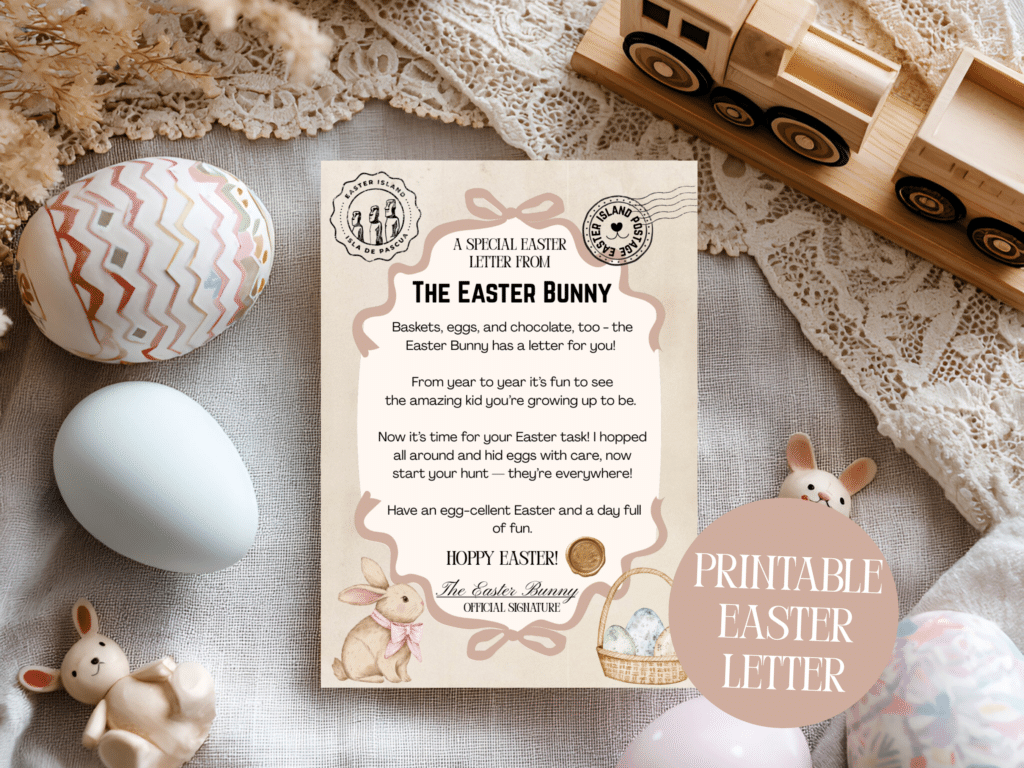
Make Easter memorable with this letter from the Easter Bunny! Pop it in your child’s Easter basket or put it in an envelope and “mail” it.
Easter STEM Activities That Encourage Engineering Thinking
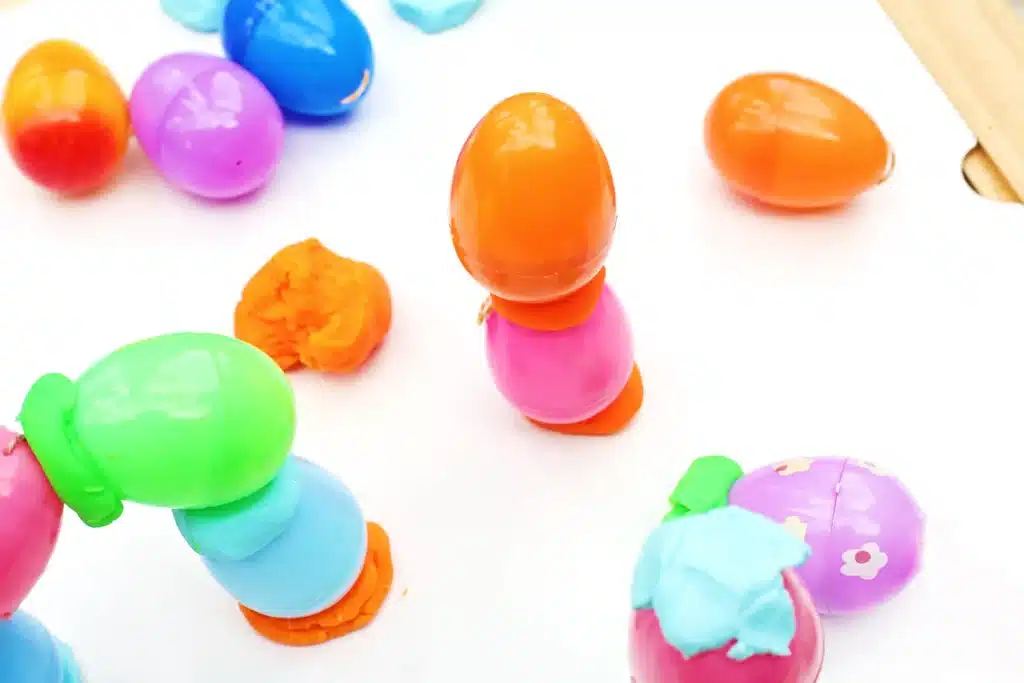
Engineering-focused Easter STEM activities work best when materials are flexible and forgiving. Playdough provides a sturdy yet adaptable base, while plastic Easter eggs introduce lightweight shapes that challenge balance and alignment. Together, they create a low-pressure environment where ideas can be tested, revised, and rebuilt again and again.
This Easter STEM challenge invites children to think like engineers. Decisions about spacing, symmetry, and support happen organically as towers are built taller or arches stretched wider. There is no single “right” solution, allowing creativity and logic to work side by side.
Supplies for the Easter Egg Tower STEM Project
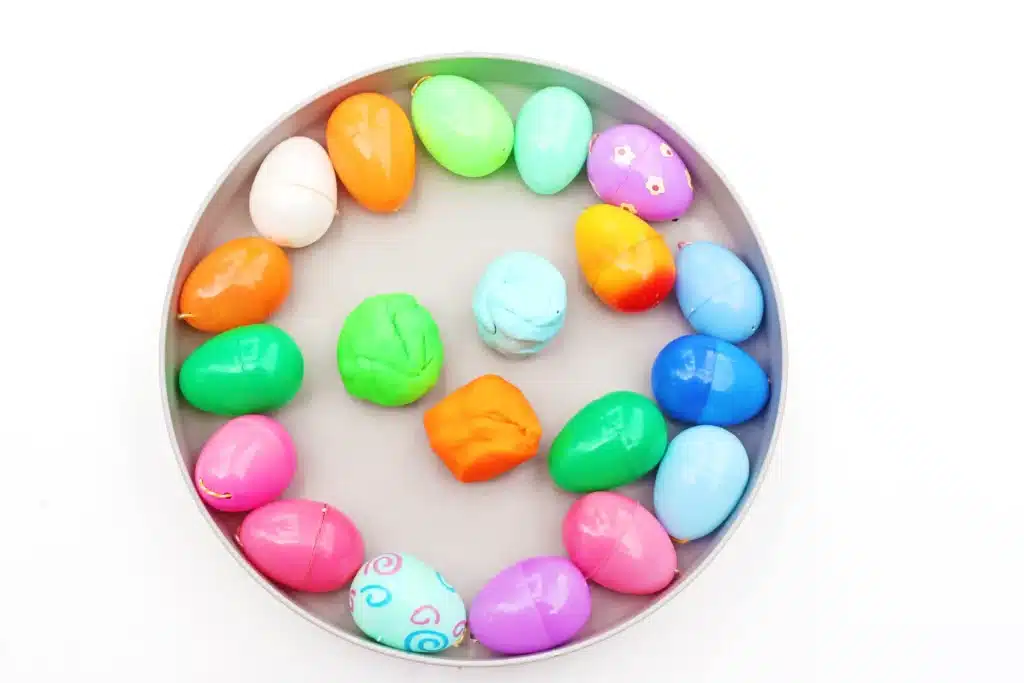
This Easter playdough activity uses simple materials that are easy to source and quick to prepare.
Supplies needed:
- Plastic Easter eggs (empty and clean)
- Playdough in one or more colors
- Flat surface or tray for building
- Optional ruler or measuring tape
Optional additions include cardboard bases for stability, small trays to separate materials, or paper and pencils for sketching ideas before building.
How to Set Up This Easter STEM Challenge
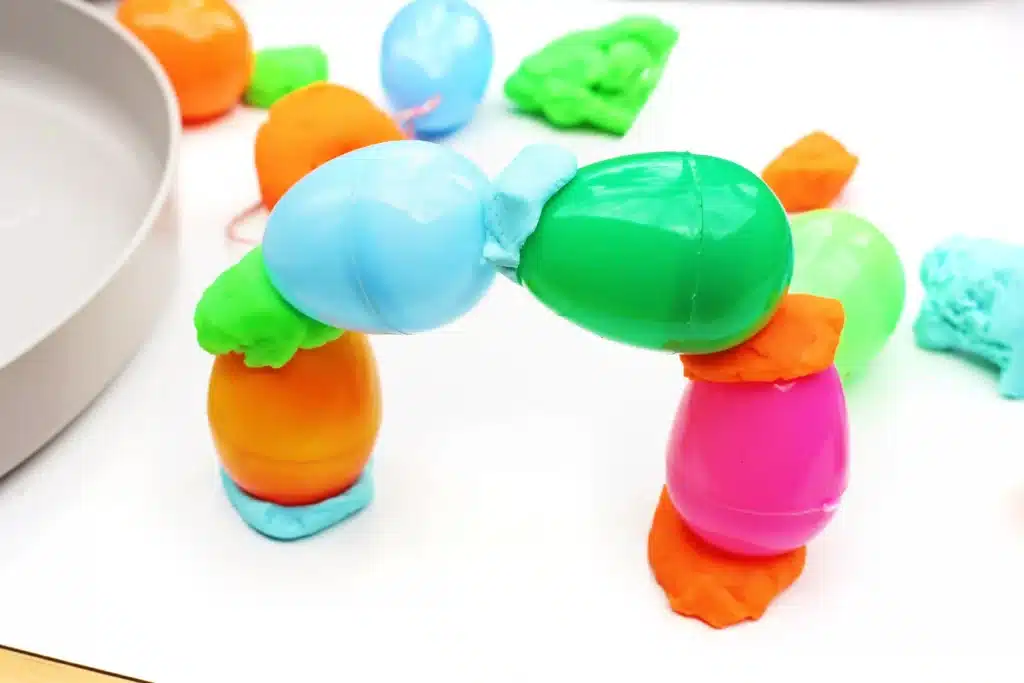
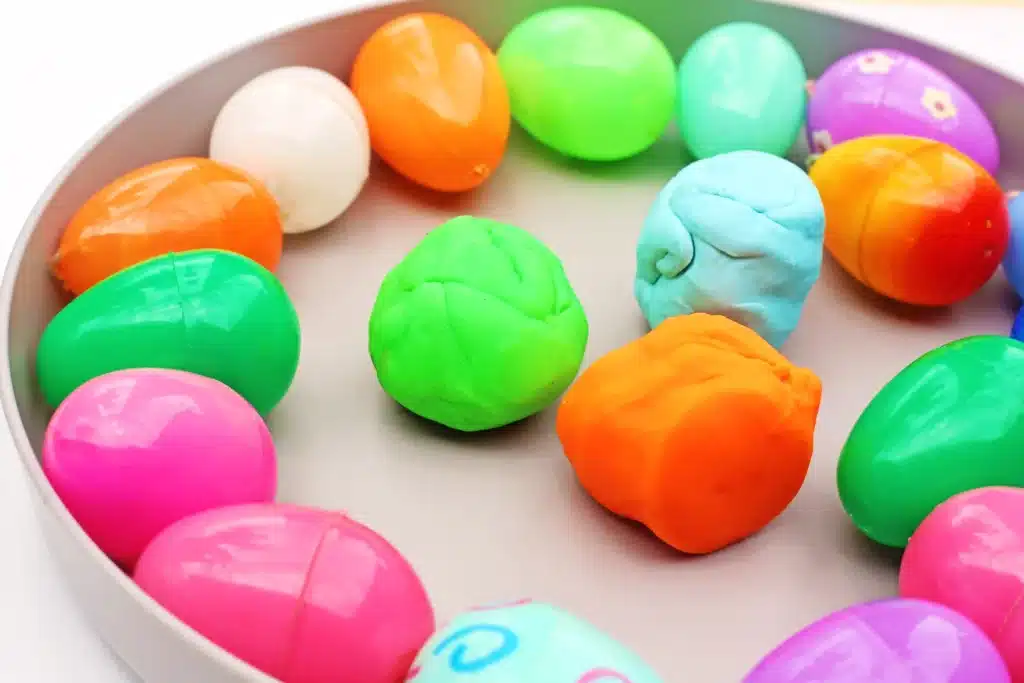
Begin by placing playdough on a flat surface or tray, forming several small balls or logs that can act as connectors and anchors. Set out plastic Easter eggs nearby so they are easy to grab and rearrange.
Introduce the challenge in simple terms. The primary goal is to build the tallest tower possible using only playdough and Easter eggs. A secondary option encourages creativity by building archways, bridges, or wide structures instead of just height-focused towers.
Once materials are ready, building can begin immediately. No further setup is required, keeping the focus on exploration rather than instruction.
How Kids Engage with the Easter Egg Tower STEM Project
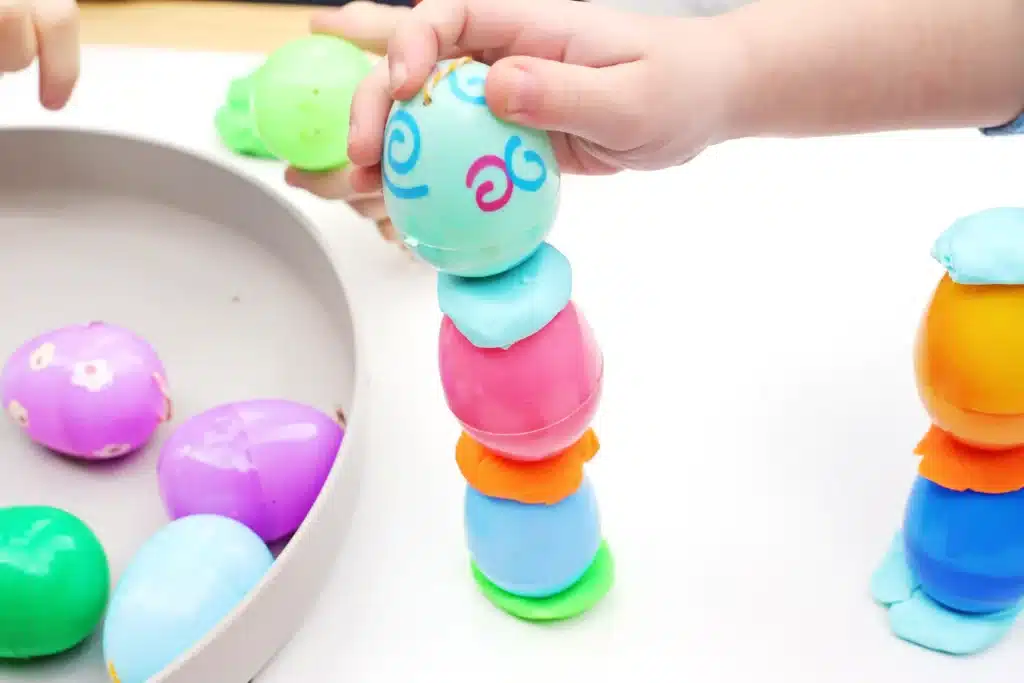
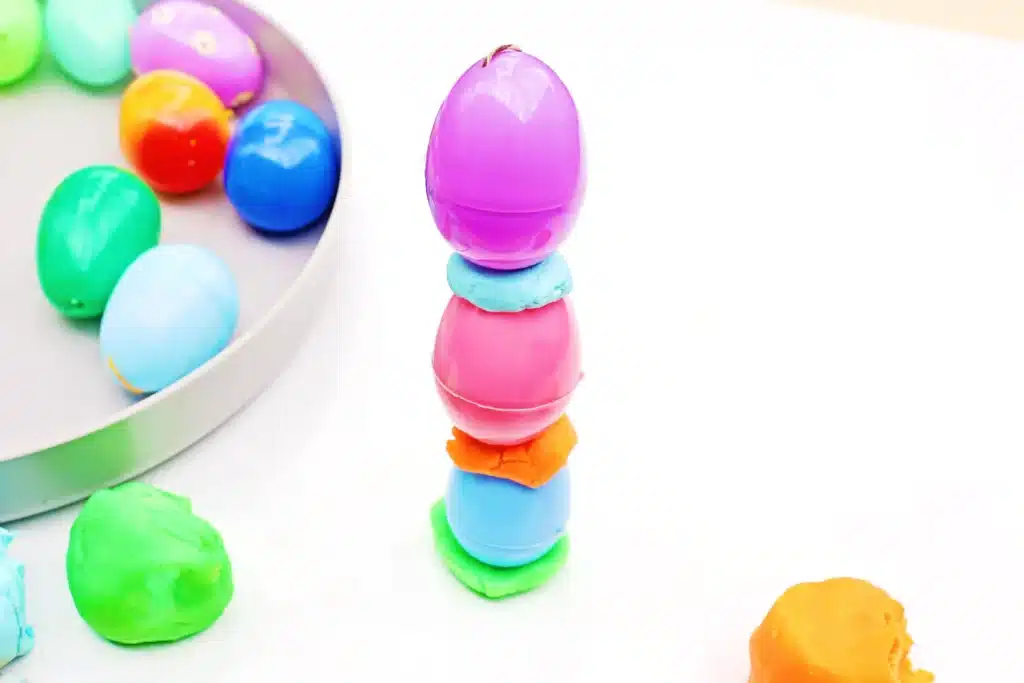
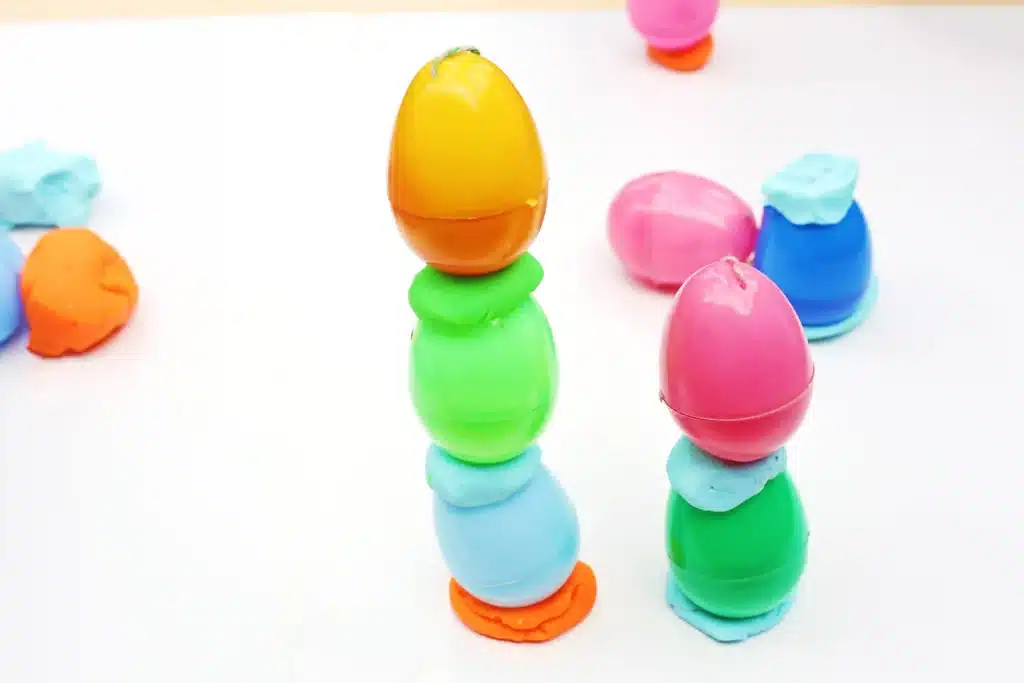
Children approach this Easter STEM challenge in a variety of ways. Some start stacking eggs vertically, using playdough between each layer as a connector. Others experiment with wide bases, discovering that broader foundations or pyramid shapes support taller towers.
As towers wobble or collapse, adjustments follow naturally. More playdough could be added for stability, or eggs might be repositioned for better balance. This process of revision is where much of the learning takes place.
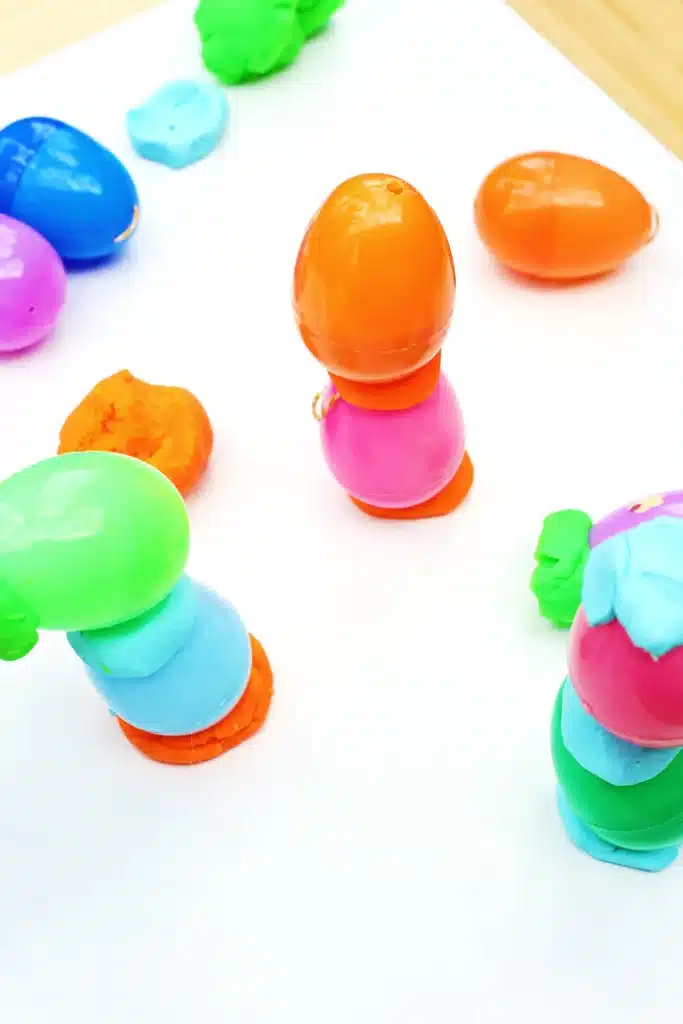
When building archways, children arrange eggs horizontally and use playdough to support curved shapes. This variation introduces new challenges related to weight distribution and spacing. Structures can evolve from towers into bridges or abstract designs, reflecting individual problem-solving styles.
Measurement can also be combined as part of play. Towers may be compared side by side, or a ruler can be used to check height. These comparisons support early math skills without dry lessons.
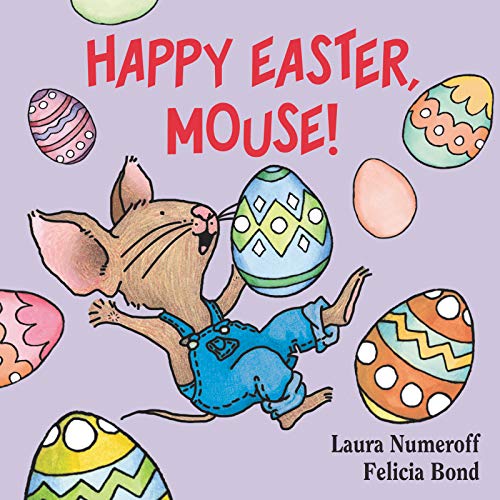
Easter Books To Read After Building Your Easter Egg Tower



Benefits of an Easter Playdough Activity Focused on STEM
The Easter egg tower STEM project supports development across multiple domains while remaining engaging and flexible.
Engineering activity for kids: Children test ideas, observe results, and refine designs. Each attempt builds understanding of stability and structure.
Fine motor development: Rolling, pressing, and shaping playdough strengthens hand muscles and coordination. Placing eggs carefully requires controlled movements.
Spatial awareness: Deciding where to place each egg builds an understanding of space, balance, and alignment.
Creativity: Open-ended challenges allow unique designs to emerge. Towers, arches, and hybrid structures reflect individual thinking.
Persistence: Collapsing structures offer opportunities to practice patience and resilience. Rebuilding encourages a growth-focused mindset.
As an Easter STEM activity, this project blends learning and play in a natural way.
Why This Easter STEM Challenge Works So Well
This activity succeeds because the materials invite experimentation. Playdough can be reshaped endlessly, removing fear of mistakes. Plastic Easter eggs are lightweight, making them easy to stack while still presenting real engineering challenges.
The seasonal theme adds familiarity without overwhelming the activity. Easter eggs are recognizable and inviting, helping children engage quickly. But the focus remains on building and problem-solving rather than decoration.
Because the challenge can scale in complexity, it works across a wide age range. Younger children may focus on simple stacking, while older learners explore symmetry, height optimization, or creative structures like arches and bridges.
Tips for Success with the Easter Egg Tower STEM Project
A few thoughtful adjustments can enhance the experience and support deeper exploration.
- Encourage a wide base before stacking upward to improve stability.
- Suggest using small amounts of playdough between eggs rather than large clumps.
- Allow time for rebuilding after collapses to try out fixes or new strategies.
- Offer both height and design challenges to accommodate different interests.
- Compare structures at the end to discuss what design choices worked well.
Limiting materials intentionally can also increase problem-solving. Providing a set number of eggs or a specific amount of playdough encourages thoughtful planning.
A Creative and Hands-On Easter STEM Activity
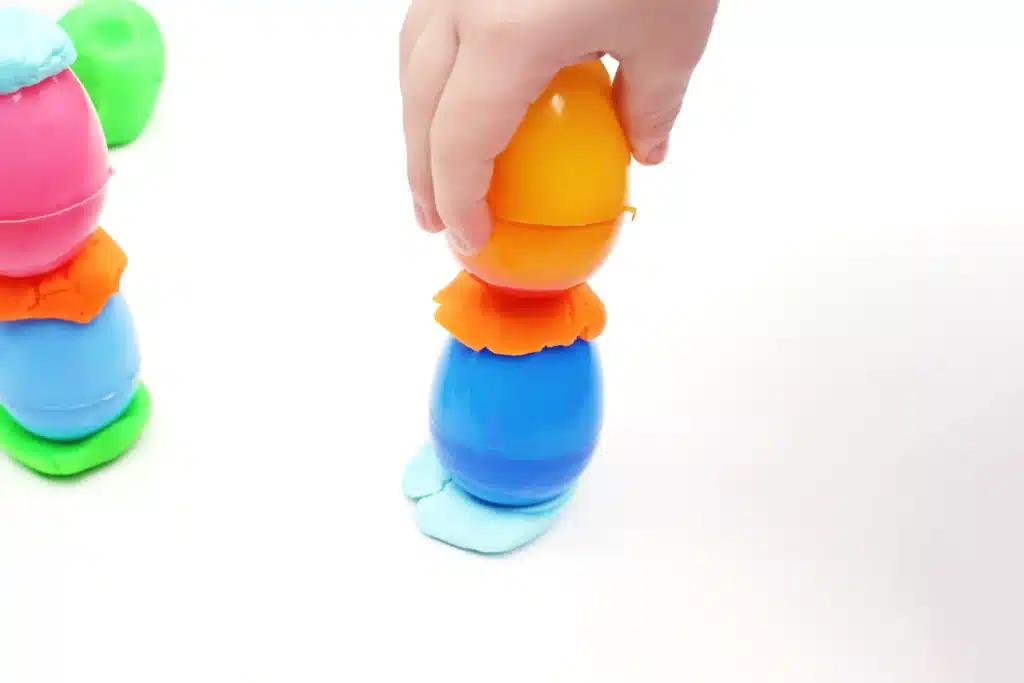
The Easter egg tower STEM project brings engineering concepts to life through simple materials and open-ended challenges. As an Easter STEM challenge, it supports creativity, persistence, and critical thinking. As an Easter playdough activity, it offers tactile engagement and flexibility that invites repeated exploration.
This project highlights how Easter STEM activities can be approachable, meaningful, and deeply engaging, all while encouraging children to think like builders and problem-solvers.
More Easter Fun!
- The Best Easter Sensory Play Ideas For Kids
 From sensory bins to playdough trays, these Easter sensory play ideas will encourage curiosity, build fine motor skills, and increase imaginative play.
 - How To Make An Easter Playdough TrayThis Easter playdough tray combines sensory play with learning and creativity. This Easter sensory activity builds motor skills and explores sensory inputs.
- The Best Bunny Crafts For KidsThese bunny crafts for kids are the perfect Easter crafts! From moving bunnies to handprint bunnies, this list has all the best crafts!
- How To Make A Paper Bag Bunny Basket CraftThis budget-friendly paper bag bunny basket craft is an easy Easter craft for kids. Using simple supplies, kids will turn a paper bag into a cute Easter basket.
- How To Make A Bunny Handprint CraftThis bunny handprint craft transforms a simple handprint into a keepsake craft. Using simple supplies, parents and kids will love this easy Easter craft!
- How To Make A Dinosaur Easter Basket for KidsBuild a dinosaur Easter basket with a DIY dinosaur Easter egg, plush dino, themed toys, a book, and a printable Easter tag for a creative prehistoric surprise.
- How To Make A Rain Boots Easter Basket For KidsBright rain boots turn into a creative Easter basket for kids filled with toy garden tools, treats, DIY seed bombs, and a free printable Easter tag.
- How To Make A Chocolate Bunny Milkshake For EasterA chocolate bunny milkshake is a sweet celebration in a glass. This creamy chocolate treat topped with a candy bunny is a fun Easter recipe kids will love.
- Jelly Bean Bark: An Easy Easter Treat for KidsJelly bean bark is a simple Easter treat for kids made with melted chocolate, jelly beans, and sprinkles. This easy no-bake Easter recipe is colorful and fun.
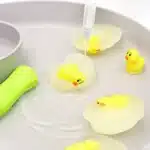
- The Best Frozen Chick Rescue ActivityChildren melt yellow ice to rescue hidden toy chicks in this spring sensory play idea that blends hands-on science, fine motor skills, and discovery.
- How To Make Peeps Banana Pudding Mini PiesKids can help create adorable Peeps banana pudding mini pies with marshmallow bunnies. This easy Easter dessert for kids turns decorating into fun.
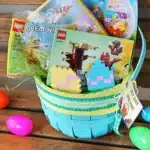
- How to Make a LEGO Easter Basket (Free Printable Tag)Build an unforgettable LEGO Easter basket with LEGO Easter sets, DIY LEGO Easter eggs, and a printable Easter tag. A creative idea for kids who love building.













Leave a Reply