How To Do A Fizzy Bunny Experiment For Easter

Spring activities include extra excitement when bubbling reactions and bright colors are introduced. The fizzy bunny experiment blends simple chemistry with an adorable Easter theme, creating an engaging Easter activity for kids that combines art, science, and sensory exploration. Bunny cookie cutters transform an ordinary science activity into a colorful Easter tray filled with fizzy reactions.
This post contains affiliate links. I earn a small commission if you choose to purchase, at no extra cost to you!
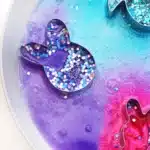
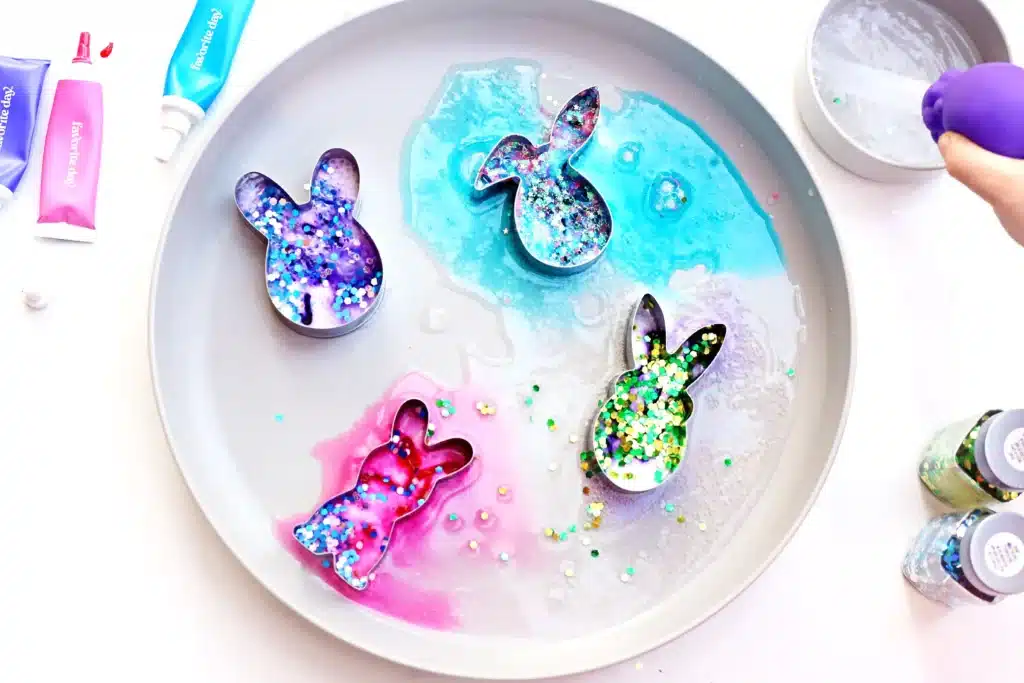
Inside each bunny shape, baking soda, food coloring, and glitter create a vibrant mixture. Adding vinegar triggers the chemical reaction, producing lively bubbles that sparkle and swirl across the tray. This Easter science experiment encourages curiosity while strengthening fine motor skills and early science understanding.
Children observe color changes, watch fizzy reactions, and explore cause-and-effect relationships through hands-on discovery. The Easter STEM activity works well for preschool classrooms, homeschool science time, or family Easter learning moments.
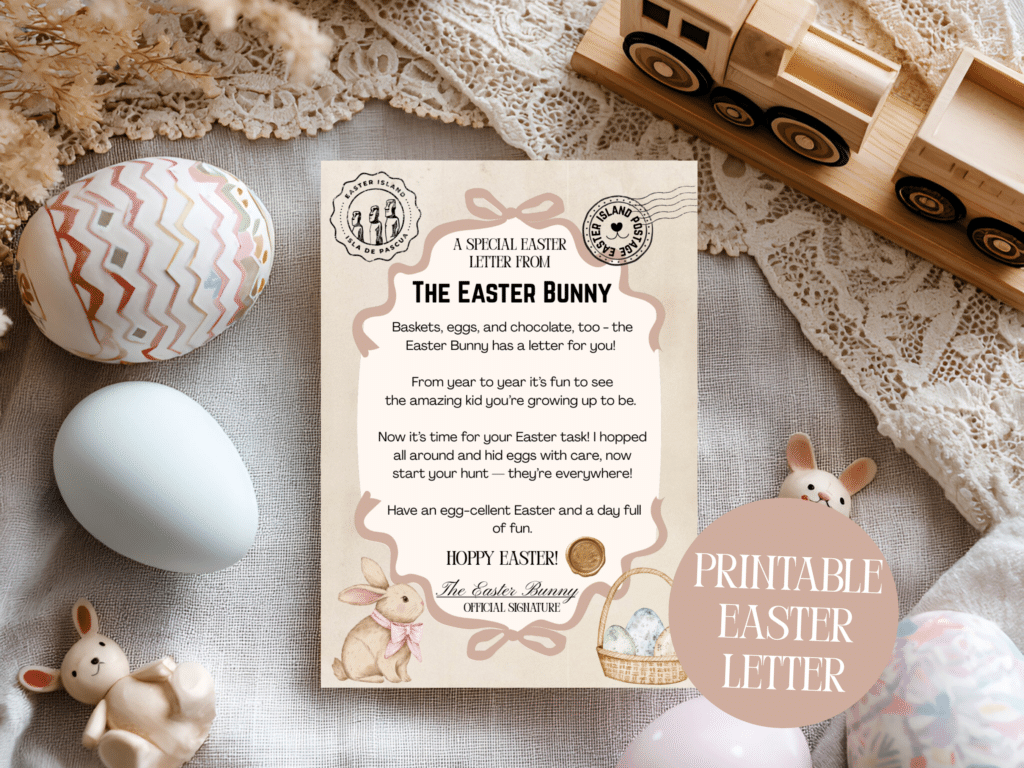
Make Easter memorable with this letter from the Easter Bunny! Pop it in your child’s Easter basket or put it in an envelope and “mail” it.
Supplies for the Fizzy Bunny Easter Activity for Kids
Gathering supplies requires only a few household materials. Most, if not all, can be found in kitchen cabinets or craft bins.
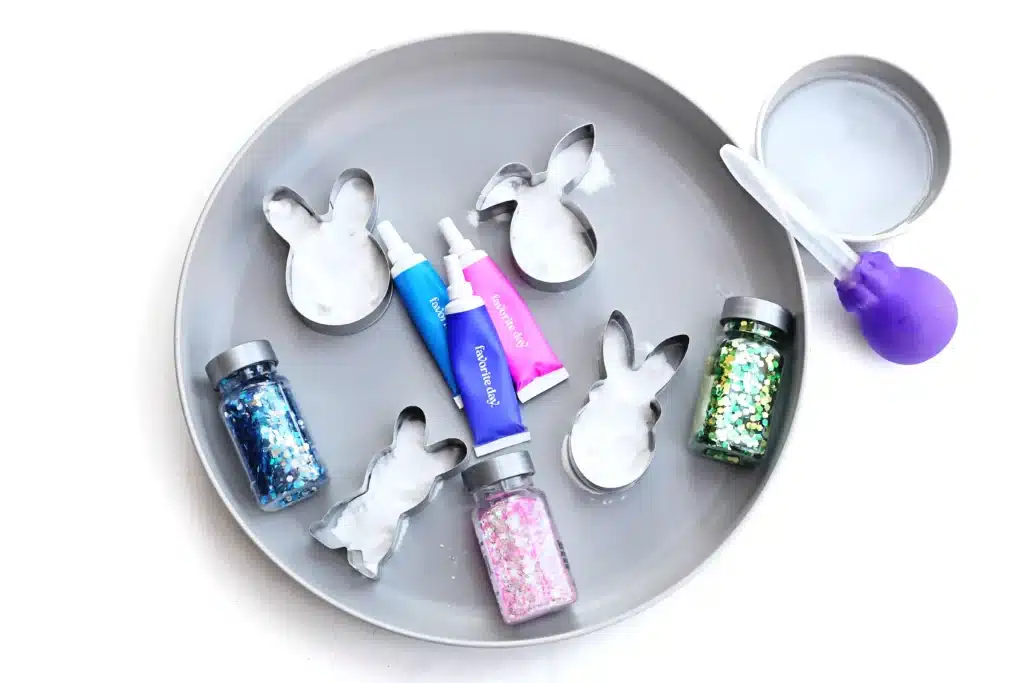
Supply List
- Bunny cookie cutters
- Baking soda
- White vinegar
- Food coloring (multiple colors create bright effects)
- Glitter
- Droppers or pipettes
- Large tray or shallow container
- Small bowls or cups for vinegar
The tray keeps materials contained, allowing bubbling mixtures to spread safely without creating a large mess.
How to Set Up the Fizzy Bunny Experiment
Preparation takes only a few minutes. The setup stage also provides an opportunity for children to participate in arranging the materials.
1. Place the tray or shallow container on a table or floor workspace.
2. Arrange bunny cookie cutters across the tray.
3. Fill each cookie cutter with baking soda. Spread the powder evenly across the bottom.
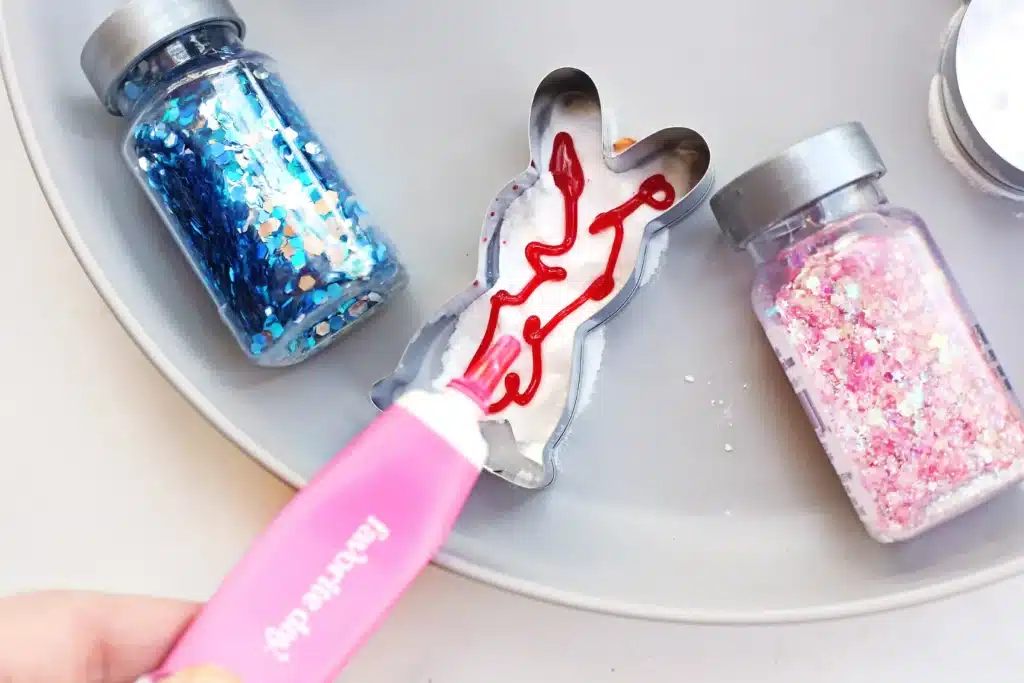
4. Add drops of food coloring into the baking soda. Different colors inside separate bunny shapes create a blended effect.
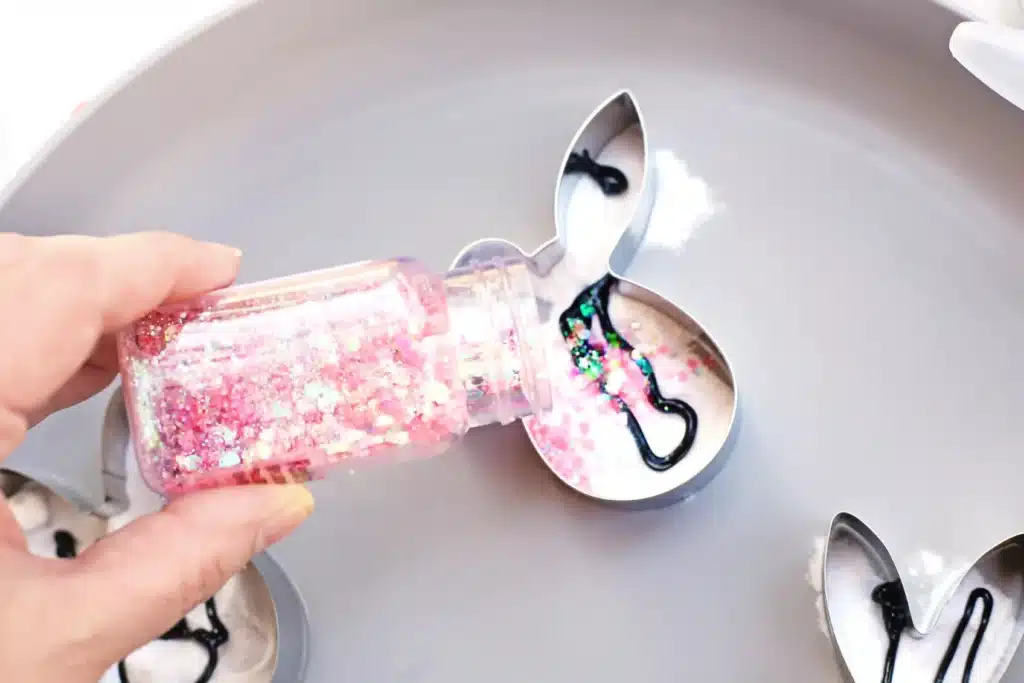
5. Sprinkle glitter across the baking soda mixture.
6. Pour vinegar into small bowls.
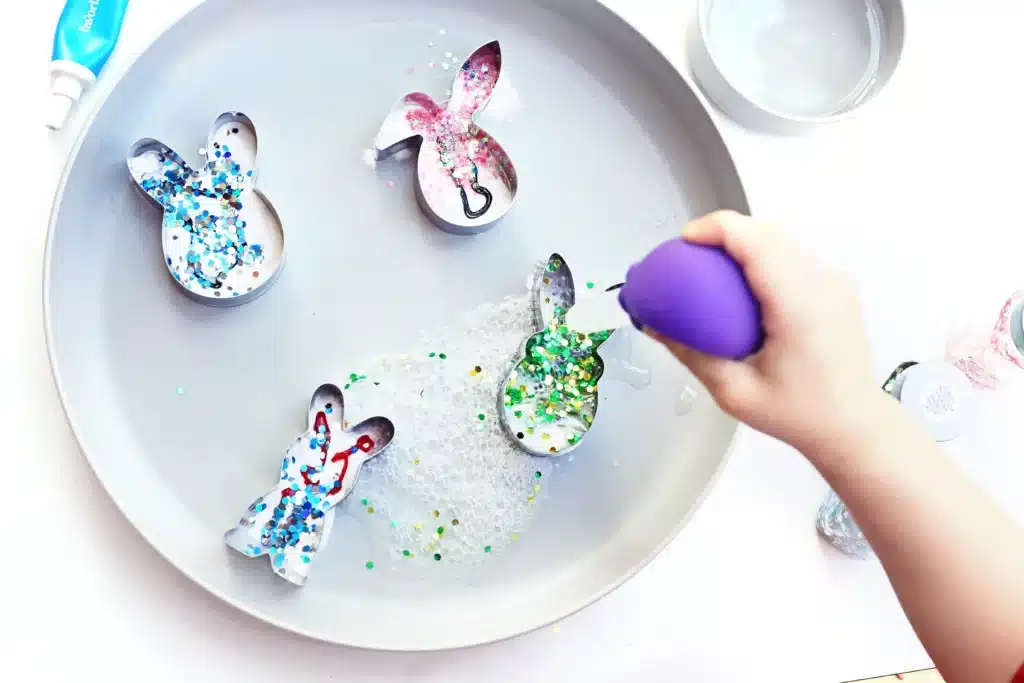
7. Use droppers to transfer vinegar into the bunny shapes.
8. Watch the mixture fizz and bubble as the reaction begins.
The baking soda reacts immediately once vinegar makes contact. Bubbles rise quickly and foam spreads around the bunny outline.
Additional vinegar continues the reaction, producing repeated bursts of fizz.
Bunny Activity for Kids: Exploring the Science Behind the Fizz
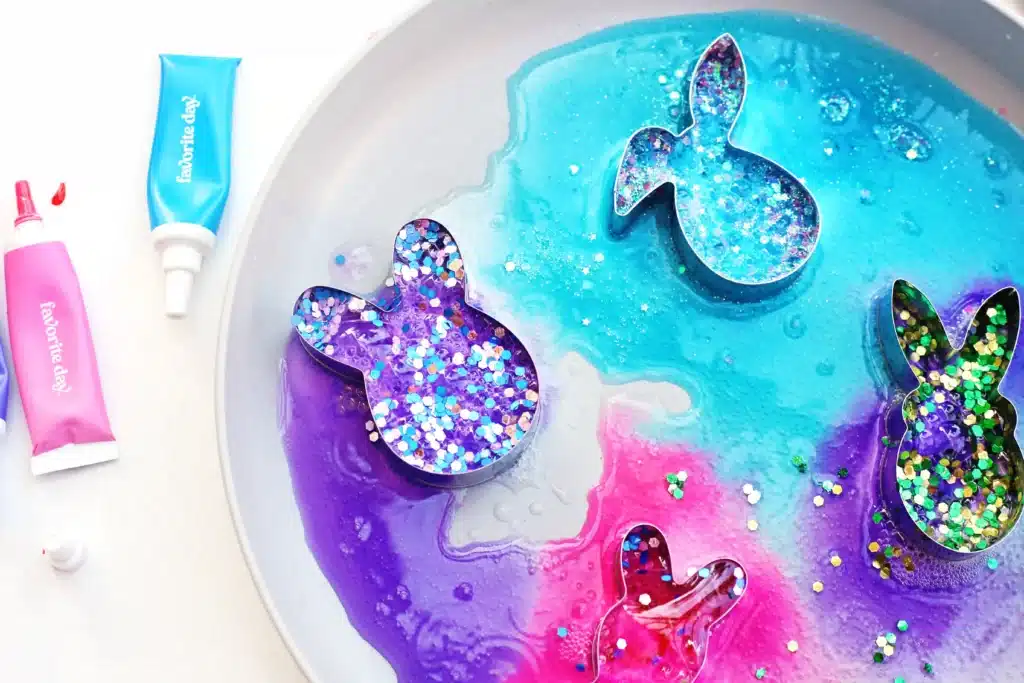
The fizzy bunny experiment introduces an early chemistry concept through visual observation. Baking soda is a base, while vinegar supplies the acid. When these two substances meet, a reaction occurs that forms carbon dioxide gas.
This gas creates the familiar fizzing bubbles.
Inside the bunny cookie cutters, the gas pushes the colored liquid upward and outward. The mixture spreads across the tray while glitter moves along with the bubbles, creating swirling, sparkly patterns.
Young learners observe several scientific concepts during this Easter STEM activity:
- Chemical reactions
- Gas formation
- Color mixing
- Cause and effect
- Observation and prediction
The tray serves as a small science lab. Droppers control the amount of vinegar dispensed, allowing children to experiment with different amounts of liquid and observe how the reaction changes.
Easter Activity for Kids That Encourages Creativity
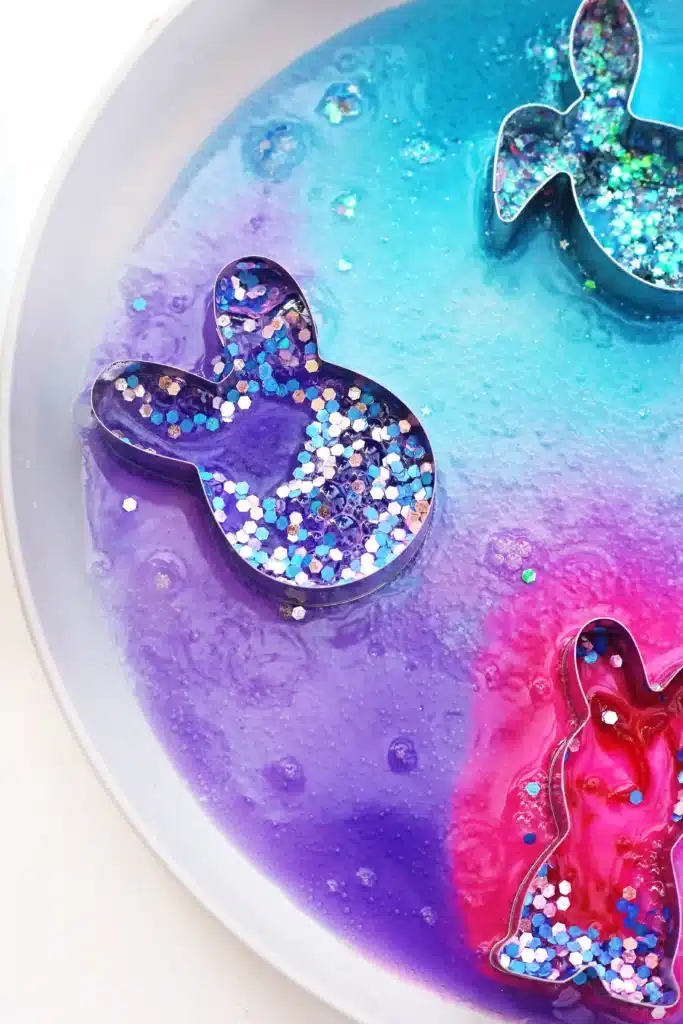
Although the Easter learning activity centers on science, creativity plays a large role. Food coloring blends together across the tray, creating marbled patterns. Glitter floats on top of bubbles, forming sparkling swirls.
Different bunny shapes can produce unique results. Tall bunnies, wide bunnies, or sitting bunny silhouettes create slightly different foam patterns during the reaction.
The tray is also an artistic bunny activity for kids; children can watch color streams mix and swirl across the foam.
Benefits of the Fizzy Bunny Easter Science Experiment
A hands-on Easter learning activity supports many areas of childhood development. The fizzy bunny experiment encourages several important skills while maintaining a sense of discovery.
1. Early Science Understanding
Children see a real chemical reaction taking place. The bubbling mixture introduces chemistry concepts in a simple and memorable format.
2. Sensory Exploration
Bubbles, textures, colors, and glitter create a rich sensory experience. Visual movement keeps attention focused during the activity.
3. Fine Motor Skill Development
Droppers strengthen finger muscles and coordination. These small movements support handwriting readiness and everyday motor tasks.
4. Curiosity and Observation
Children watch reactions closely and begin forming questions. Curiosity drives deeper learning and encourages scientific thinking.
5. Creative Expression
Food coloring and glitter allow each bunny shape to look different. The tray is turned into a colorful Easter science display.
Easter Science Experiment That Brings Learning and Color Together
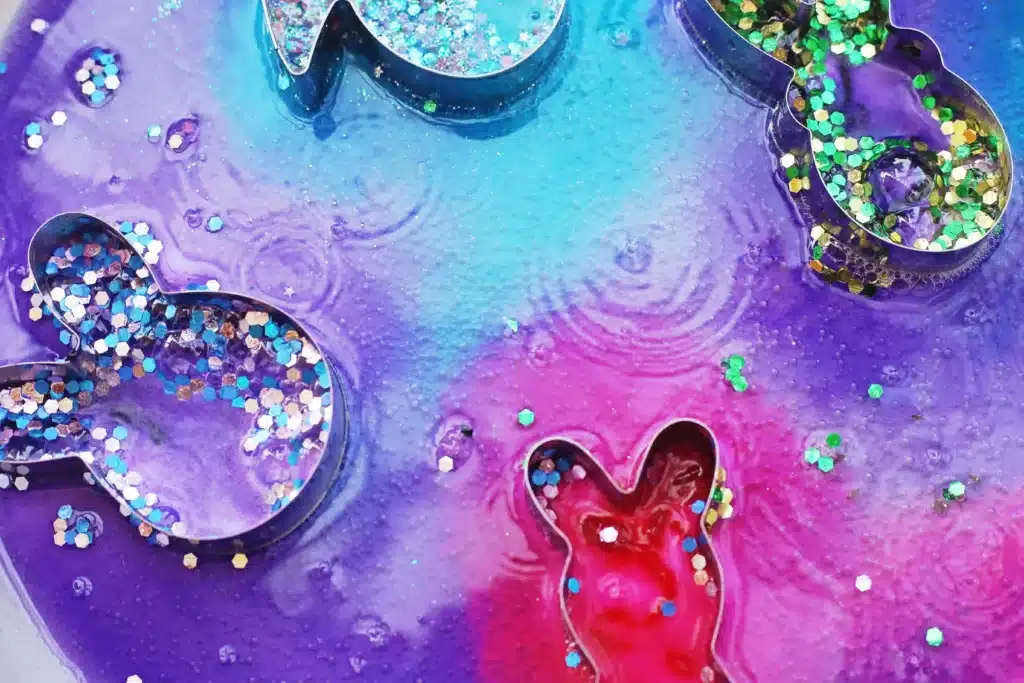
The fizzy bunny experiment blends science, creativity, and hands-on exploration into a bright Easter activity for kids. Bunny cookie cutters filled with baking soda, food coloring, and glitter create bubbling reactions that capture attention, all the while introducing early chemistry concepts. Each fizzing bunny offers a chance to observe gas formation, color movement, and cause-and-effect relationships in a simple, visual format.
This Easter science experiment supports early learning through sensory exploration, fine motor practice with droppers, and creative expression through color choices and glitter. The tray setup keeps the activity organized while allowing bubbling reactions to spread and swirl across the surface.
Perfect for classrooms, homeschool lessons, or seasonal science trays, this bunny activity for kids delivers both discovery and excitement. Bright fizzing reactions elevate a few everyday ingredients into an engaging learning experience that encourages curiosity, observation, and creative experimentation throughout the Easter season.
Print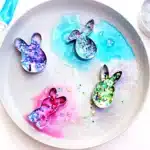
How To Do A Fizzy Bunny Experiment For Easter
This fizzy bunny experiment is the perfect Easter activity for kids. Use baking soda, food coloring, glutter, and vinegar to create a beautiful array of colors shaped like bunnies.
- Total Time15
Materials
- Bunny cookie cutters
- Baking soda
- White vinegar
- Food coloring (multiple colors create bright effects)
- Glitter
- Droppers or pipettes
- Large tray or shallow container
- Small bowls or cups for vinegar
Instructions
opportunity for children to participate in arranging the materials.
- Place the tray or shallow container on a table or floor workspace.
- Arrange bunny cookie cutters across the tray.
- Fill each cookie cutter with baking soda. Spread the powder evenly across the bottom.
- Add drops of food coloring into the baking soda. Different colors inside separate bunny shapes create a blended effect.
- Sprinkle glitter across the baking soda mixture.
- Pour vinegar into small bowls.
- Use droppers to transfer vinegar into the bunny shapes.
- Watch the mixture fizz and bubble as the reaction begins.
- Prep Time: 5
- Category: Activities, Crafts, DIY, Easter
Easter Books To Read After Your Fizzy Bunny Experiment
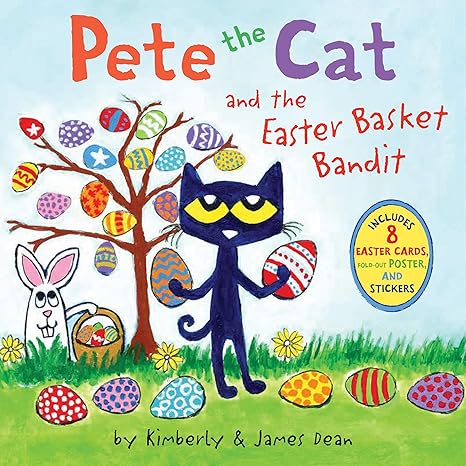
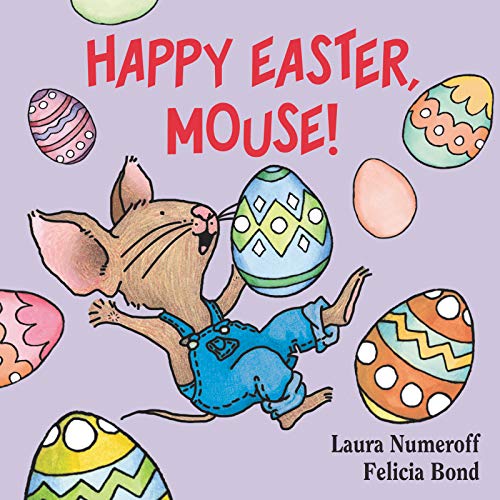
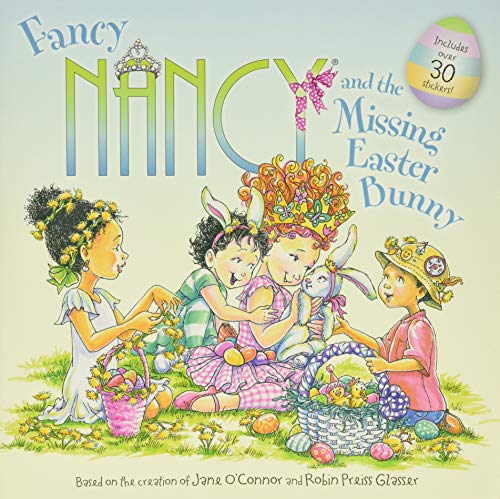
If you’ve seen a few other of my Easter blog posts, you’ll know that my favorite Easter book is How To Catch The Easter Bunny by Adam Wallace. I love the “How To Catch” books because they are a great way to get kids to love reading. The story is so fun and kids will be impatiently waiting to see if the Easter Bunny can be caught. You can also try reading some of these other popular Easter books:


More Easter Fun
- How to Make a LEGO Easter Basket (Free Printable Tag)
 Build an unforgettable LEGO Easter basket with LEGO Easter sets, DIY LEGO Easter eggs, and a printable Easter tag. A creative idea for kids who love building.
 - How To Do A Fizzy Bunny Experiment For EasterWatch bunny shapes bubble and sparkle in this fizzy bunny experiment for kids using baking soda, vinegar, glitter, and food coloring.
- How To Make Easter Basket Pudding CupsBuild adorable Easter Basket Pudding Cups with Peeps bunnies and candy eggs. This simple Easter treat for kids doubles as a fun spring dessert activity.
- How To Make Carrot Cake JarsThese carrot cake jars are a delicious Easter treat for kids. This simple Easter dessert is made with carrot cupcakes, pecans, buttercream, and chocolate.
- The Best Strawberry Funfetti BunniesThese strawberry funfetti bunnies are a delicious Easter dessert recipe. They are perfect for an Easter party, Easter dinner, and classroom parties.
- The Best Easter Bread Recipe (Pane di Pasqua)This Italian Easter Bread Recipe will make your Easter dinner fabulous! It is a soft, fluffy bread that’s perfect for Easter parties and Easter dessert boards.
- The Best Bunny Chocolate Spoons For EasterThese bunny chocolate spoons are an easy Easter dessert that everyone will love. Made with 4 ingredients, they are perfect for gifts and Easter basket fillers.
- The Best Chick-Themed Crafts and ActivitiesFind the best chick-themed crafts and activities! From handprint crafts to sensory bins, this list has the best chick activities that are perfect for spring.
- The Best Easter Peeps TreatsFind the best Easter peeps treats on this list that contains Easter desserts, such as cookies, cake, cupcakes, and more! These recipes are the perfect for any Easter party.
- The Best Bunny Treats For KidsThese bunny treats for kids make perfect Easter desserts and spring desserts. Kids and adults alike will devour these delicious Easter treats!
- The Best Chick Handprint CraftThis chick handprint craft is a beautiful keepsake craft for spring. It’s an easy craft for kids and saves your child’s handprint forever.
- The Best Cinnamon Sugar Bunny Twists For EasterThese cinnamon sugar bunny twists are an easy Easter dessert that will be loved by all of your Easter party guests. They are perfect for kids and adults alike.