

Fizzy Pot of Gold Experiment: A St. Patrick’s Day Science Experiment for Kids
February 1, 2026

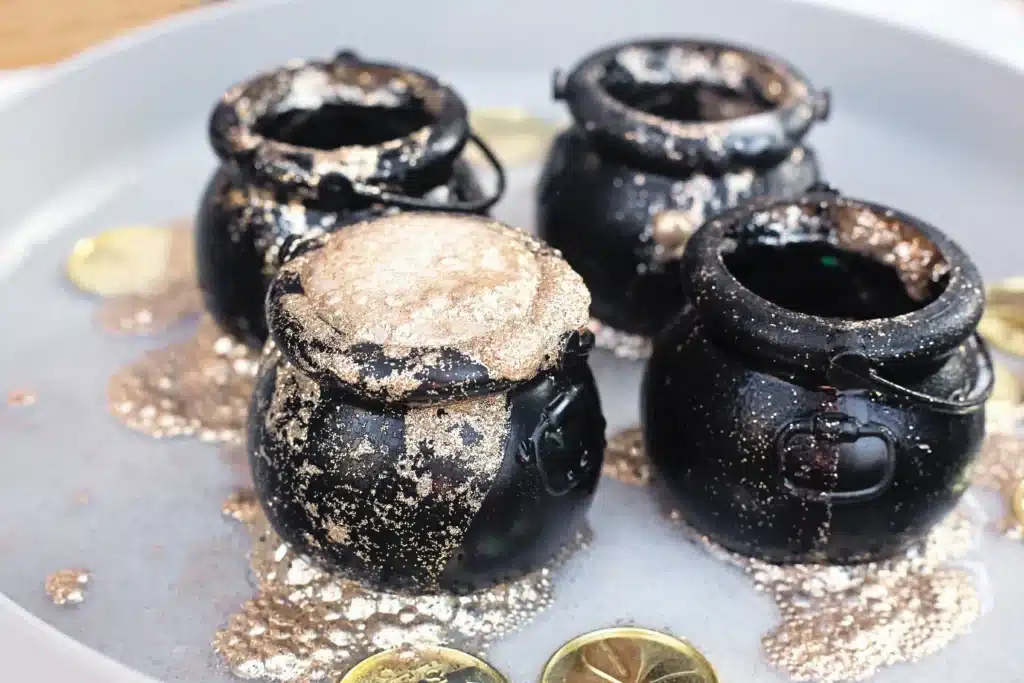
Baking soda volcanoes are a classic kids’ baking soda vinegar experiment, but things have moved so far beyond the standard paper mache volcano. This fizzy pot of gold experiment blends visual excitement with simple chemistry, making it an engaging St. Patrick’s Day activity for kids that is simultaneously magical and educational. Using small black pots, baking soda, vinegar, and fine gold glitter, this activity creates a bubbling reaction which, when it spills over the edges of the container, will leave shimmering “gold” behind. The result is a memorable St. Patrick’s Day science experiment that encourages curiosity, observation, and early scientific thinking.
This activity works well as a seasonal science invitation, a classroom experiment, or a themed exploration tied to St. Patrick’s Day traditions. The materials are simple, the setup is quick, and the reaction captures kids’ attention, guaranteed.
Supplies for the Fizzy Pot of Gold Experiment
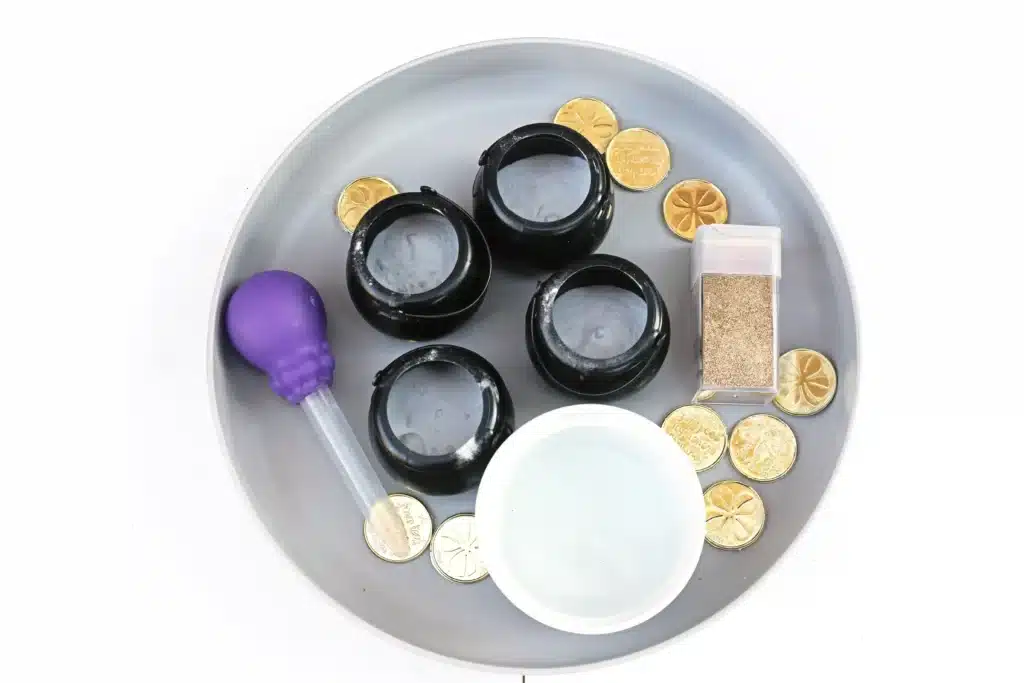
This St. Patrick’s Day science experiment for kids uses common household materials.
- Small black pots or containers (cauldron-shaped is ideal)
- Baking soda
- White vinegar
- Fine gold glitter
- Dropper or pipette
- Tray or shallow bin to catch overflow
The fine gold glitter works especially well, as its small size closely represents liquid gold and settles beautifully along the edges of the pot after the reaction.
How to Set Up the Fizzy Pot of Gold Experiment
This St. Patrick’s Day activity for kids is easy to prepare and works best on a protected surface.
1. Place the black pots in a tray or shallow bin to contain the fizzing overflow.
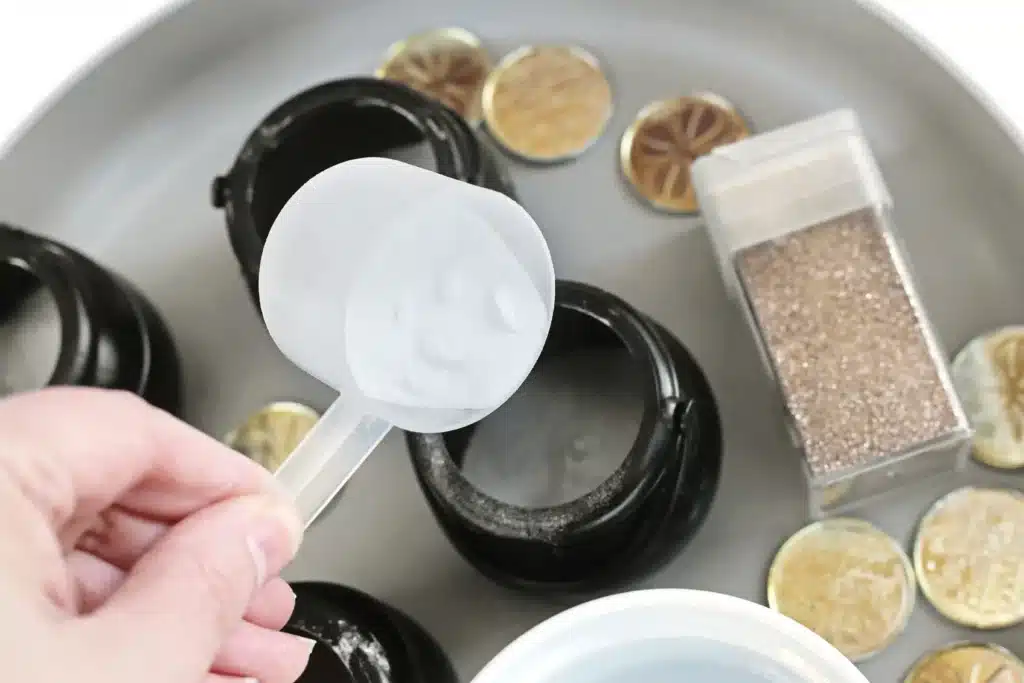
2. Add a scoop of baking soda to each pot, filling the bottom.
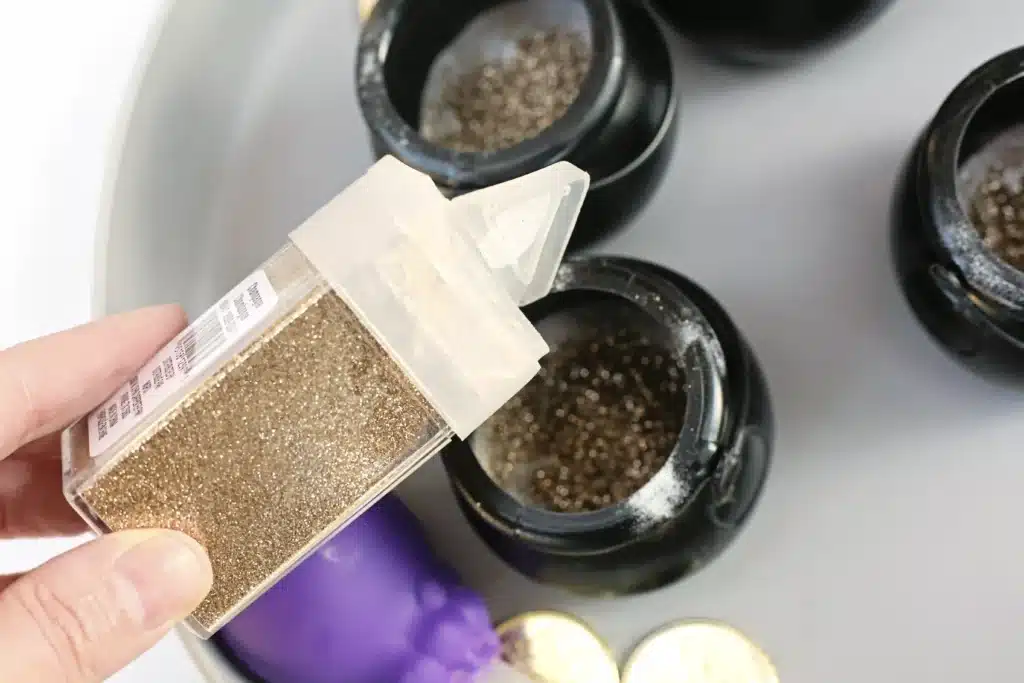
3. Sprinkle a small amount of fine gold glitter on top of the baking soda.
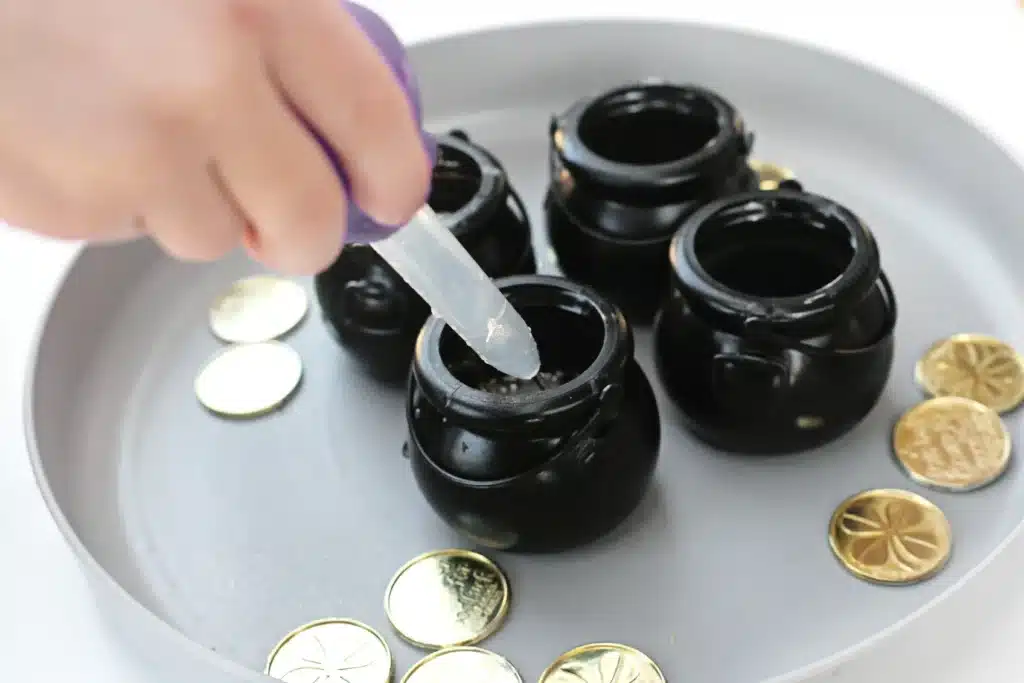
4. Fill a dropper with vinegar.
5. Squeeze the vinegar into the pot and observe the reaction.
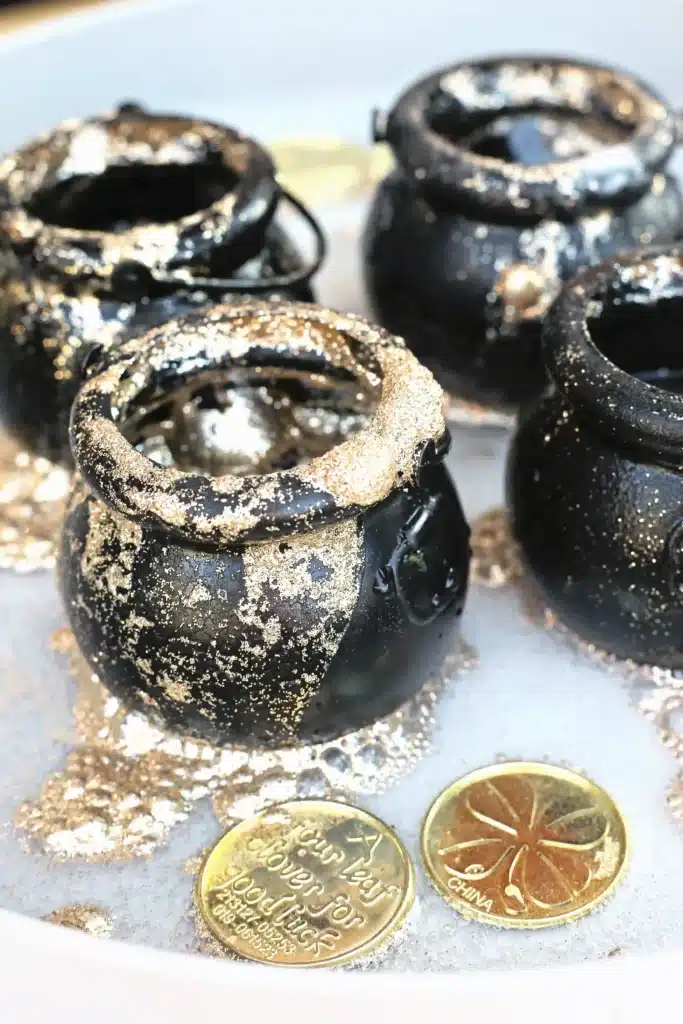
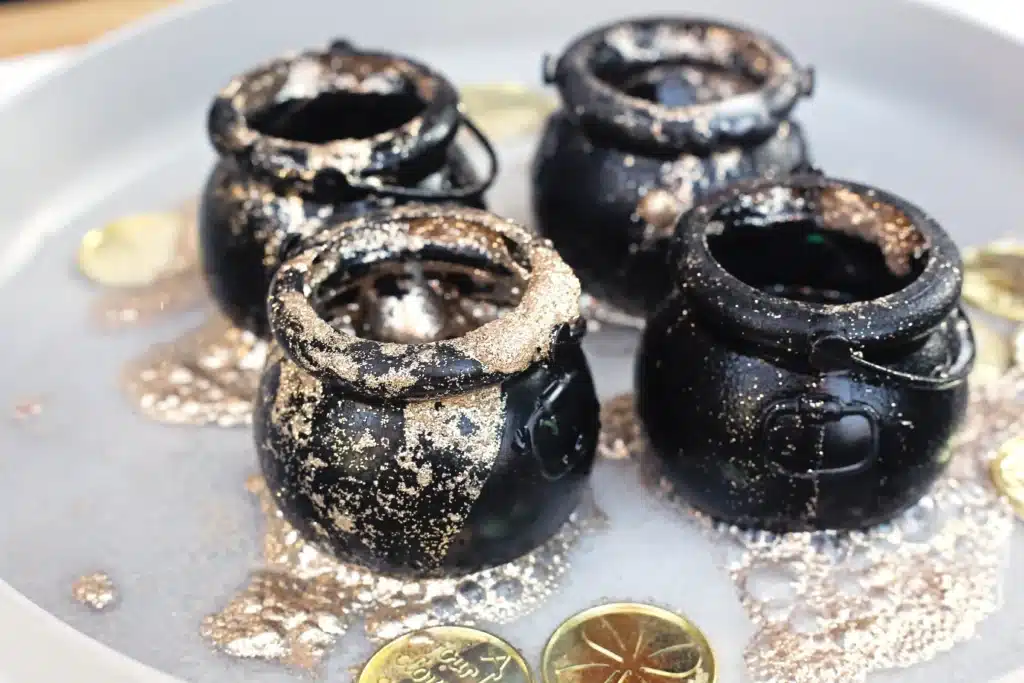
As the vinegar is added, the mixture begins to fizz and bubble, rising up and spilling over the edges of the pot. The bubbling action carries the glitter upward, leaving a drippy ring of “gold” around the rim and down the sides.
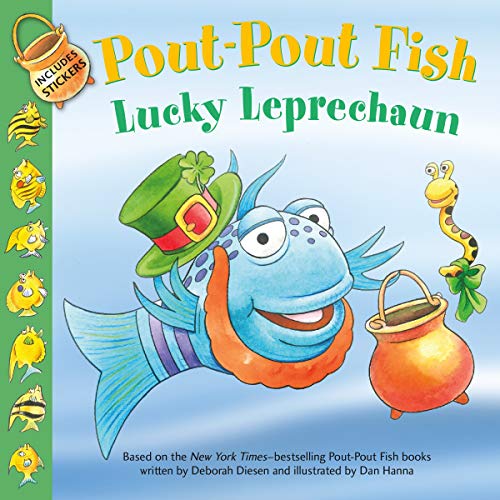
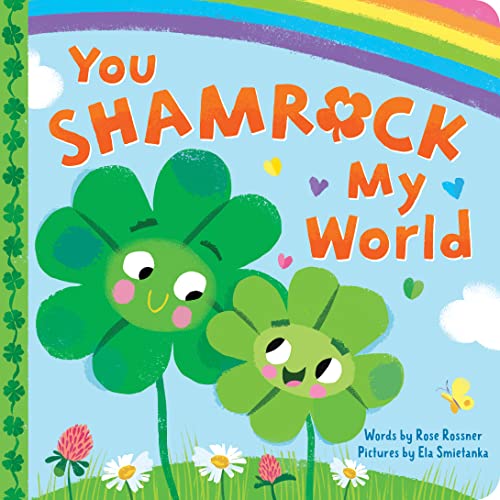
St. Patrick’s Day Books To Read After The Experiment


How Kids Interact With the Experiment
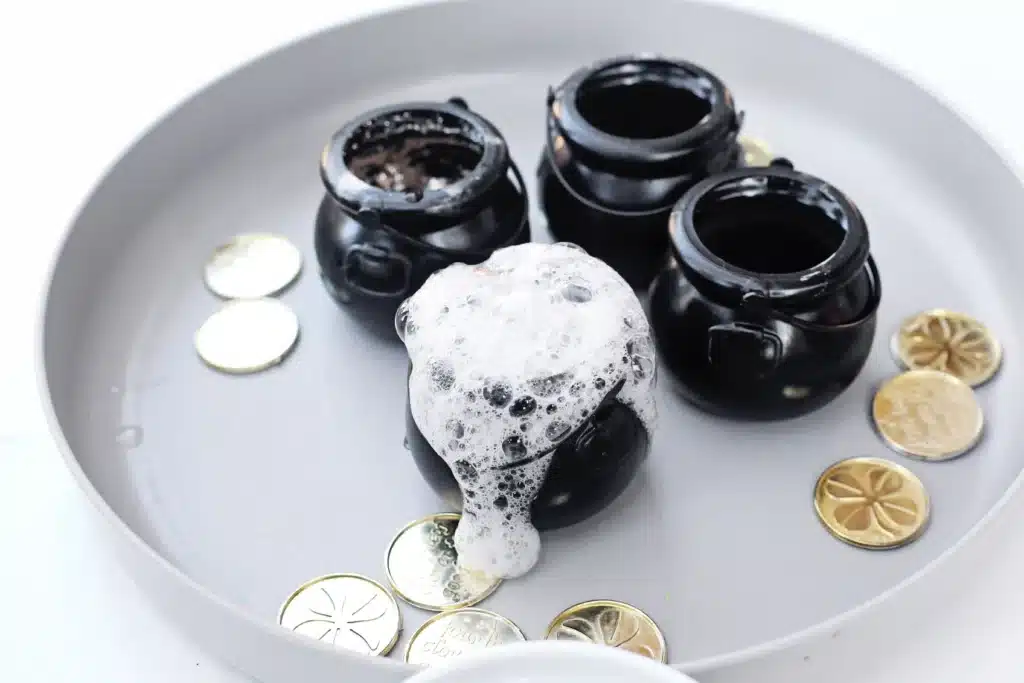
The fizzy pot of gold experiment encourages observation and exploration through repeated testing. Children often enjoy adding vinegar slowly to control the reaction or adding it more quickly to see how the intensity of the fizz changes. Using droppers adds an element of precision, supporting careful movement and focus.
This St. Patrick’s Day science experiment naturally leads to comparisons. Some pots may fizz higher than others depending on how much vinegar is added. Others may leave thicker rings of gold glitter, prompting discussions about cause and effect. The visual contrast between the black pot, white foam, and gold glitter keeps attention centered on the reaction.
The Science Behind the Fizzy Pot of Gold
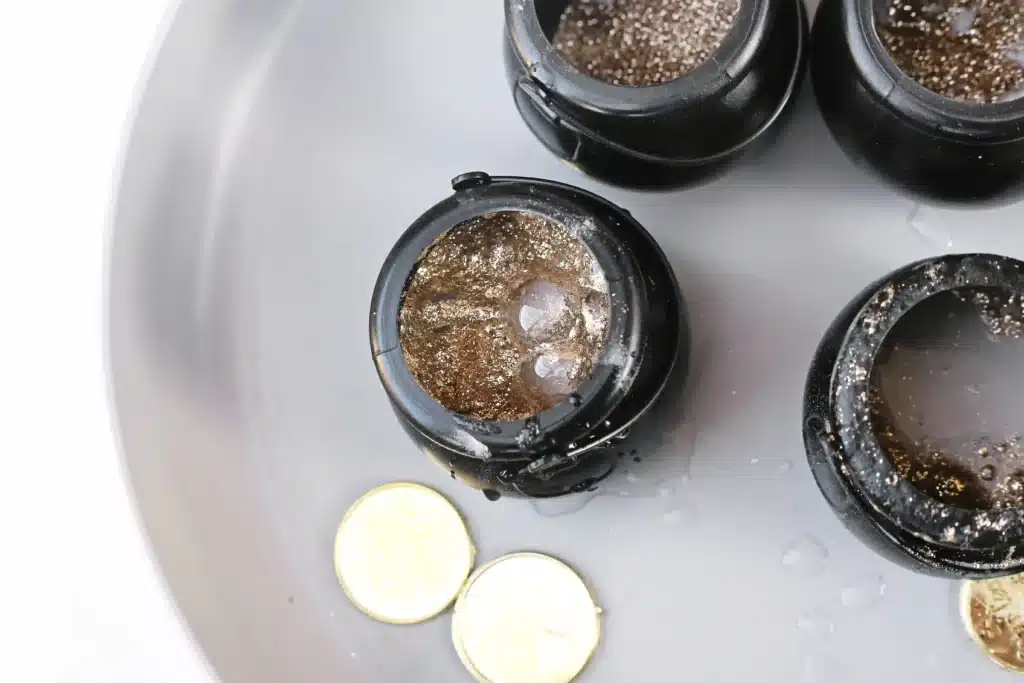
At the core of this St. Patrick’s Day science experiment for kids is a classic baking soda vinegar experiment. Baking soda is a base, and vinegar is an acid. When combined, they react to form carbon dioxide gas. This gas creates bubbles, which cause the mixture to expand and fizz upward.
As the bubbles rise, they push the fine gold glitter toward the surface and over the edges of the pot. Once the reaction slows and the foam settles, the glitter remains behind, creating the appearance of gold left behind after the bubbling ends.
This simple reaction introduces foundational science concepts such as chemical reactions, gas formation, and observable change. The St. Patrick’s Day STEM activity focuses on what can be observed rather than abstract explanations, making it well suited for early learners.
Benefits of the Fizzy Pot of Gold Activity
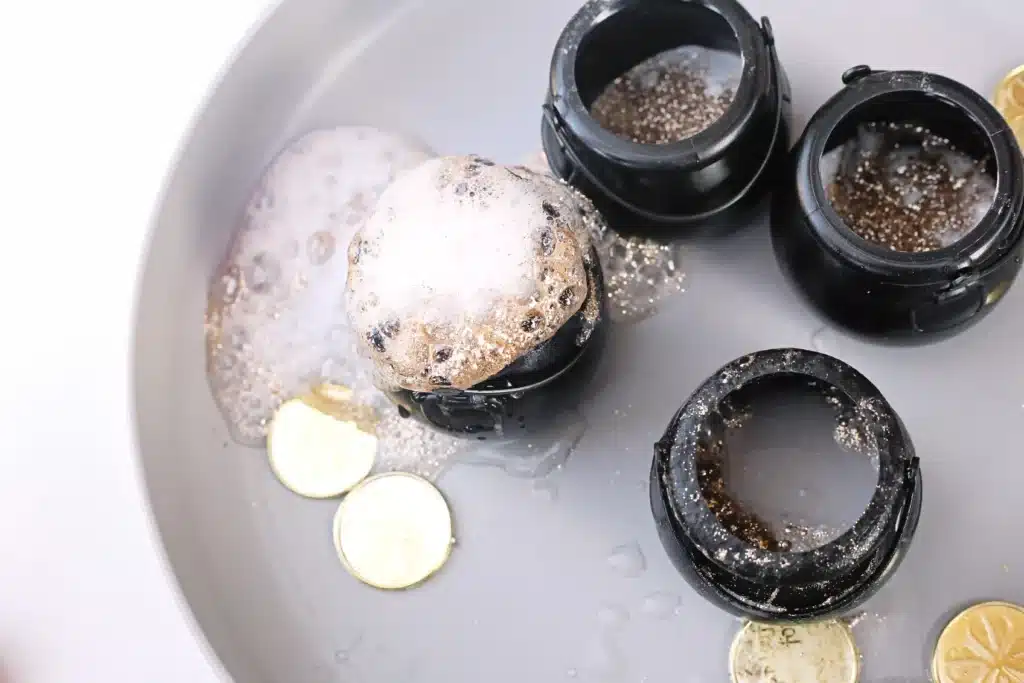
This St. Patrick’s Day activity for kids supports learning across several developmental areas.
- Science Exploration: Children observe a chemical reaction and its effects in real time. With repeat doses, the vinegar becomes super saturated, and stops reacting with the baking soda until more is added.
- Cause and Effect: Adjusting the amount of vinegar or baking soda changes the reaction.
- Fine Motor Skills: Using droppers strengthens hand control and coordination.
- Sensory Observation: The fizzing sound, bubbling motion, and visual contrast encourage focused attention.
- Early STEM Skills: The activity supports questioning, predicting, and testing outcomes.
As a St. Patrick’s Day science experiment, the activity blends seasonal interest with meaningful learning.
Extending the St. Patrick’s Day Science Experiment
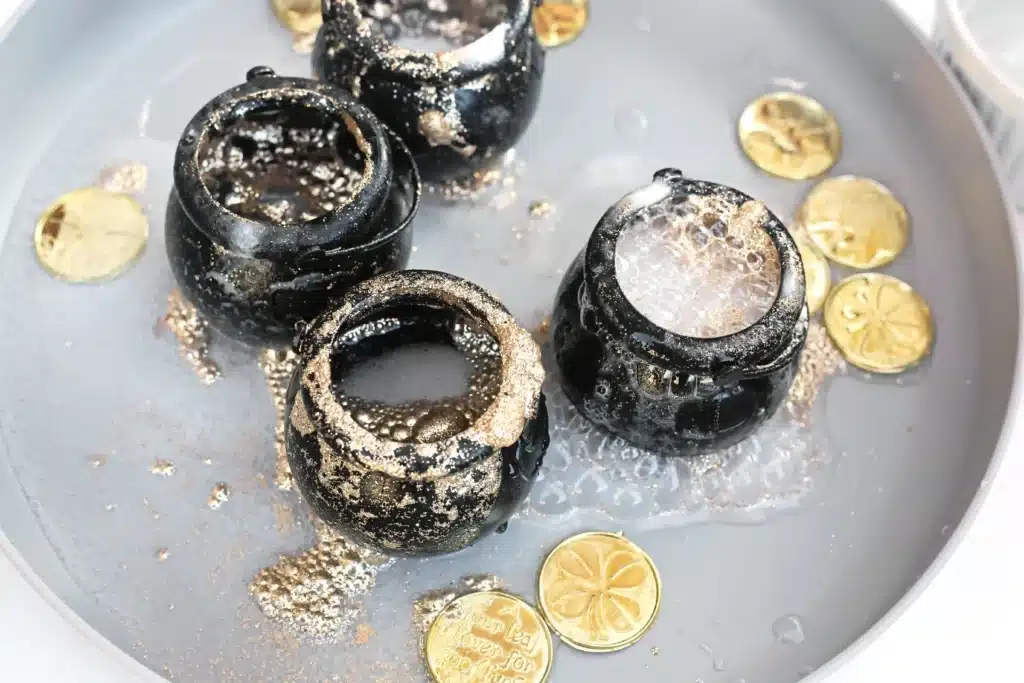
The fizzy pot of gold experiment can be expanded in several ways. Adding more baking soda after the initial reaction allows for repeated fizzing. Comparing different amounts of vinegar introduces early measurement concepts. Using multiple pots side by side encourages comparison and discussion.
The St. Patrick’s Day STEM activity can also pair well with St. Patrick’s Day tales or discussions about rainbows and pots of gold, creating a cross-curricular connection between science and seasonal themes.
Why This St. Patrick’s Day Activity for Kids Is Effective
The fizzy pot of gold experiment captures attention quickly while remaining grounded in real science. The bubbling reaction creates excitement, while the lingering gold glitter provides a clear visual result. This combination keeps focus on both process and outcome, supporting deeper understanding.
Because the materials are familiar and the steps are straightforward, the activity allows children to focus on observation rather than setup. The result is a St. Patrick’s Day science experiment for kids that is so very engaging, with sparkly gold everywhere.
More St. Patrick’s Day Fun!
- Lucky Charms Bark: A St. Patrick’s Day Recipe for Kids
 Lucky Charms bark brings rainbow magic to the dessert table. This St. Patrick’s Day treat for kids features creamy sweetness, bright cereal crunch, and a shimmering green finish that turns classroom parties and family celebrations into something unforgettable.
 - Lucky Charms Puppy Chow: A Magical St. Patrick’s Day Treat for KidsLucky Charms puppy chow is a sweet St. Patrick’s Day treat for kids with a crunchy coating and a touch of gold sparkle. It’s an easy no-bake party snack.
- The Best St. Patrick’s Day Craft: Leprechaun LookersMake these adorable leprechaun lookers – made with simple materials, this DIY St. Patrick’s Day craft will keep kids exploring for hours.
- Edible St. Patrick’s Day Sensory Bin: A Hands-On Sensory Exploration Through PlayThis edible St. Patrick’s Day sensory bin combines sensory play with cognitive development, making it a safe and beneficial St. Patrick’s Day activity for kids.
- The Best St. Patrick’s Day Treats for KidsCelebrate St. Patrick’s Day with a little extra sweetness! These 13 St. Patrick’s Day treats for kids are fun, colorful, and easy to make.
- The Best St. Patrick’s Day Snack: Lucky Charms Yogurt CloversLucky Charms yogurt lovers are a fun and easy treat for kids made with yogurt and cereal. They are perfect for St. Patrick’s Day snacks, classroom treats, or simple holiday fun.
- The Best St. Patrick’s Day Crafts for KidsA full list of fun and easy St. Patrick’s Day crafts for kids that are perfect for classrooms, preschool, and simple holiday crafting.
- The Best Easy Rainbow Art Projects for St. Patrick’s DayExplore fun rainbow art projects for St. Patrick’s Day, perfect for kids, classrooms, and easy holiday crafting.
- The Best Paper Plate Crafts for St. Patrick’s DayDiscover fun and easy paper plate crafts for St. Patrick’s Day, perfect for kids, classrooms, and simple holiday crafting.
- Printable St. Patrick’s Day Favor Tags: A Simple Rainbow Treat Idea for KidsThese St. Patrick’s Day gift ideas include printable favor tags paired with an easy rainbow treat made with Skittles and Rolos for holiday celebrations.
- The Best Rainbow Cloud Craft For KidsThis rainbow cloud craft is a fun and easy activity for kids, perfect for spring, weather lessons, and colorful classroom or at-home crafting.
- Pot of Gold Playdough Tray: A St. Patrick’s Day Sensory Activity for KidsA pot of gold playdough tray is a fun St. Patrick’s Day sensory activity for kids using yellow playdough, gold coins, rainbow pipe cleaners, and small pots.












Leave a Reply