
Fizzy Candy Hearts Experiment: An Easy Valentine STEM Activity for Kids
January 24, 2026
This post may contain affiliate links. Please read our disclaimer policy for details.

While it sounds like the latest thing at the sweet shop, the fizzy candy hearts experiment is actually a learning experience. It blends simple chemistry with hands-on discovery, making it a memorable valentine STEM activity for kids. Using common household materials and classic candy hearts, this Valentine’s Day science experiment transforms a simple plastic tray into a bubbly learning experience. As vinegar meets baking soda, a colorful fizzing reaction unfolds, encouraging observation, prediction, and curiosity. This candy hearts activity supports early science skills while keeping the focus on exploration.
This post contains affiliate links. I earn a small commission if you choose to purchase, at no extra cost to you!
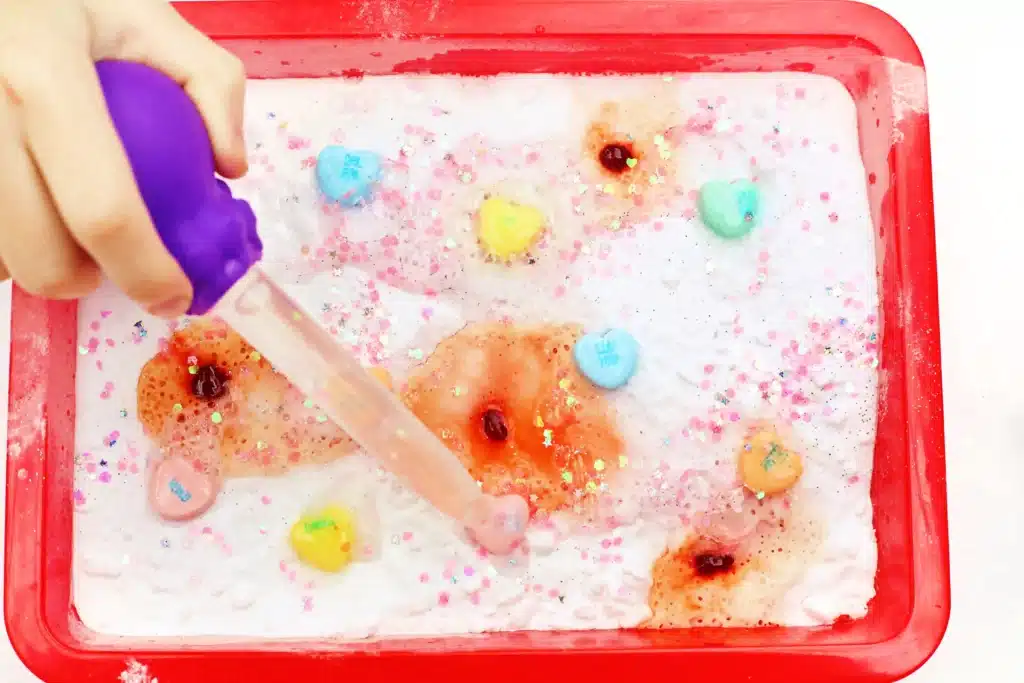
Valentine-themed learning experiences don’t often enter the realm of science. But this activity introduces STEM concepts in a way that is accessible and inviting, especially for preschool and elementary-aged learners. With minimal setup and plenty of visual feedback, the fizzy candy hearts experiment is great for classrooms, homeschool settings, and small group learning environments.
Valentine STEM Activity Setup Using Candy Hearts
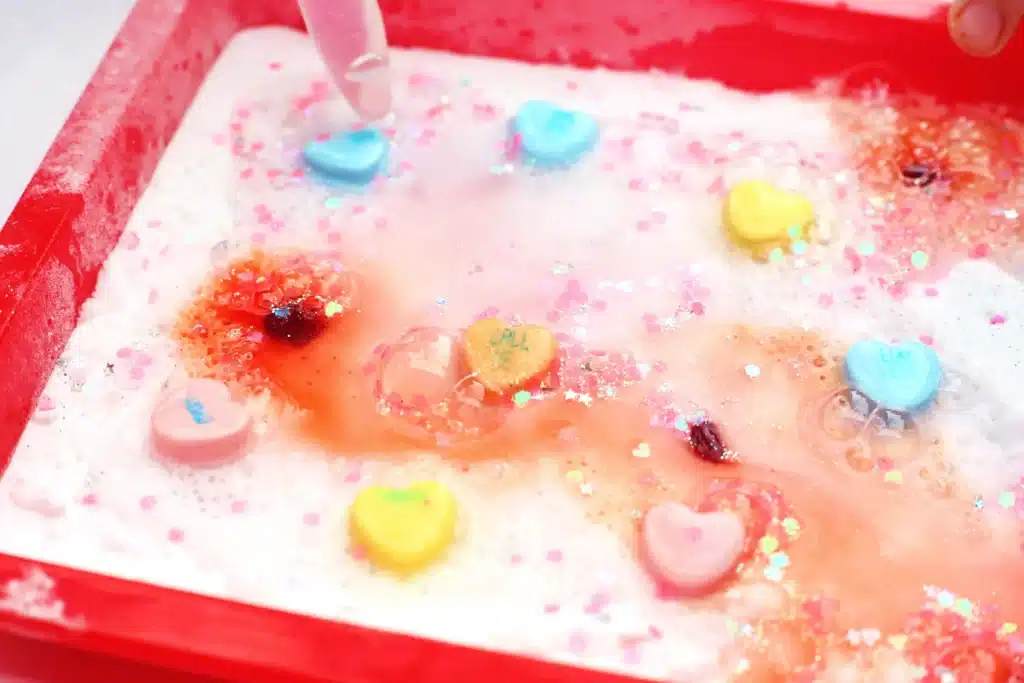
This valentine STEM activity begins with a shallow tray that serves as the experiment surface. A layer of baking soda creates the base for the chemical reaction. Candy hearts are placed directly on top, acting as both decoration and focal point. Glitter and food coloring add visual interest and help highlight movement during the reaction.
The experiment comes to life when vinegar is added. Each drop triggers bubbles as carbon dioxide gas forms, lifting glitter and spreading color across the tray. The slow, controlled addition of vinegar allows kids to observe cause-and-effect relationships while they drop it in.
Supplies for the Fizzy Candy Hearts Experiment
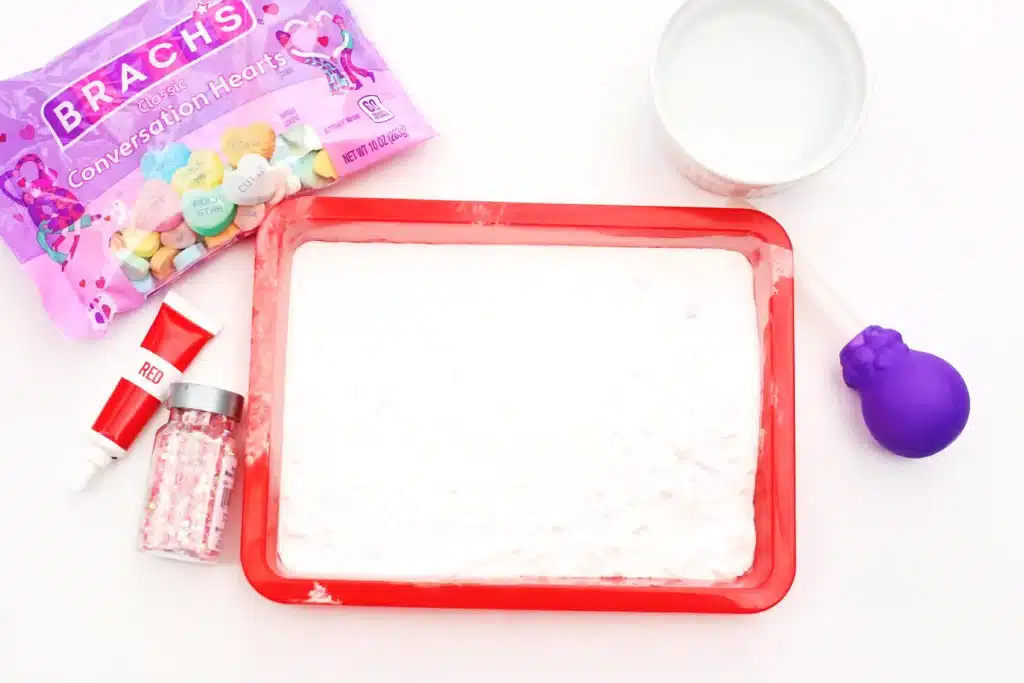
- Baking soda
- Candy hearts
- White vinegar
- Food coloring
- Glitter
- Shallow tray or dish
- Dropper or pipette
All materials are easy to source, making this Valentine’s Day activity for kids practical for repeated use. Droppers encourage fine motor practice and control, while the tray helps contain the reaction for easier observation and cleanup.
Valentine’s Day Science Experiment Instructions
1. Pour baking soda into the tray, spreading it evenly across the bottom.
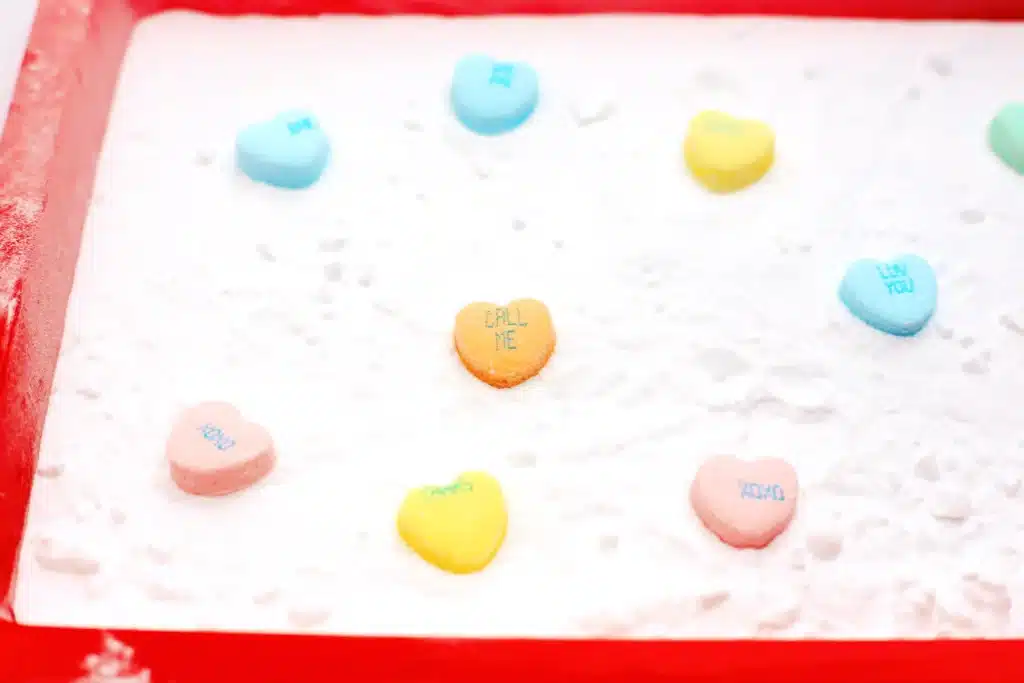
2. Place candy hearts on top of the baking soda layer.
3. Sprinkle glitter over the tray for visual texture.
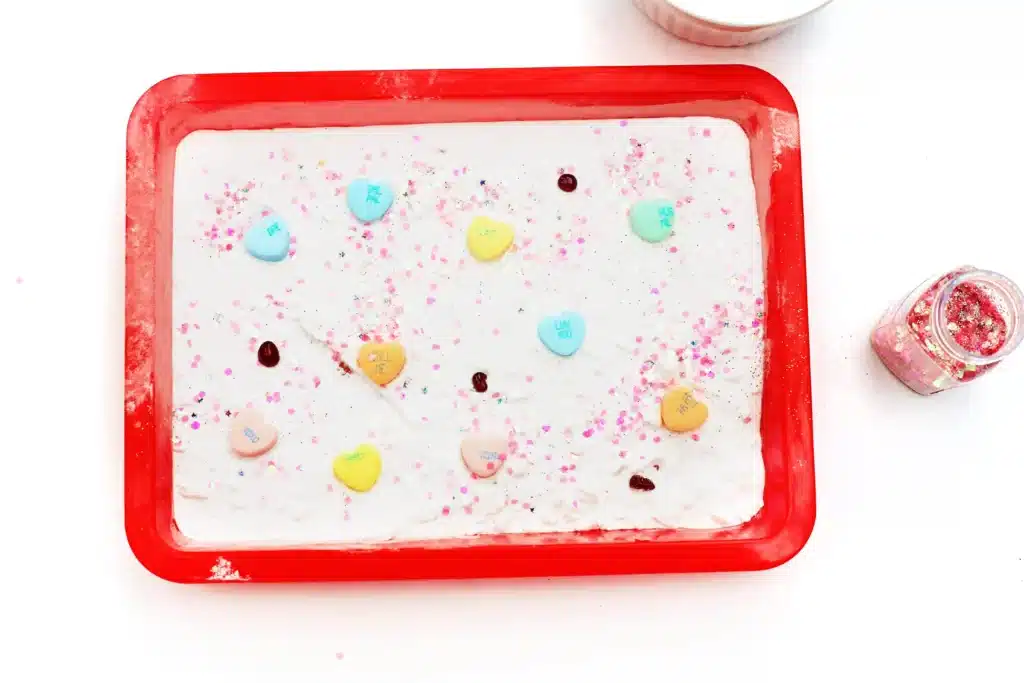
4. Add several drops of food coloring, scattered around the candy hearts.
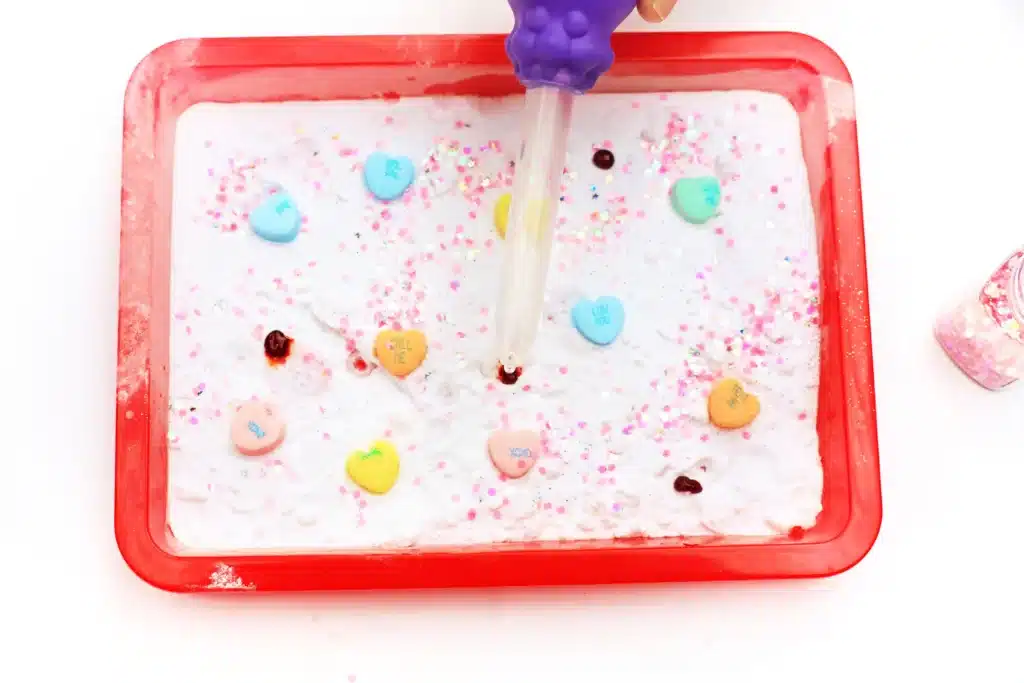
5. Fill a dropper with vinegar.
6. Slowly squeeze drops of vinegar onto the baking soda and candy hearts.
7. Observe the fizzing reaction as bubbles form.
Repeating the process with different color combinations or varying the placement of vinegar adds opportunities for comparison and discussion.
The Science Behind This Valentine STEM Activity
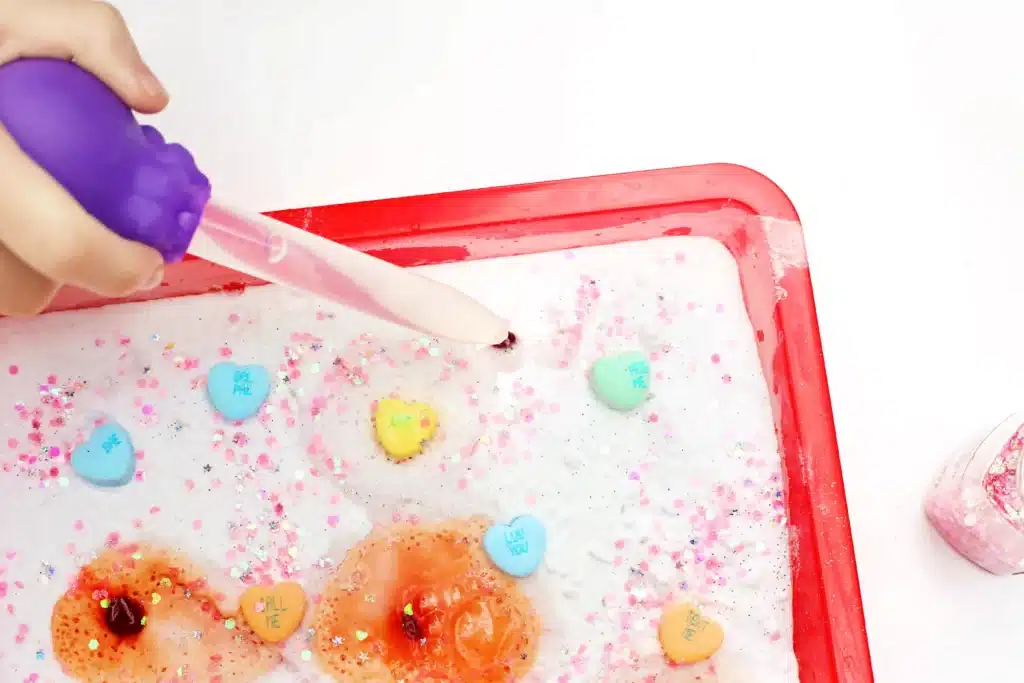
The fizzy candy hearts experiment demonstrates a classic acid-base reaction. Baking soda is a base, while vinegar is an acid. When combined, the two substances react to form carbon dioxide gas. This gas escapes as bubbles, creating the fizzing effect seen across the tray.
The glitter and food coloring make the reaction more visible, allowing movement and expansion to be observed clearly. Candy hearts do not affect the reaction, but they provide a focal point. This can help little learners focus attention on specific areas of the tray. Over time, the candy hearts will begin to dissolve slightly, introducing discussions about solubility and material changes.
This Valentine’s Day science experiment supports early chemistry concepts without requiring technical vocabulary. The focus remains on observation and explanation.
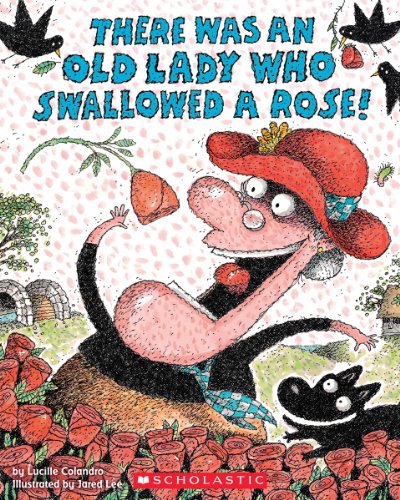
Valentine Books To Read After Your Valentine’s Day Experiment




How Kids Learn Through the Candy Hearts Activity
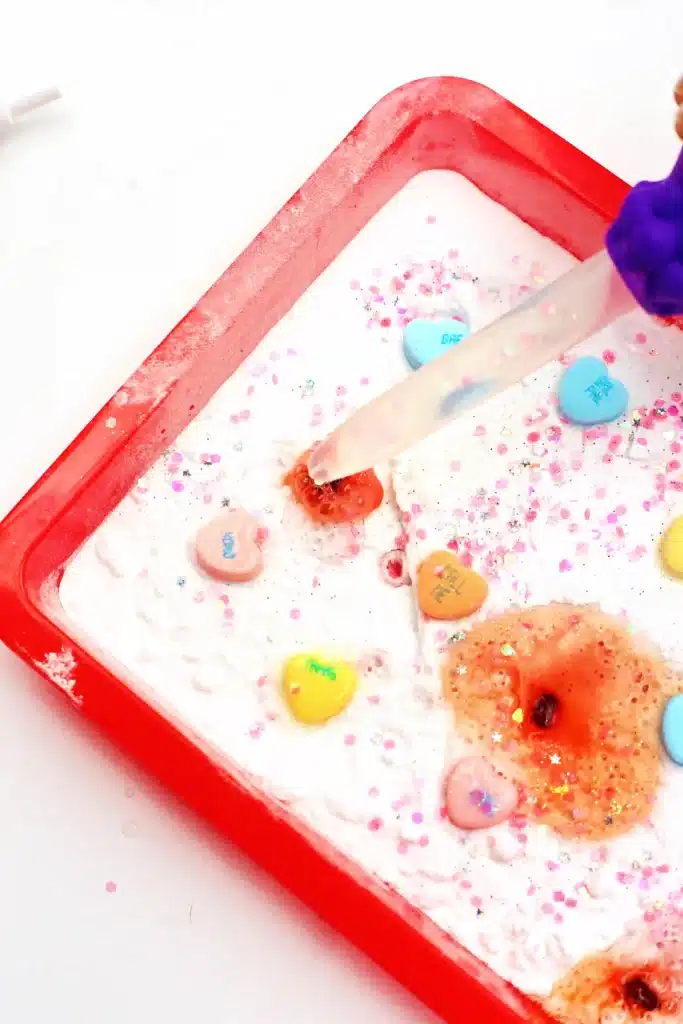
This candy hearts activity encourages active learning through experimentation. Kids observe what happens when vinegar contacts baking soda and can practice describing what is going on. Cause-and-effect relationships are evidenced as each drop produces an immediate response.
The dropper promotes fine motor development and hand strength. Visual learners benefit from the color movement, while tactile learners remain engaged through hands-on interaction. Language development is supported as kids describe bubbling, color spreading, and changes in texture.
Problem-solving skills also play a role. Adjusting the rate of vinegar or choosing different areas of the tray leads to varied results. These changes open the door to discussions about variables and outcomes, meaning this valentine science activity lays the groundwork for future STEM learning.
Educational Benefits of This Valentine’s Day Activity for Kids
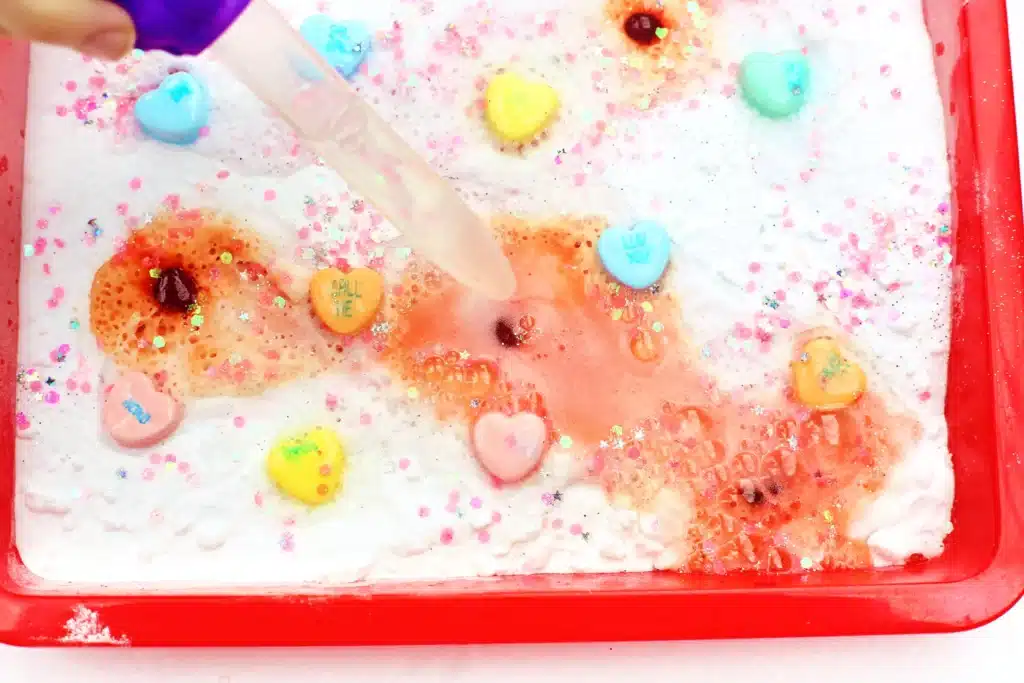
This Valentine’s Day activity for kids supports learning across multiple areas while keeping the focus on hands-on exploration.
- Introduces basic chemistry concepts through direct observation
- Supports fine motor skill development using droppers
- Encourages prediction, experimentation, and discussion
- Reinforces cause-and-effect relationships
- Provides a low-pressure introduction to STEM learning
- Works well for mixed-age groups
This valentine STEM activity fits seamlessly into themed learning weeks just as easily as standalone science lessons. The simplicity of the setup allows attention to remain on the process rather than on complicated instructions.
Extending the Valentine’s Day Science Experiment
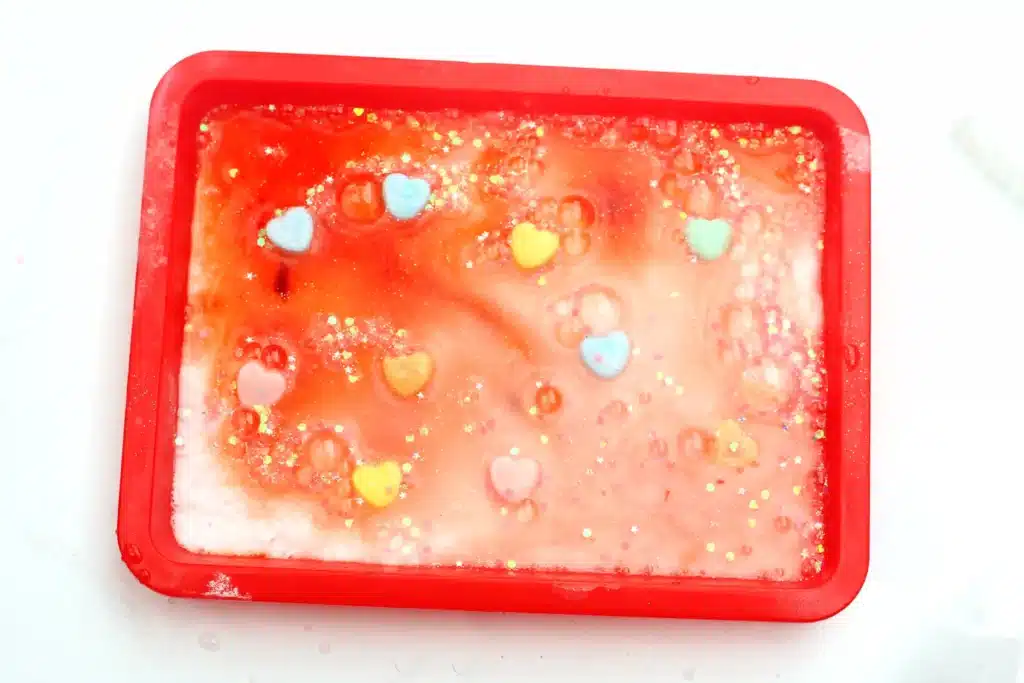
The fizzy candy hearts experiment can be expanded in several ways. Comparing reactions using different liquids such as lemon juice introduces new variables. Timing how long fizzing lasts supports early math skills. Sorting candy hearts by color or size before placement connects the activity to classification practice.
Documenting observations with drawings or dictated notes adds a literacy component, creating a well-rounded Valentine’s Day activity for kids that supports multiple learning domains.
Final Thoughts on This Valentine STEM Activity
The fizzy candy hearts experiment offers a meaningful way to connect Valentine’s Day themes with science exploration. Through simple materials and clear reactions, this Valentine’s Day science experiment supports curiosity, observation, and early STEM thinking in an approachable format. The combination of color, movement, and hands-on interaction keeps attention focused while reinforcing foundational concepts. As a candy hearts activity, it fits naturally into seasonal learning while maintaining strong educational value.
More Valentine’s Day Fun!
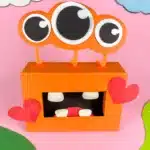
- The BEST DIY Valentine’s Day Craft: monster valentine box
 Make this monster valentine box that is one of the most unforgettable Valentine box ideas! This monster craft is so cute & will be the talk of the school!
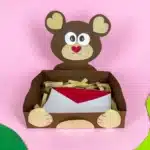
 - The Best Valentine’s Day Craft Idea: Bear Valentine BoxMake this adorable Valentine’s Day craft for your classroom Valentines exchange! This bear valentine craft is one of the best valentine box ideas!
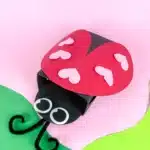
- The Best Valentine’s Day Crafts: ladybug Valentines BoxMake the cutest ladybug valentines box using a recycled box, pipe cleaners, and construction paper. This Valentine’s Day craft is perfect for classroom valentine exchanges.
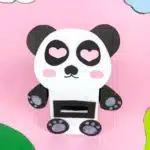
- The Best Valentine’s Day Box Idea: panda valentines boxCreate a DIY panda Valentines box for a fun and easy classroom exchange. Kids will love making and using this adorable panda Valentine’s Day craft!
- The Best Valentine’s Day Box IDea: Butterfly Valentines boxThis butterfly Valentines box is an easy kids craft for classroom Valentine exchanges, school parties, and Valentine’s Day activities.
- The Best Valentines Box Idea: Bunny Valentines boxThis bunny valentines box is a fun and easy craft for kids and is the perfect addition to Valentine’s Day classroom exchanges and school parties.
- The Best Valentine’s Day Craft: Bee Valentines BoxThis bee Valentines box is a fun and easy Valentine’s Day craft for kids, perfect for Valentine’s Day classroom exchanges and school parties.
- The Best Valentine’s Day Craft: sloth Valentine boxMake a sloth Valentine box for kids with this easy Valentine’s Day craft using materials you already own that is perfect for classroom valentines exchanges.
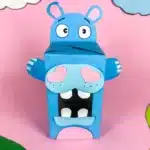
- The Best Hippo Valentine Box: A Fun Valentine’s Day CraftMake a hippo Valentine box for kids with this easy Valentine’s Day craft, great for classroom exchanges.
- The Best Valentines Resources for First Grade and KindergartenFind the best math and literacy Valentine’s Day resources for kindergarten and first grade, perfect for classroom activities and centers.
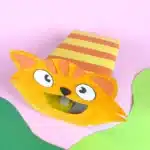
- The Best Valentine’s Day Craft For Kids: Cat Valentine BoxThis cat Valentine box is a fun and easy craft for kids, perfect for Valentine’s Day classroom exchanges and school parties.
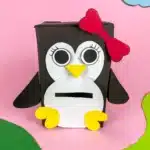
- The Best Valentine’s Day Craft for kids: Penguin Valentine boxThis penguin Valentine box is a fun and easy craft for kids, perfect for Valentine’s Day classroom exchanges and school parties.


Leave a Reply