

The Best Valentine’s Day Sensory Bin Using Rose Petals
December 22, 2025

A Valentine’s Day sensory bin is one of those activities that instantly transforms a routine morning into something magical. The moment children see a bin filled with rose petals, soft pom poms, and cheerful shades of pink and red, they are drawn in. Sensory bins invite curiosity, encourage hands-on exploration, and provide a comforting, open-ended way to learn through play. This rose petal sensory bin is simple to assemble and beautifully thematic, making it perfect for classroom centers, early finisher activities, morning invitations, or quiet play at home.
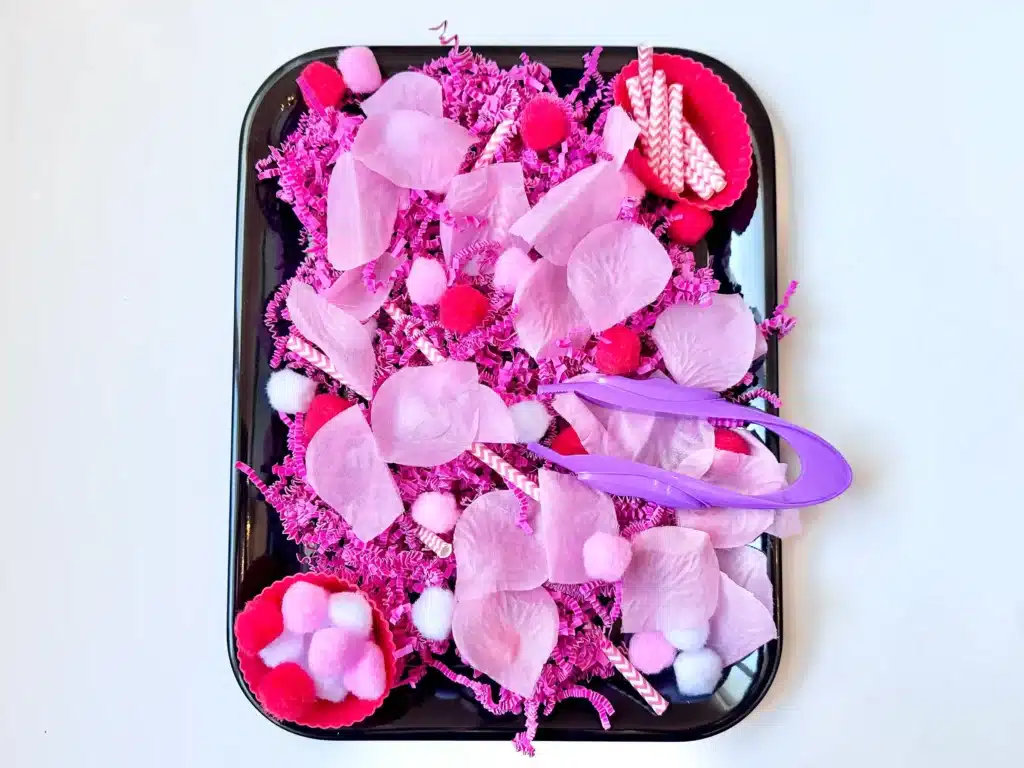
What makes this bin especially charming is the combination of textures. The silky rose petals, fluffy pom poms, crinkly paper shreds, and smooth paper straws create a sensory experience that is both calming and energizing. Children can scoop, sort, snip, pinch, and pour—each action building fine motor strength and hand-eye coordination. The colors themselves feel like Valentine’s Day: a mix of red, pink, and white that sets a warm, joyful tone.
How To Make This Valentine’s Day Sensory Bin
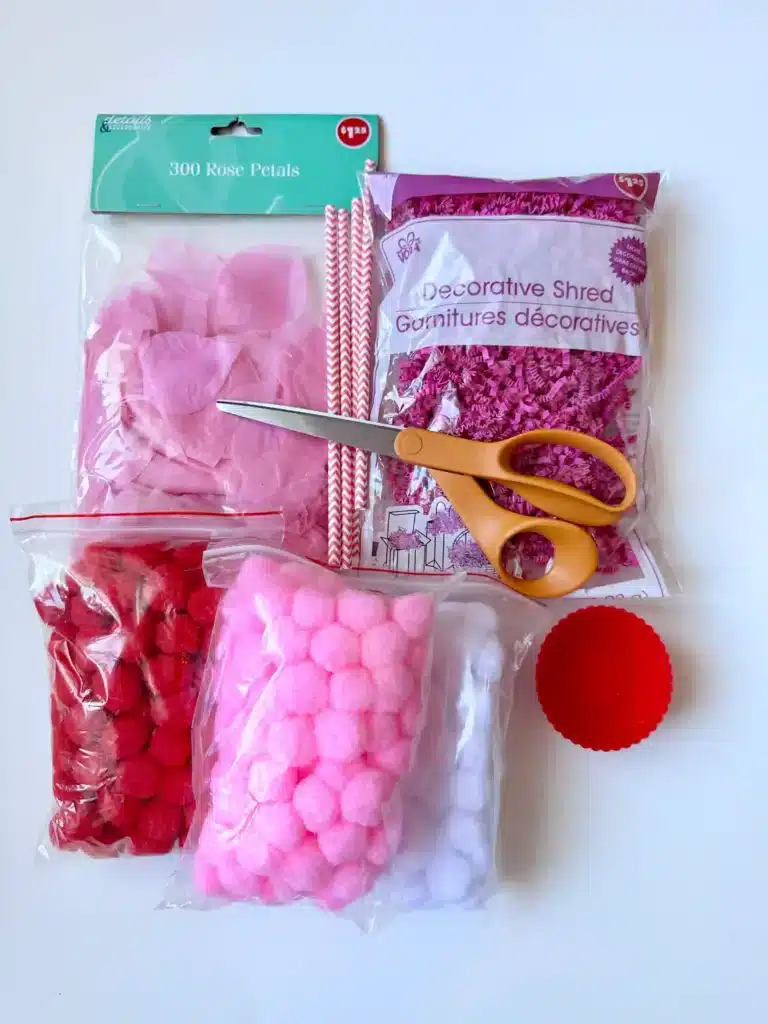
Preparing this sensory bin requires only a handful of inexpensive materials, many of which can be found at the Dollar Tree. The supply list includes rose petals, pom poms in red, pink, and white, paper straws, silicone muffin tins, scissors, and hot pink paper shreds. Once everything is gathered, assembly takes only a few minutes. Spread the paper shreds across the bottom of your bin or tray, sprinkle the rose petals throughout, and nestle the pom poms in between the layers. Cut the paper straws into various lengths and scatter them around for added interest. Place the muffin cups and scissors on one side, and the bin is ready for play.
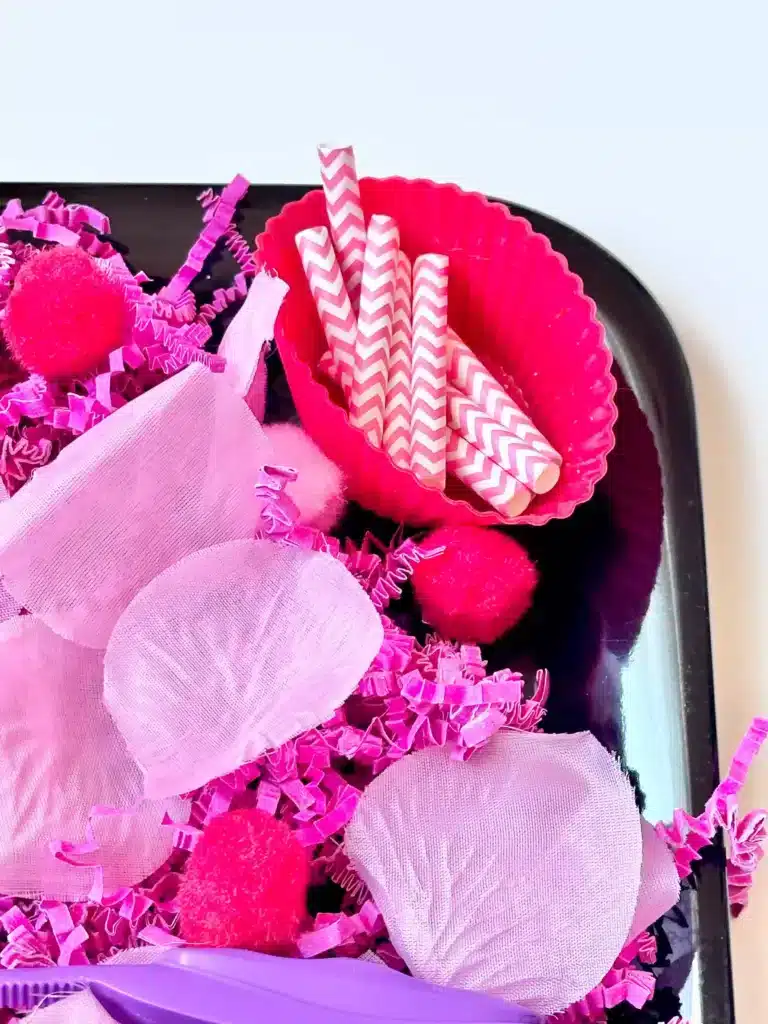
The beauty of sensory play is that children instinctively know what to do. Some will immediately begin sorting pom poms by color or size. Others will cut the paper straws into tiny pieces, delighted by the snipping sound. Some children will gather rose petals into pretend bouquets, place pom poms into muffin cups to make “cupcakes,” or use the straws as pretend candles. These imaginative stories and playful actions are not just adorable—they are meaningful. Every pinch, cut, scoop, and grab strengthens small muscles needed for writing, cutting, zippering, and tying shoes.
Why Parents and Teachers Love This Sensory Bin
This sensory bin is also an appealing way to support cognitive skills such as sorting, comparing, and pattern creation. Children can group pom poms by color or size, arrange petals into patterns, or sort cut straw pieces by length. Some children enjoy counting how many petals they can find or predicting which items are easiest to pick up with tongs or tweezers. These early math experiences are woven naturally into the bin without the pressure of formal instruction, making learning feel organic and child-driven.
Task completion is another important skill built through sensory play. The bin invites children to start a small project—such as filling a muffin cup, creating a color-sorted pile, or cutting all the straws—and stick with it until they feel satisfied. These tiny moments of purposeful work help children develop stamina and self-direction. Over time, they build confidence in their ability to see a task through from beginning to end, which is essential across all academic areas.
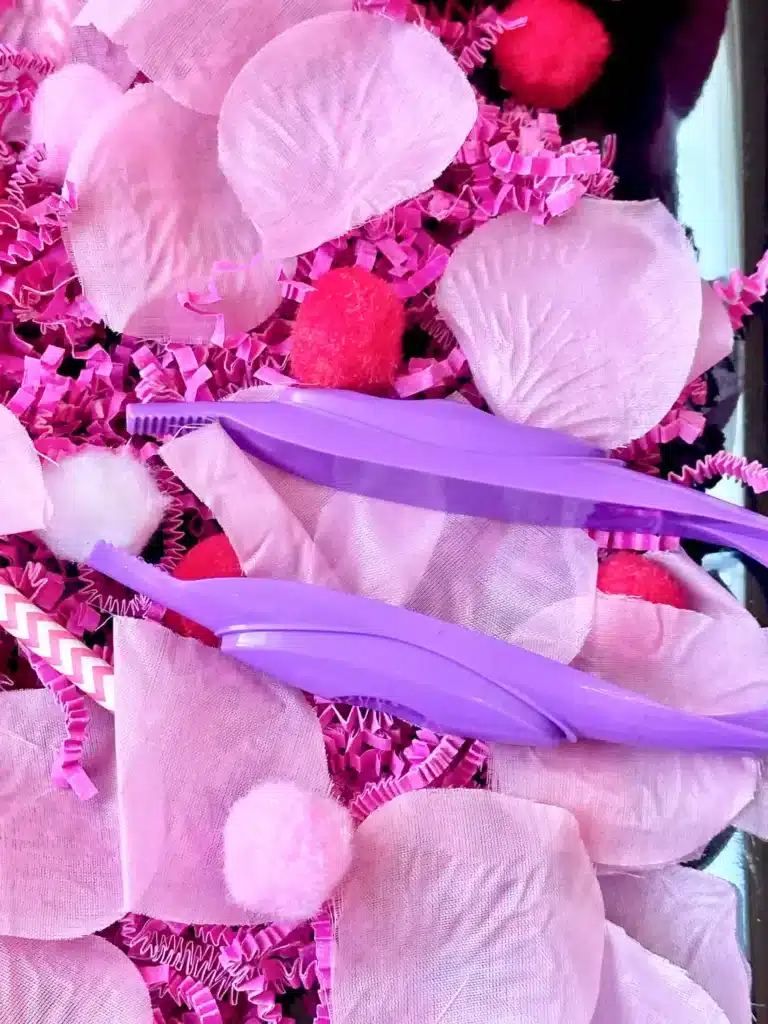
This sensory bin also encourages children to follow simple directions when used in a structured setting. You might give instructions like “find three red pom poms,” “cut five straws,” or “fill one muffin tin with only pink items.” These prompts help children practice attending to instructions, processing them, and responding correctly. They also provide gentle opportunities for teachers to model vocabulary like petals, shreds, scoop, sort, pinch, soft, fluffy, and silky. Exposure to sensory vocabulary enriches language development and gives children new words to describe what they feel and observe.
Beyond academics, this bin offers calming sensory input. The soft textures and repetitive movements can be grounding for children who need a quiet moment or a smooth transition into the day. Sensory play is often used as a regulation tool, helping children settle into learning, release extra energy, or refocus after high-stimulation activities. The colors and textures of this Valentine’s Day bin create a soothing, inviting space that many children gravitate toward.
Benefits of the valentine’s Day Sensory Bin Supplies
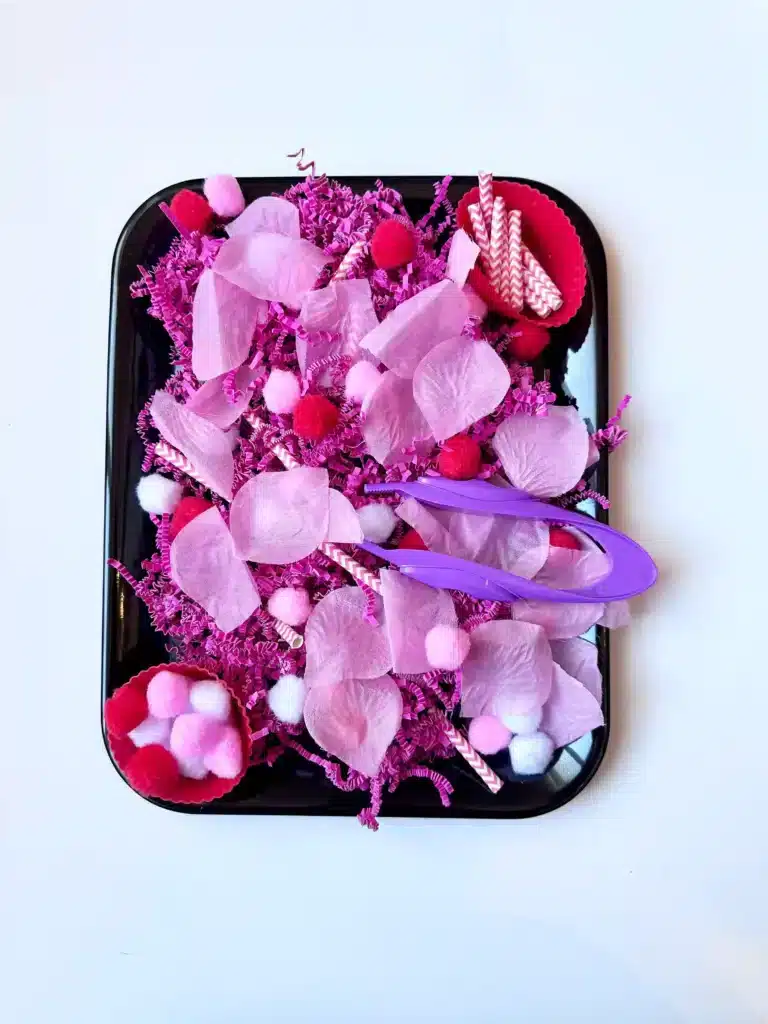
The rose petals in particular add something special. They introduce an element of pretend play—children often treat them as real petals and use them to create Valentine’s “gifts,” decorate pretend cakes, or gather them carefully into piles. This encourages storytelling, imaginative thinking, and social play when children collaborate. The petals also move differently than typical sensory fillers, catching air lightly when tossed or brushed aside. Their glide and softness add a unique tactile experience not often found in everyday classroom materials.
The paper straws offer a different form of engagement. Cutting straws is an excellent precursor to snipping paper, and children love the satisfying spring they feel when the scissors make contact. Straw pieces can become pretend sprinkles, beads, or decorations. They can be threaded onto pipe cleaners, sorted by length, or counted into muffin cups. Every variation introduces more opportunities for problem-solving, prediction, and fine motor refinement.
The pom poms and paper shreds contribute additional sensory variety. Pom poms are perfect for grasping, transferring, and counting. Paper shreds create a textured base that encourages children to dig, uncover items, and hide treasures for a friend to find. These interactions deepen sensory exploration and keep the bin engaging even after many uses.
Extend the Learning
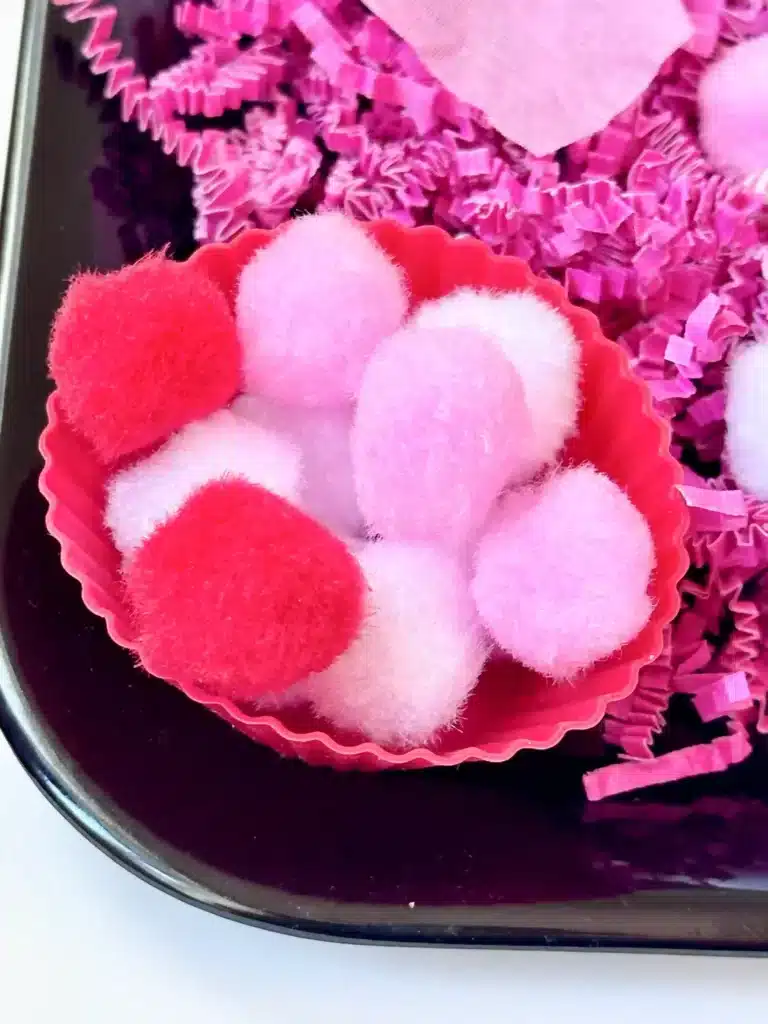
Teachers and parents can extend the learning with simple invitations to play. For example, children might create color-coded “desserts” in the muffin cups, make patterns with straw pieces, or count how many petals they can hold in one hand. You can add tongs or scoops to strengthen hand muscles further. For literacy practice, children can sort items that begin with the same letter sound or make a heart-shaped trail using petals and pom poms.
This bin also pairs beautifully with Valentine’s Day books such as The Day It Rained Hearts, Love Is, or Llama Llama I Love You. Reading before or after sensory play helps children make connections between text and hands-on experiences. They might gather petals just like in the story, create pretend valentines, or talk about how characters in the book show love and kindness—concepts that fit perfectly with the warm, nurturing spirit of Valentine’s Day.
Once playtime is over, cleanup is simple. Pour everything back into a large zip-top bag or storage bin and save it for future use. Sensory bins like this hold up well and can be used again and again throughout February. You can refresh it with new tools, different colored pom poms, or heart-shaped containers to keep it feeling exciting.
A Fun and Meaningful Valentine’s Day Activity
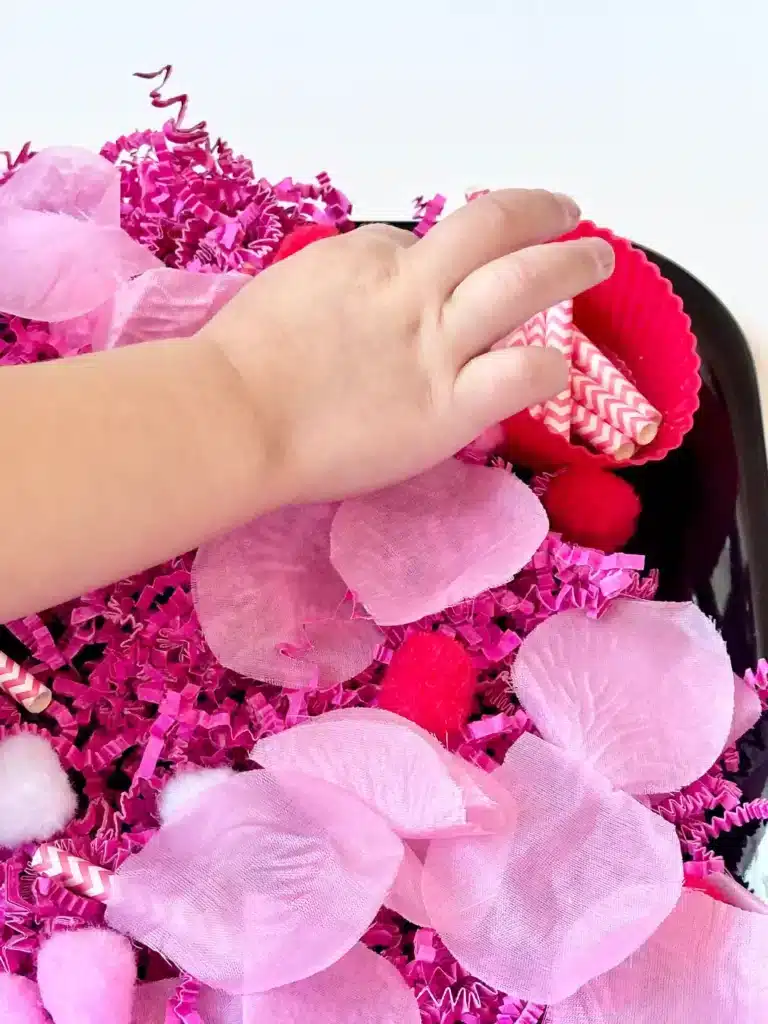
The Valentine’s Day rose petal sensory bin is a wonderful example of how a few simple materials can create an enriching, meaningful play experience. It allows children to explore, imagine, sort, count, create, and build essential fine motor skills—all while feeling calm, engaged, and joyful. Whether used in a classroom or at home, this sensory bin brings a touch of Valentine’s magic to any learning environment and invites children to discover the beauty of hands-on play.
Liked This? You May Also Like…
- The BEST DIY Valentine’s Day Craft: monster valentine box
 Make this monster valentine box that is one of the most unforgettable Valentine box ideas! This monster craft is so cute & will be the talk of the school!
 - The Best Valentine’s Day Craft Idea: Bear Valentine BoxMake this adorable Valentine’s Day craft for your classroom Valentines exchange! This bear valentine craft is one of the best valentine box ideas!
- The Best Valentine’s Day Crafts: ladybug Valentines BoxMake the cutest ladybug valentines box using a recycled box, pipe cleaners, and construction paper. This Valentine’s Day craft is perfect for classroom valentine exchanges.
- The Best Valentine’s Day Box Idea: panda valentines boxCreate a DIY panda Valentines box for a fun and easy classroom exchange. Kids will love making and using this adorable panda Valentine’s Day craft!
- The Best Valentine’s Day Box IDea: Butterfly Valentines boxThis butterfly Valentines box is an easy kids craft for classroom Valentine exchanges, school parties, and Valentine’s Day activities.
- The Best Valentines Box Idea: Bunny Valentines boxThis bunny valentines box is a fun and easy craft for kids and is the perfect addition to Valentine’s Day classroom exchanges and school parties.
- The Best Valentine’s Day Craft: Bee Valentines BoxThis bee Valentines box is a fun and easy Valentine’s Day craft for kids, perfect for Valentine’s Day classroom exchanges and school parties.
- The Best Valentine’s Day Craft: sloth Valentine boxMake a sloth Valentine box for kids with this easy Valentine’s Day craft using materials you already own that is perfect for classroom valentines exchanges.
- The Best Hippo Valentine Box: A Fun Valentine’s Day CraftMake a hippo Valentine box for kids with this easy Valentine’s Day craft, great for classroom exchanges.









Leave a Reply