

The Best Valentine’s Day Craft For Kids: Handprint Heart Tree
December 19, 2025

The Handprint Heart Tree is one of those projects that feels simple on the surface but carries a surprising amount of meaning and learning underneath. At first glance, it’s a sweet Valentine’s Day craft made with hearts and handprints. In practice, it becomes a powerful activity that supports fine motor development, emotional expression, task completion, and a strong sense of classroom community. Because each tree uses a child’s own handprint, students immediately feel connected to their work, which increases engagement and pride from the very beginning.
Why Teachers and Parents Love This Handprint Heart Tree Craft
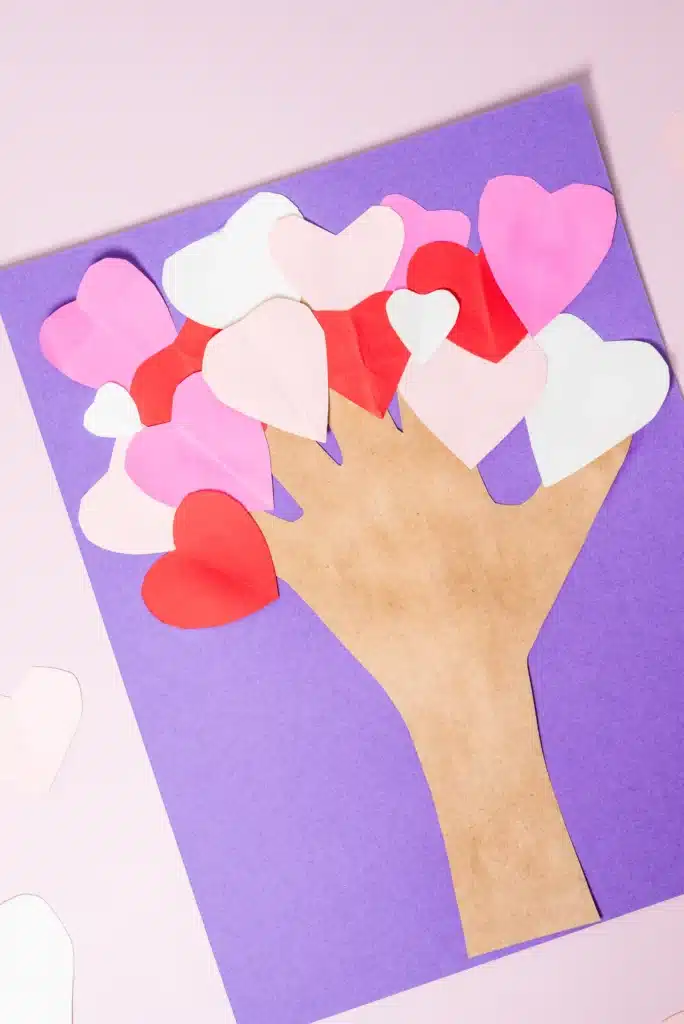
This craft fits beautifully into preschool, kindergarten, and first grade classrooms, especially during February when themes of kindness, love, and friendship are naturally woven into daily lessons. It also works well beyond Valentine’s Day and can easily be adapted for kindness weeks, social-emotional learning units, family projects, or classroom community displays. The heart shapes can represent many things—people students care about, kind actions they’ve experienced, or feelings they want to share—making the activity flexible and meaningful.
The Handprint Heart Tree also makes a beautiful classroom display. When all the trees are displayed together, they create a visual representation of classroom community. Each tree is unique, but together they show how individual contributions come together to form something bigger. Students often feel proud seeing their work on the wall and enjoy pointing out their own handprint to family members or visitors.
This activity is low-prep and flexible, making it teacher-friendly as well. It can be completed in one longer session or broken into shorter chunks across the day. Tracing and cutting can happen first, followed by assembly later. The materials are simple and affordable, and the steps are easy for students to follow once modeled. It works well for whole-group instruction, small groups, or even as a quiet independent activity after expectations are clear.
Benefits of this Valentine’s Day Craft
From a fine motor perspective, the Handprint Heart Tree is packed with skill-building opportunities. Tracing a hand and arm requires careful pencil control, steady pressure, and attention to shape. Students must follow curves, slow down around fingers, and adjust their grip as needed. These small, controlled movements directly support handwriting readiness and help strengthen the muscles used for writing, cutting, and coloring.
Cutting out the handprint adds another layer of fine motor practice. Navigating around fingers and curved edges challenges students to use both hands together—one to guide the paper and one to control the scissors. Cutting heart shapes further reinforces these skills, especially because hearts require smooth curves rather than straight lines. For younger students or those who need extra support, pre-cut templates can be used while still allowing students to participate in assembly and design decisions.
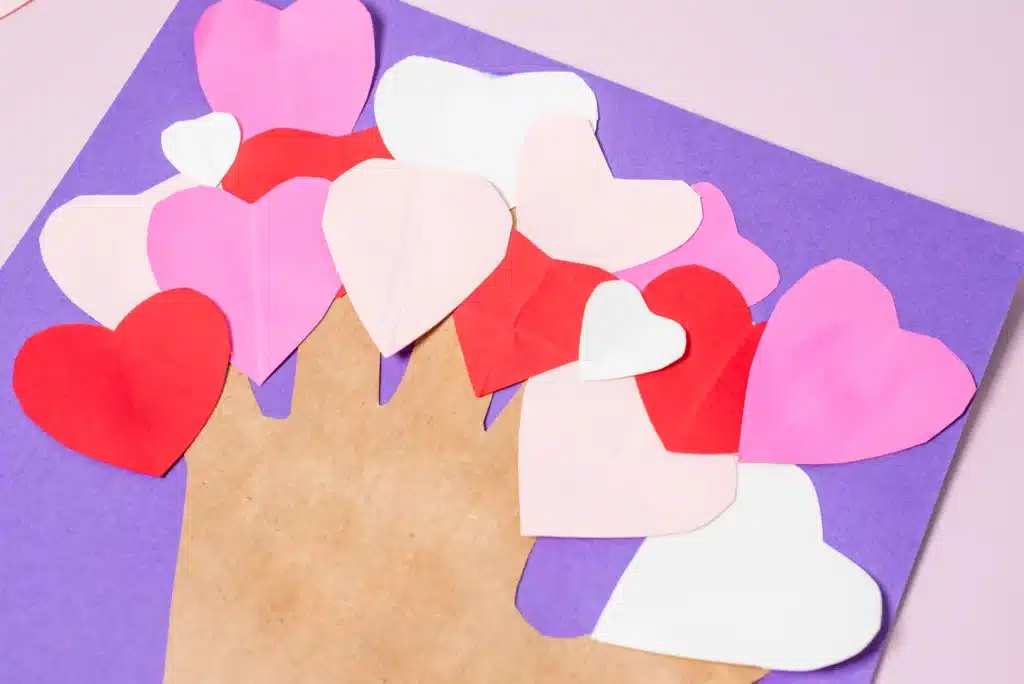
Assembling the tree encourages planning, spatial awareness, and problem-solving. Students decide where to place the trunk, how high to glue it on the page, and how to arrange the hearts so the tree looks full and balanced. This process builds executive functioning skills, as children must think ahead before gluing pieces down permanently. If a heart is placed too low or too far to one side, students often notice and problem-solve on their own, learning from the experience.
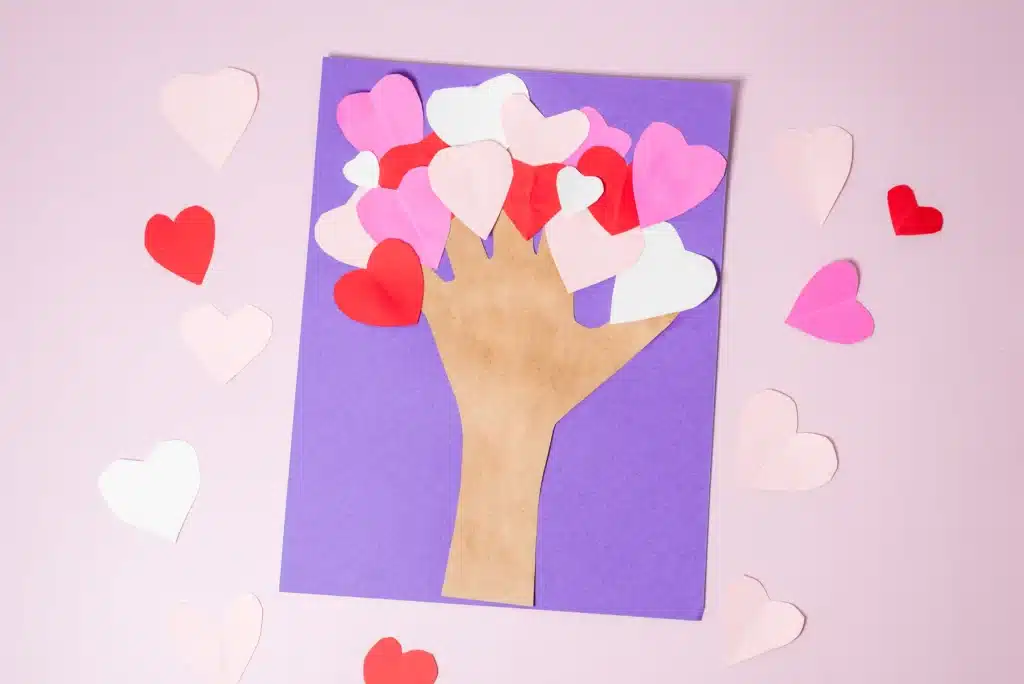
Task completion is another major strength of this activity. The tree doesn’t feel “finished” until enough hearts are added, which naturally encourages students to stay focused and continue working. Because the end result is visually appealing and personal, students are motivated to complete each step carefully rather than rushing through. This makes the craft especially helpful for students who are still developing stamina for longer tasks.
The emotional and social-emotional benefits of the Handprint Heart Tree are just as important as the academic ones. Using a handprint instantly personalizes the project and helps students feel seen and valued. Teachers can invite students to talk about what their hearts represent, whether that’s family members, friends, pets, kind actions, or things that make them feel happy. These conversations encourage emotional awareness, empathy, and expressive language in a natural, age-appropriate way.
This craft also supports oral language development. Students love sharing whose handprint it is, why they chose certain colors, or what their hearts stand for. These discussions can happen during the activity or afterward as a sharing circle. Even reluctant speakers are often eager to talk about something they created themselves, making this a great low-pressure opportunity for building confidence in speaking.
Literacy connections fit seamlessly into this project. Students can dictate or write sentences about their tree, label hearts with words or names, or respond to simple prompts such as “My hearts show…” or “This tree is special because…”. These writing extensions feel meaningful rather than forced, which is especially helpful for young writers who are still building confidence and endurance.
What you’ll need to make this valentine’s day handprint tree craft
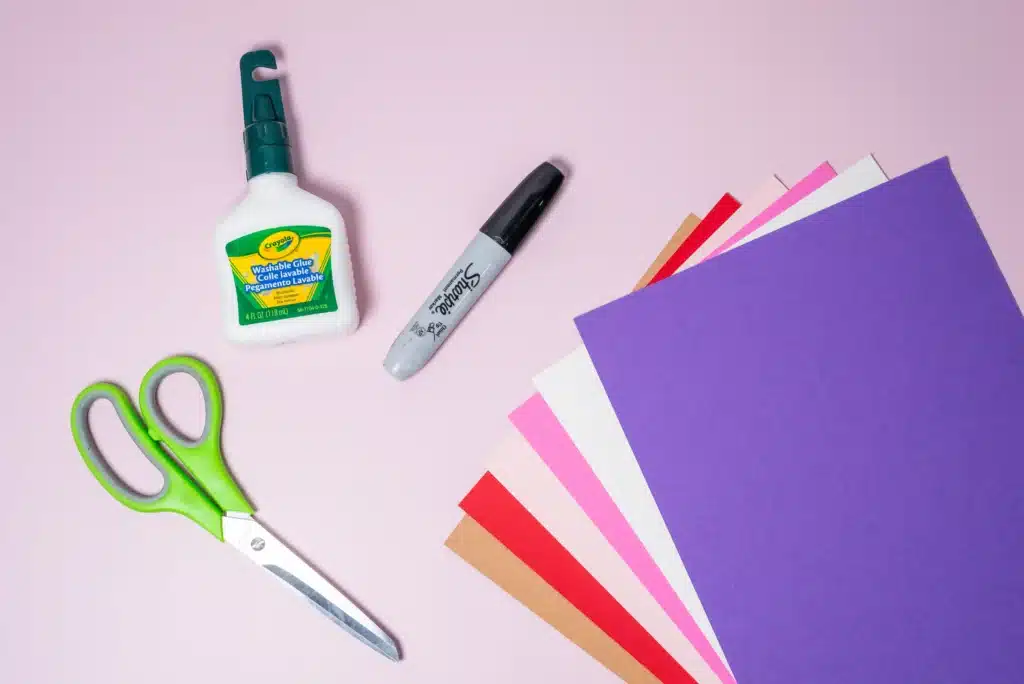
Materials needed:
Colored paper for hearts
Brown or tan paper for the tree trunk
Glue
Tools needed:
Scissors
Pencil or marker
How to make the handprint heart tree
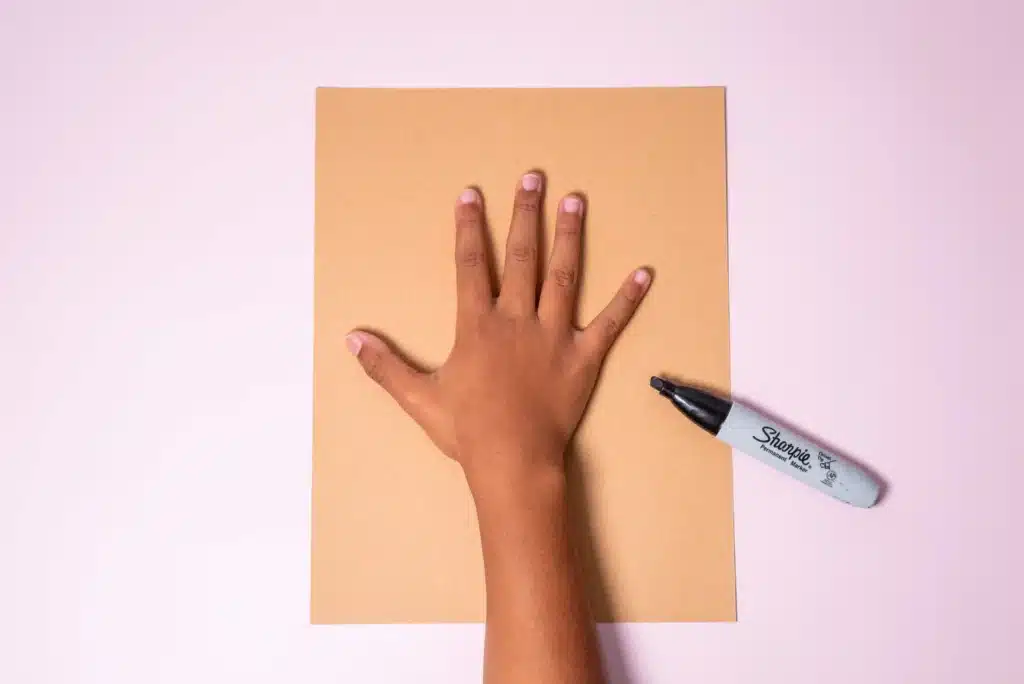
1. Trace a child’s hand and arm on brown or tan paper to create the tree trunk and branches. Cut out the handprint shape carefully.

2. Cut multiple heart shapes from colored paper. Use a mix of colors and sizes to make the tree more visually interesting.
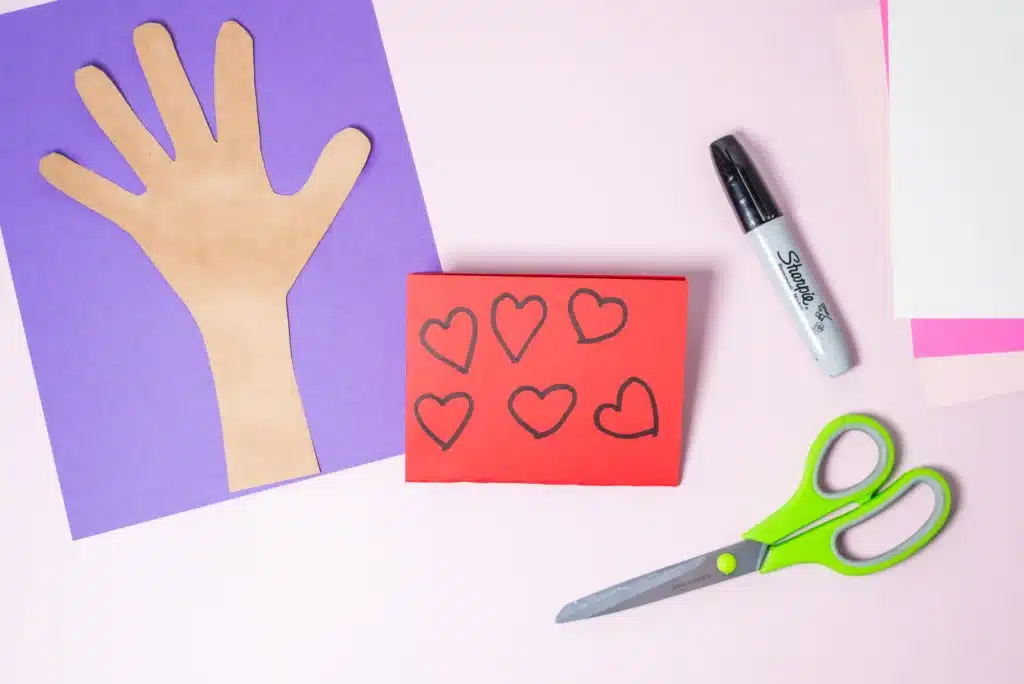
3. Glue the handprint trunk onto a blank background sheet of paper, positioning it toward the bottom of the page.
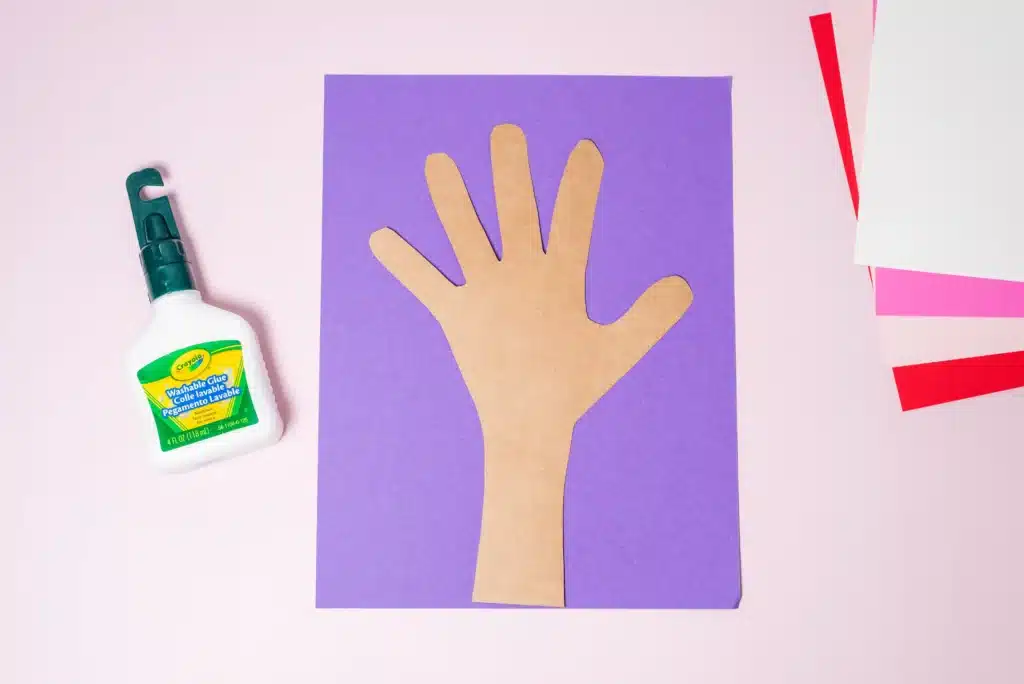
4. Arrange the heart shapes above the branches to form the tree canopy. Overlap hearts slightly so the tree looks full.
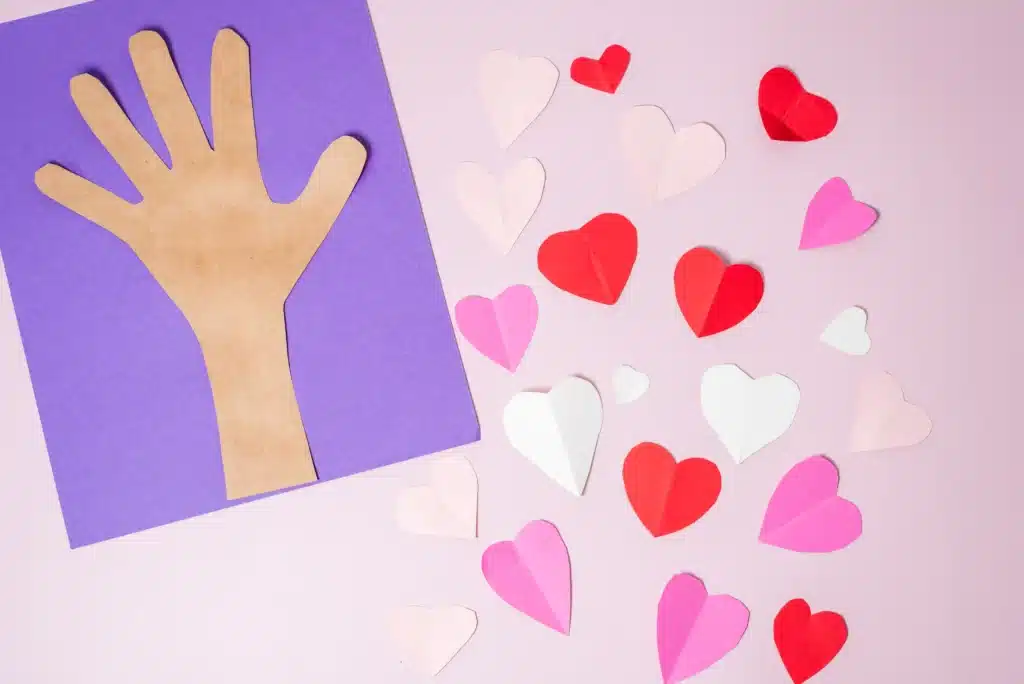
5. Glue the hearts in place once the arrangement looks balanced.
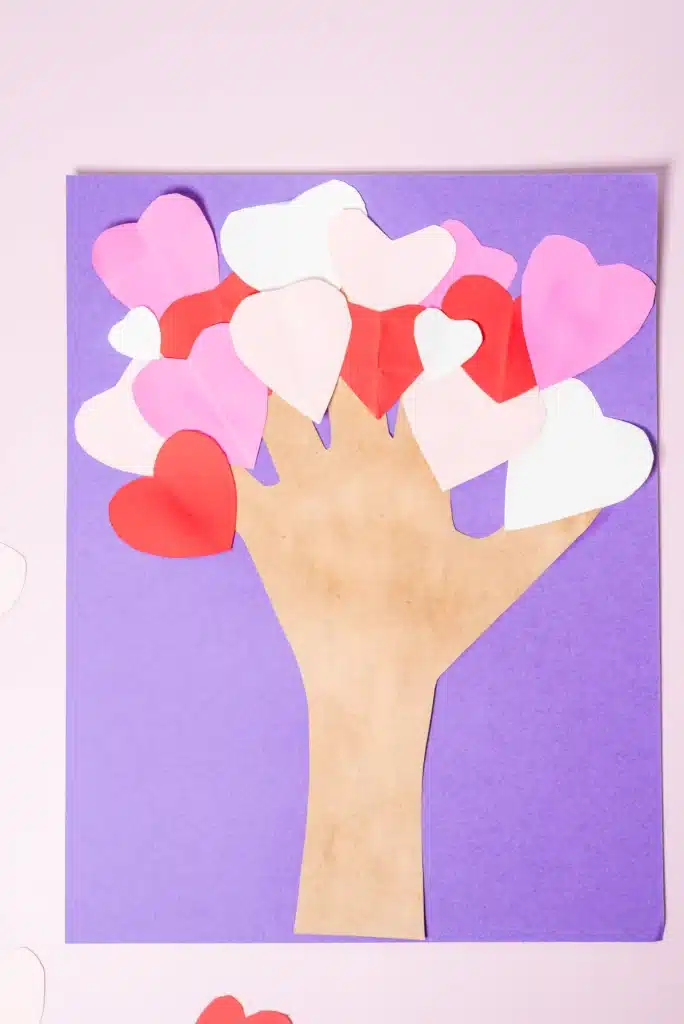
6. Add more hearts if needed to fill in empty spaces.
7. Allow the project to dry completely before displaying.
A Sweet and Meaningful Valentine’s Day Craft

The Handprint Heart Tree is a perfect example of how a simple craft can support multiple areas of development at once. It strengthens fine motor skills, encourages perseverance, supports emotional expression, and builds classroom community—all while creating something students are genuinely proud of. With its personal touch and meaningful design, this craft becomes more than just a Valentine’s project; it becomes a keepsake and a learning experience that students remember long after the glue has dried.
Liked This? You May Also Like…
- The BEST DIY Valentine’s Day Craft: monster valentine box
 Make this monster valentine box that is one of the most unforgettable Valentine box ideas! This monster craft is so cute & will be the talk of the school!
 - The Best Valentine’s Day Craft Idea: Bear Valentine BoxMake this adorable Valentine’s Day craft for your classroom Valentines exchange! This bear valentine craft is one of the best valentine box ideas!
- The Best Valentine’s Day Crafts: ladybug Valentines BoxMake the cutest ladybug valentines box using a recycled box, pipe cleaners, and construction paper. This Valentine’s Day craft is perfect for classroom valentine exchanges.
- The Best Valentine’s Day Box Idea: panda valentines boxCreate a DIY panda Valentines box for a fun and easy classroom exchange. Kids will love making and using this adorable panda Valentine’s Day craft!
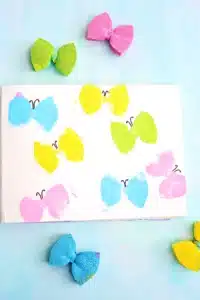
- The Best Valentine’s Day Box IDea: Butterfly Valentines boxThis butterfly Valentines box is an easy kids craft for classroom Valentine exchanges, school parties, and Valentine’s Day activities.
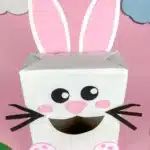
- The Best Valentines Box Idea: Bunny Valentines boxThis bunny valentines box is a fun and easy craft for kids and is the perfect addition to Valentine’s Day classroom exchanges and school parties.
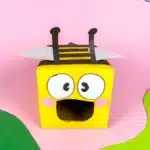
- The Best Valentine’s Day Craft: Bee Valentines BoxThis bee Valentines box is a fun and easy Valentine’s Day craft for kids, perfect for Valentine’s Day classroom exchanges and school parties.
- The Best Valentine’s Day Craft: sloth Valentine boxMake a sloth Valentine box for kids with this easy Valentine’s Day craft using materials you already own that is perfect for classroom valentines exchanges.
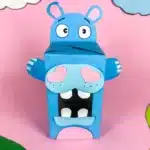
- The Best Hippo Valentine Box: A Fun Valentine’s Day CraftMake a hippo Valentine box for kids with this easy Valentine’s Day craft, great for classroom exchanges.






Leave a Reply