
How To Make A Color Sorting Sensory Bin For Spring
March 31, 2026

Spring is chock full of gardens, insects, and small creatures leading big lives. This color sorting sensory bin brings those ideas into a hands-on caterpillar activity designed for toddlers and preschoolers. With a base of dried green split peas and a colorful caterpillar made from cupcake liners, this activity combines sensory exploration with early learning skills.
Children explore colors and work on fine motor development while sorting soft pom-poms into the matching caterpillar sections. The simple setup encourages concentration and curiosity while maintaining a calm, engaging environment. A pair of sensory tweezers or small tongs adds an extra layer of skill-building, elevating the caterpillar sensory bin into a meaningful fine motor activity for preschoolers.
This spring sensory bin works well at home, in preschool classrooms, or as part of a themed insect unit. The cute caterpillar shape provides a visual guide that supports sorting practice while keeping kids engaged in the color sorting activity.
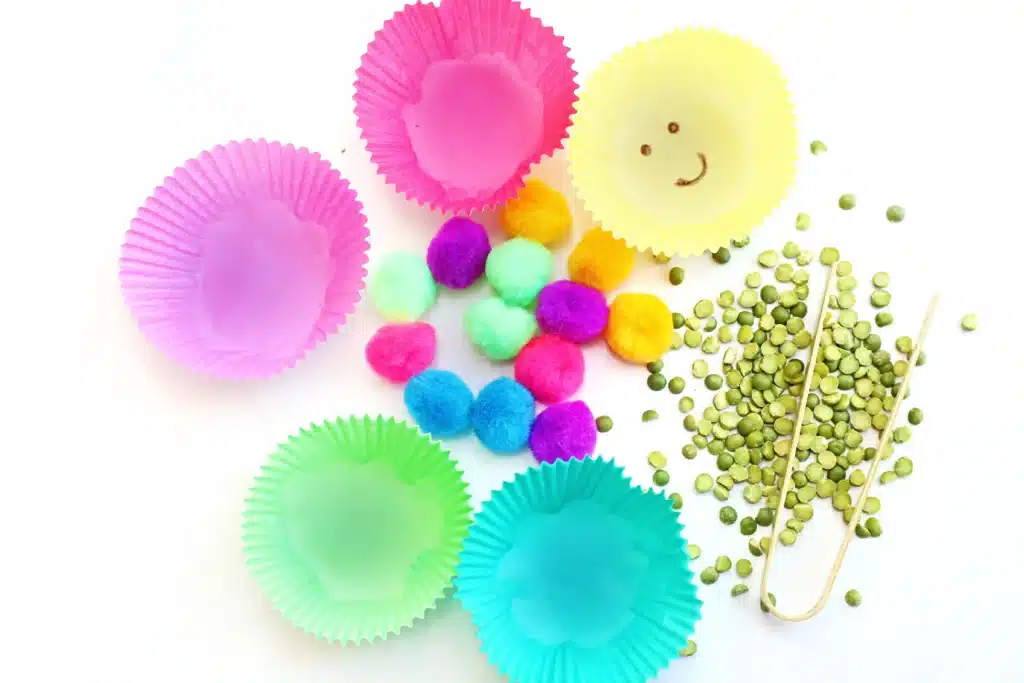
What You’ll Need For This Color Sorting Sensory Bin
Creating this caterpillar activity requires a handful of simple materials. Many of these items can readily be found in craft supply closets or classroom bins.
The split peas create a textured sensory base that evokes a natural setting. Cupcake liners act as the caterpillar’s body segments, forming clear sorting spaces for each color.
How to Set Up the Caterpillar Color Sorting Sensory Bin
Prep takes only a few minutes and can easily be fit into a daily activity rotation.
1. Fill the Sensory Bin
Pour dried green split peas into the container until the bottom is fully covered. The peas form a surface that mimics a grassy garden environment.
Join the List
Subscribe
2. Arrange the Caterpillar Body
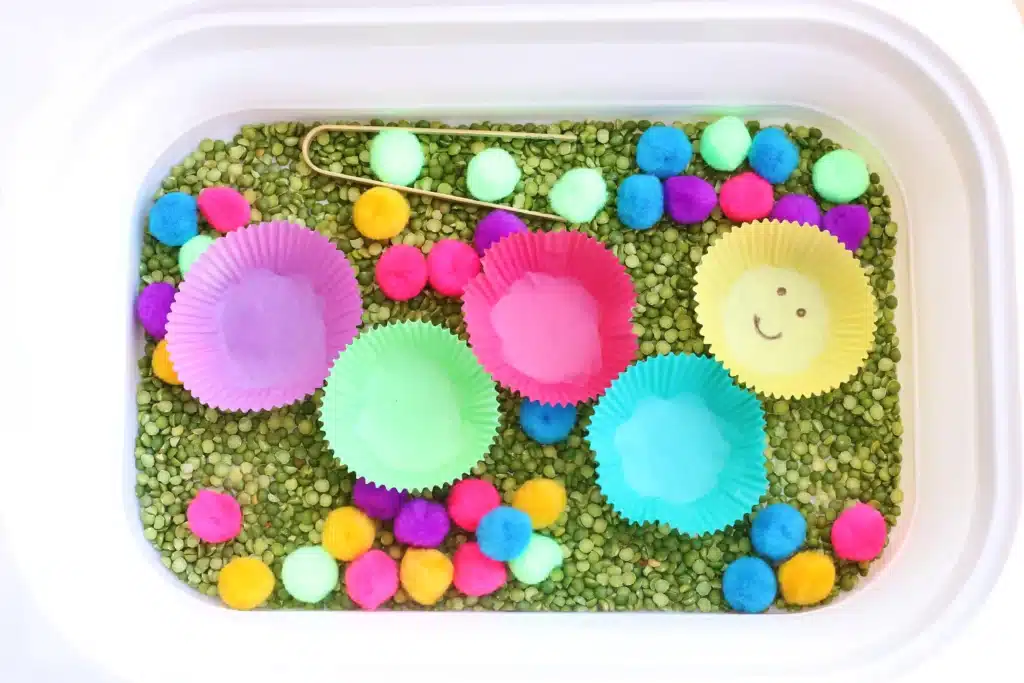
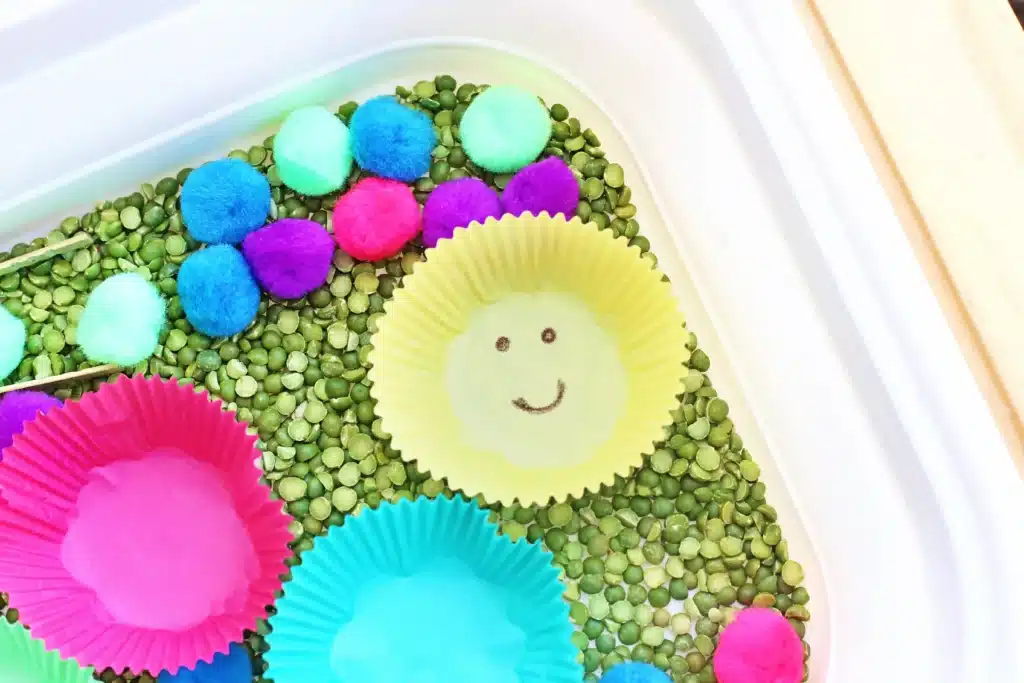
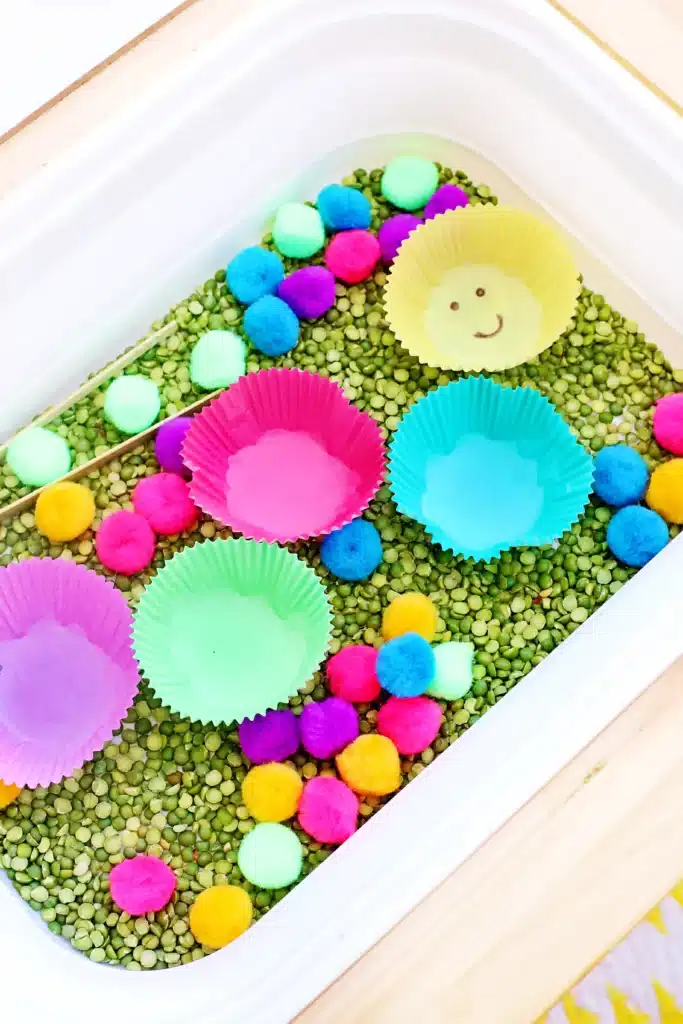
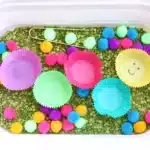
Place several cupcake liners across the center of the caterpillar color sorting sensory bin in a curved or straight line. Each liner represents a segment of the caterpillar. Use different colors such as pink, purple, yellow, green, or blue.
3. Create the Caterpillar Head
Choose one liner to represent the head. Draw a simple smiling face with a permanent marker if desired.
4. Scatter the Pom-Poms
Spread pom-poms across the split pea base. Select colors that match the cupcake liners so that each liner has a corresponding group of pom-poms.
5. Add Sorting Tools
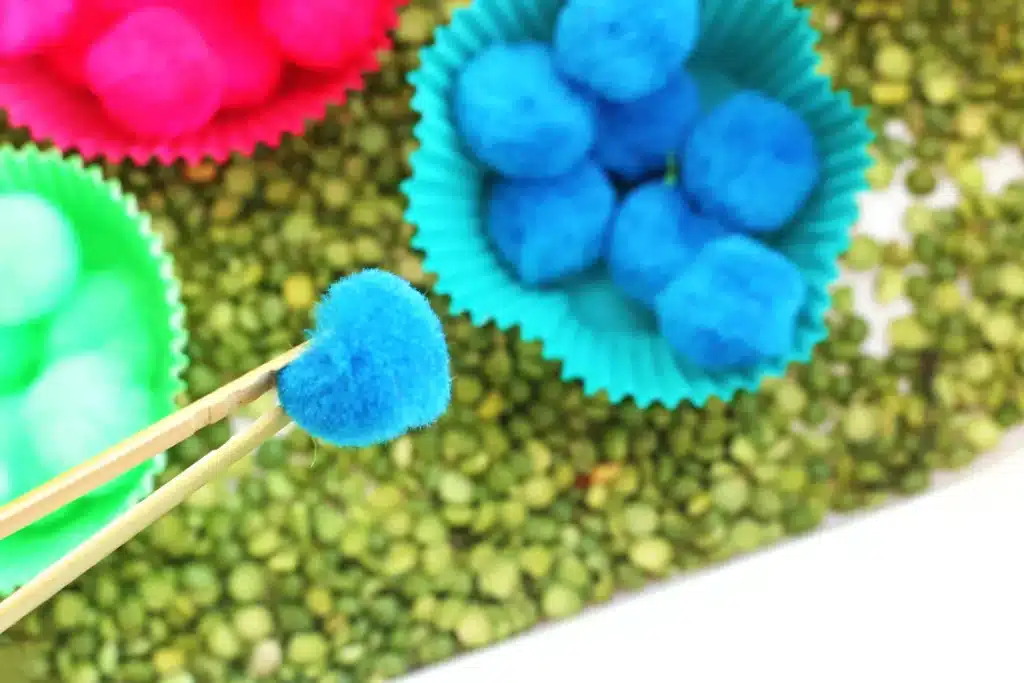
Place sensory tweezers or small tongs in the bin. Children can use fingers or tools to pick up pom-poms during the color sorting activity.
The result resembles a colorful caterpillar resting on a green garden bed.
Benefits of a Caterpillar Color Sorting Sensory Bin
This fine motor activity for preschoolers supports multiple developmental skills via simple materials and engaging design.
Fine Motor Skill Development
Picking up pom-poms strengthens small muscles in the hands and fingers. These movements support later writing, drawing, and cutting skills.
Color Recognition
Sorting items by color strengthens early visual discrimination skills. Children learn to identify and categorize colors through repetition.
Hand-Eye Coordination
Using tweezers requires careful coordination between the eyes and hands, building control and accuracy.
Sensory Processing
The tactile surface of split peas provides sensory feedback that supports focus and engagement. Many children enjoy the calming sensation of scooping and pouring.
Early Math Skills
Sorting, grouping, and counting introduce foundational math concepts in a natural way.
Thematic Learning
The caterpillar theme connects the activity to spring topics such as insects, gardens, and life cycles. Teachers and parents can extend the experience with books or discussions about butterflies.
Extending the Spring Color Sorting Sensory Bin Activity
This spring sensory bin can easily evolve with small changes or additions.
Caterpillar Counting Game
Write numbers inside each cupcake liner and challenge children to place the correct number of pom-poms in each section.
Life Cycle Learning
Include small butterfly figures or images showing caterpillar, chrysalis, and butterfly stages.
Leafy Additions
Artificial leaves, silk flowers, or small garden decorations can transform the bin into a miniature spring landscape.
These variations extend the learning value while maintaining the original structure of the caterpillar activity.
Why This Caterpillar Activity Works Well for Preschoolers
Preschool learning thrives through discovery. This caterpillar activity encourages it in a way that is natural and engaging.
The visual structure of the caterpillar body provides a clear sorting system while maintaining a fun theme connected to spring insects. Soft pom-poms, textured peas, and colorful liners create a rich sensory environment that supports focus and curiosity.
Activities like this build foundational learning skills while encouraging independent exploration. Children gain confidence as they sort, scoop, and organize the materials within the bin.
A caterpillar color sorting sensory bin uses simple supplies and produces a meaningful early learning experience centered around nature, color, and fine motor development.
This post may contain affiliate links, please read our disclosure policy for details.
Spring Books To Read
One of my all time favorite spring books is Have You Ever Seen A Flower? by Shawn Harris. The bright, vibrant colors are a feast for you eyes and the story is beautiful. And, check out more of my favorite spring books:






How To Make A Color Sorting Sensory Bin For Spring
A caterpillar color sorting sensory bin transforms spring learning into hands-on play as preschoolers sort pom-poms and strengthen fine motor skills.
- Total Time25 minutes depending on play time
- Yield1 spring color sorting sensory bin 1x
Materials
- Plastic sensory bin or shallow storage container
- Dried green split peas (enough to cover the bottom of the bin)
- Colored silicone or paper cupcake liners
- Pom-poms in matching colors
- Sensory tweezers, kid-safe tongs, or large craft tweezers
- Permanent marker (optional for adding a caterpillar face)
Instructions
1. Fill the Sensory Bin
Pour dried green split peas into the container until the bottom is fully covered. The peas form a surface that mimics a grassy garden environment.
2. Arrange the Caterpillar Body
Place several cupcake liners across the center of the caterpillar color sorting sensory bin in a curved or straight line. Each liner represents a segment of the caterpillar. Use different colors such as pink, purple, yellow, green, or blue.
3. Create the Caterpillar Head
Choose one liner to represent the head. Draw a simple smiling face with a permanent marker if desired.
4. Scatter the Pom-Poms
Spread pom-poms across the split pea base. Select colors that match the cupcake liners so that each liner has a corresponding group of pom-poms.
5. Add Sorting Tools
Place sensory tweezers or small tongs in the bin. Children can use fingers or tools to pick up pom-poms during the color sorting activity.
The result resembles a colorful caterpillar resting on a green garden bed.
- Prep Time: 5
- Category: Activities, DIY, Spring
- Method: Setup


Leave a Reply