
Fizzy Candy Cane Experiment: A Fun and Easy STEM Christmas Activity for Kids
December 3, 2025
This post may contain affiliate links. Please read our disclaimer policy for details.

This fizzy candy cane experiment brings big fun, but with a simple setup. Sight, smell, taste, and touch are all engaged in this fantastic STEM Christmas activity. The experiment highlights chemical reactions, giving kids a chance to explore basic chemistry and cause-and-effect; all combined with a traditional holiday treat.
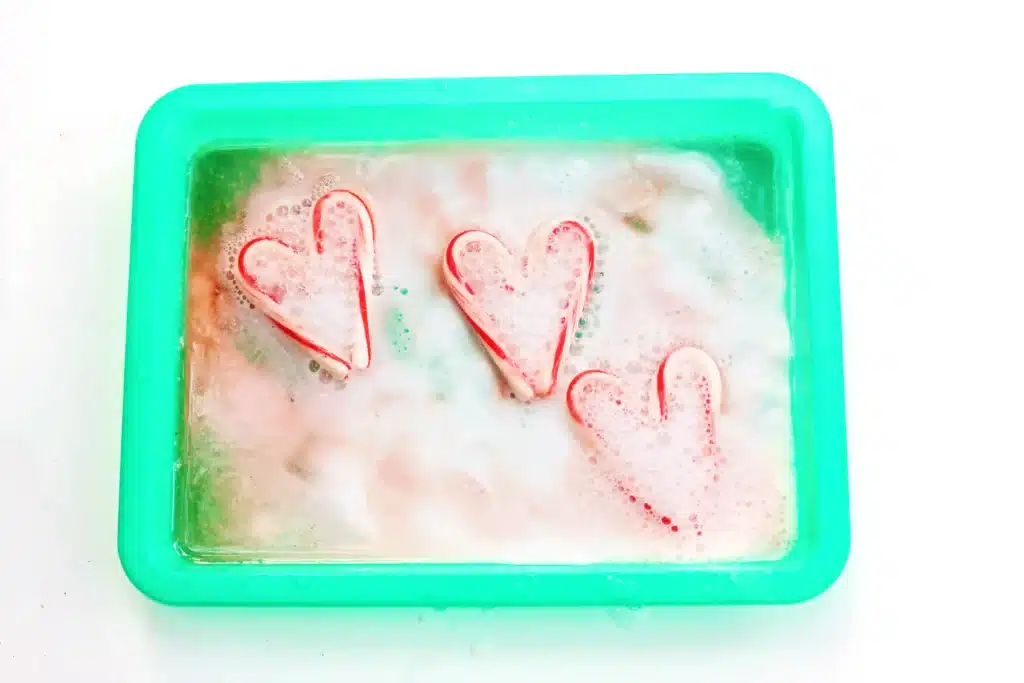
This makes it ideal for home learning, classroom science centers, winter break activities, or Christmas parties where a hands-on project keeps kids engaged. What little mess it produces is easily cleaned up, as well. The combination of candy and chemistry delivers a playfully educational moment filled with bubbly action.
Supplies Needed for This Christmas Science Experiment
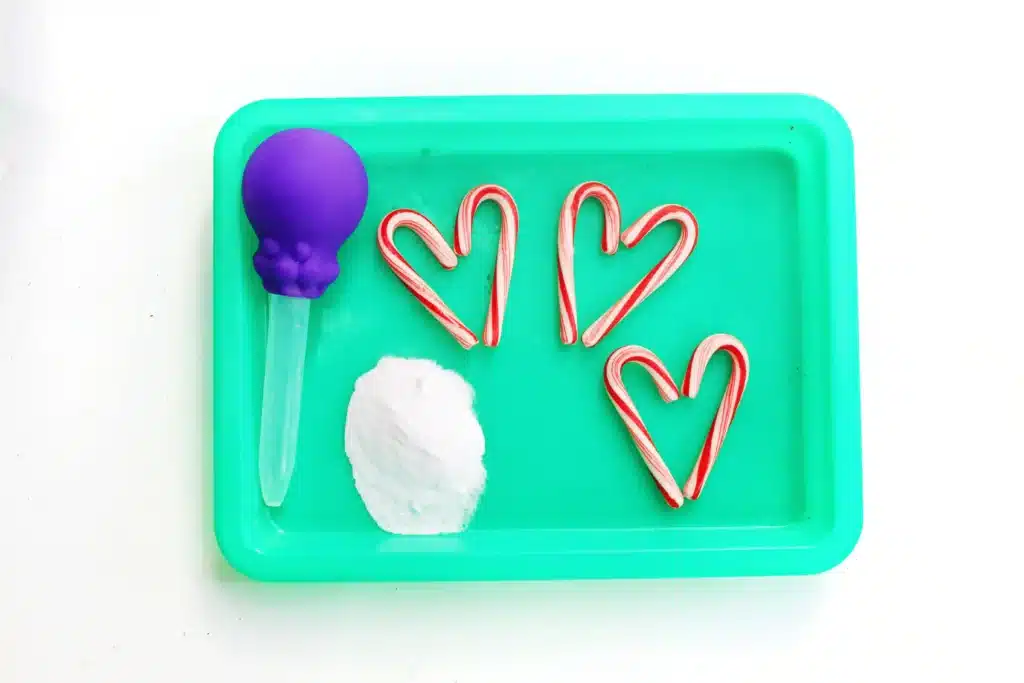
- Baking soda
- Small tray or shallow container
- Candy canes
- White vinegar
- Dropper or pipette
- Small cup or bowl for vinegar
Keep paper towels nearby for quick cleanup.
How to Set Up the Fizzy Candy Cane Experiment
1. Prepare the baking soda tray.
Sprinkle a generous layer of baking soda across the bottom of a small tray or container. This creates the reaction surface for this STEM Christmas activity for kids.
2. Wet the candy canes.
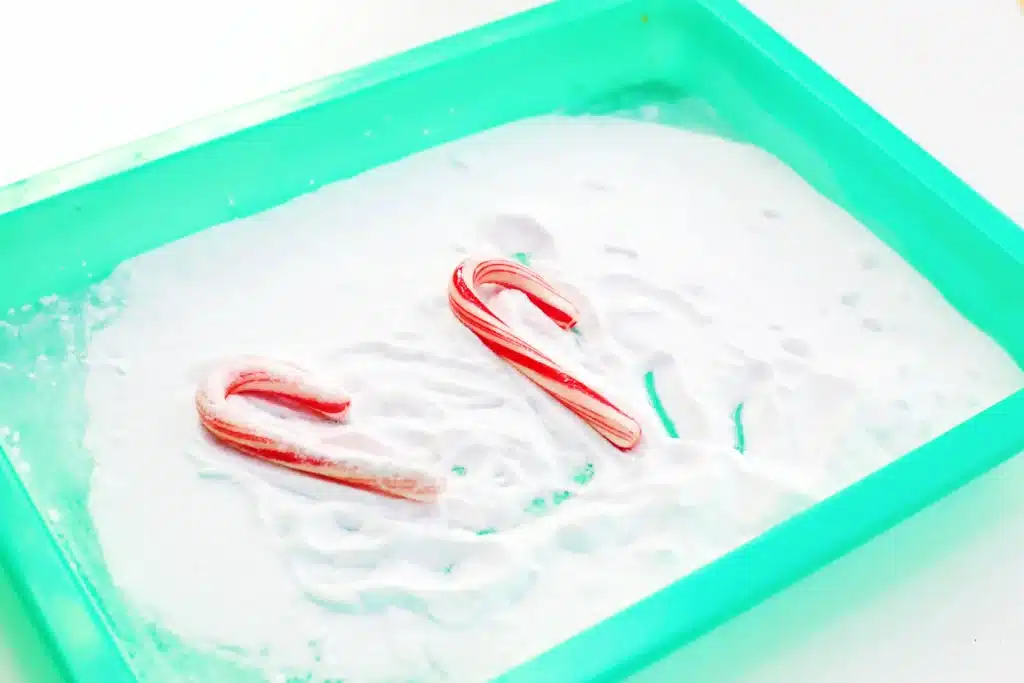
Run each candy cane under a little water or dab lightly with a damp paper towel, just enough to get the surface a little tacky. Avoid soaking them to ensure that the red stripes stay intact. Damp candy canes hold the baking soda more easily.
3. Optional lick-and-laugh moment.
Kids can lick each candy cane before dipping for an added burst of sweetness and excitement. This step adds sensory fun and encourages them to explore taste, texture, and the stickiness of dissolving sugar.
4. Coat the candy cane in baking soda.
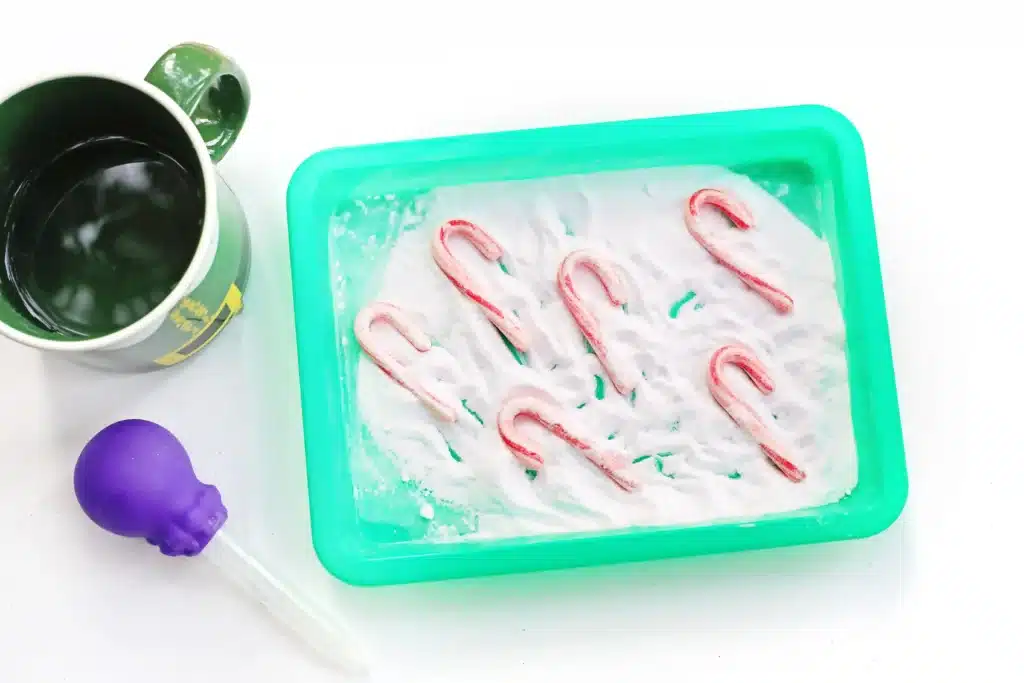
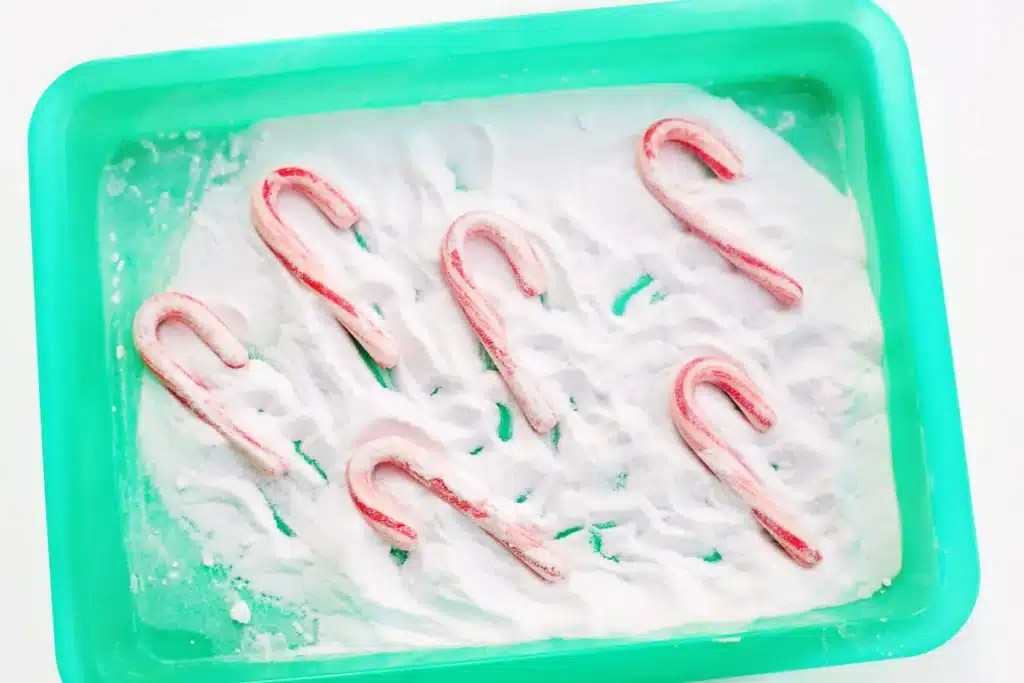
Press the damp candy cane into the baking soda tray. Rotate or roll to coat it fully. The powder clings to the sticky surface, forming a layer that reacts beautifully with vinegar.
5. Set up the reaction station.
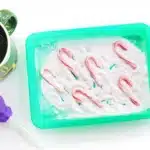
Pour vinegar into a small bowl or cup, place a dropper nearby, and position the coated candy canes in the baking soda tray.
6. Start the fizzing fun.
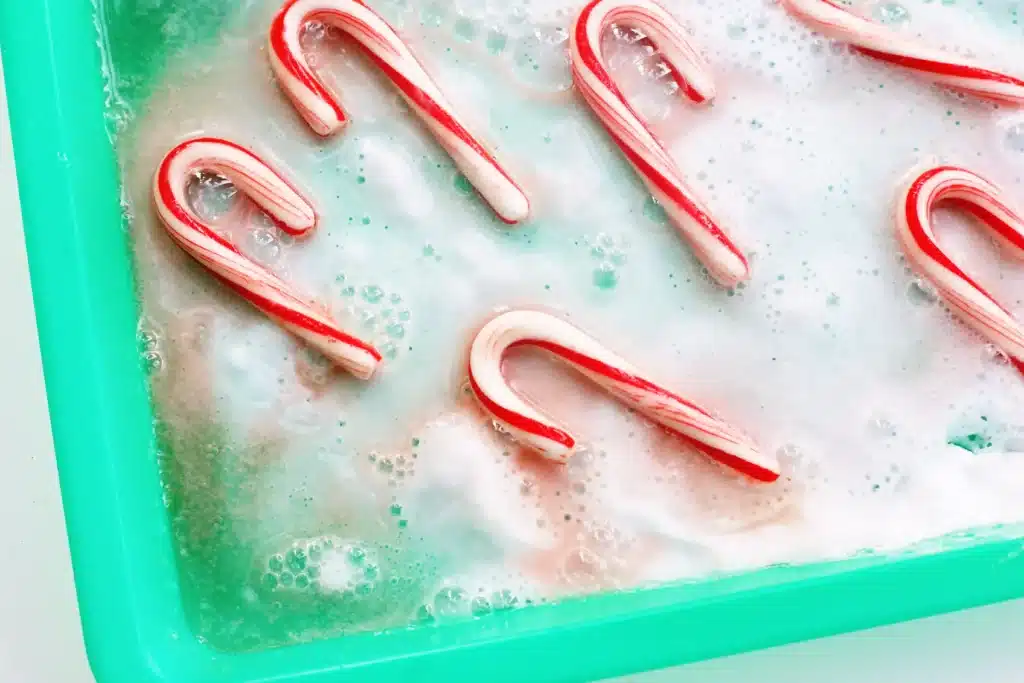
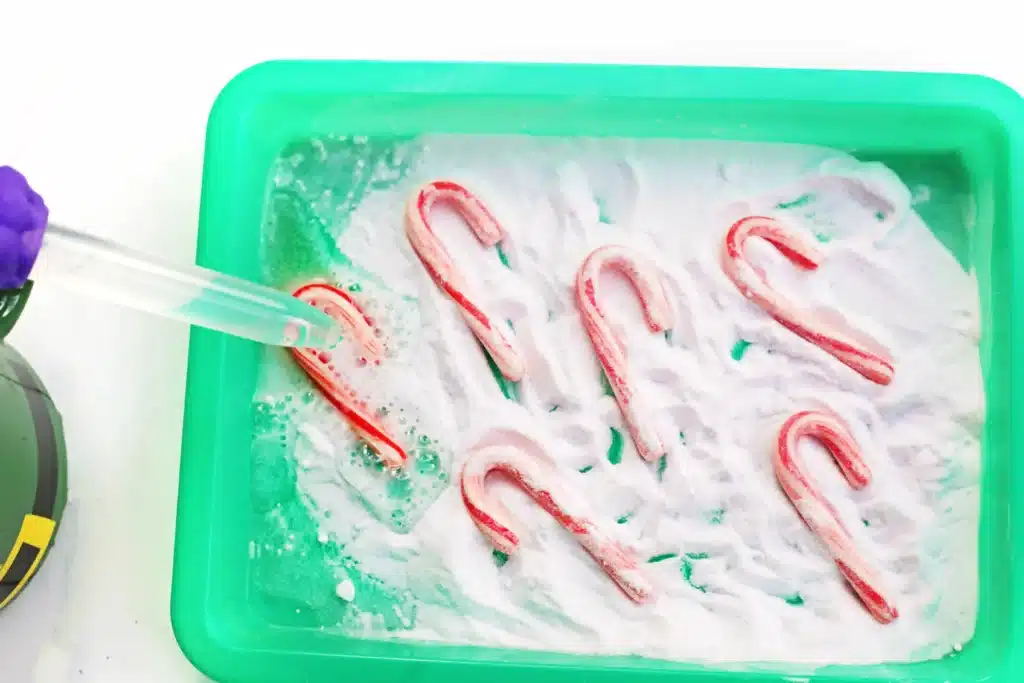
Invite kids to use the dropper to drip vinegar onto one candy cane. The moment vinegar touches baking soda, fizzing erupts. Foamy bubbles swirl around the curved candy cane, dissolving the powder and slowly revealing stripes underneath. With time, and enough vinegar, the red will start to diffuse into the liquid. This adds a festive hue to the vinegar tray.
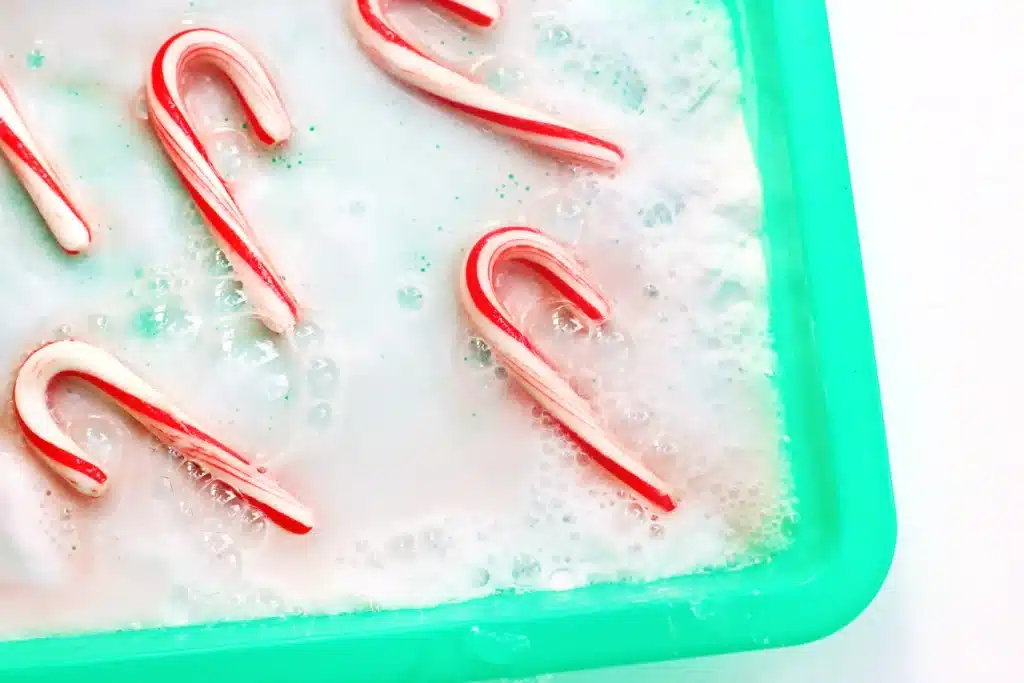
This hands-on STEM Christmas activity for kids encourages fine motor skills, experimentation, and scientific curiosity through playful exploration.
Learning Benefits from This Candy Cane Activity
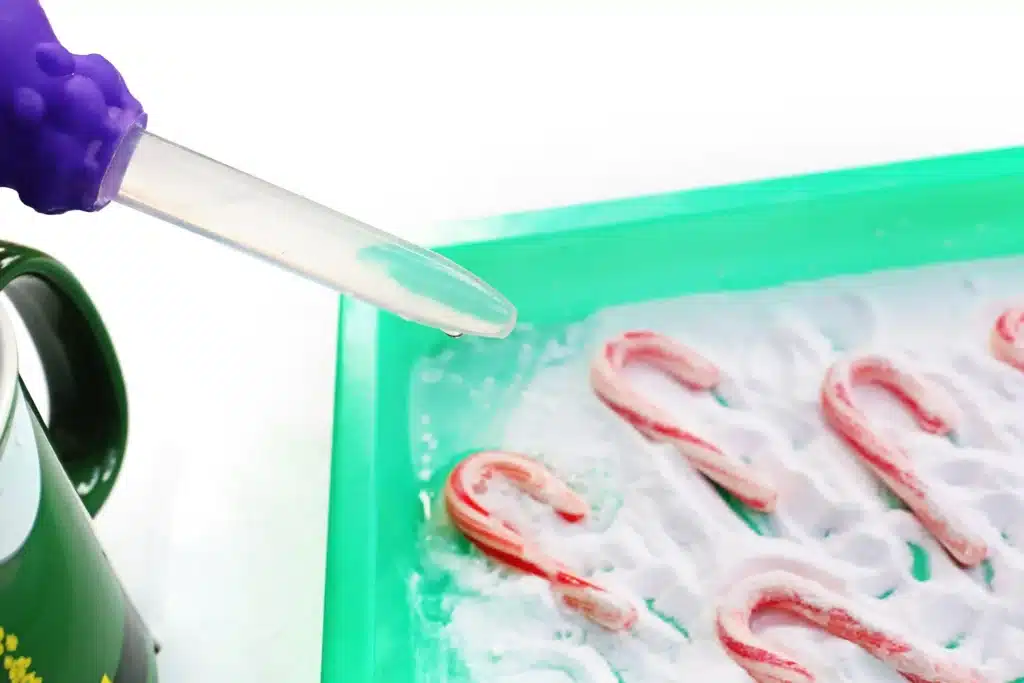
The fizzy candy cane experiment offers far more than a fun, bubbly moment. Each step involves real learning wrapped in holiday excitement.
Scientific Observation
When kids watch the vinegar and baking soda react, have them observe bubbles, foam, and hissing sounds. This supports early scientific understanding and offers a safe introduction to chemical reactions. Take this opportunity to explain that when the two substances meet, they release carbon dioxide gas, which causes the bubbling.
Sensory Exploration
Sticky candy canes, powdery baking soda, and liquid vinegar create a multi-sensory learning experience. This boosts engagement and helps kids process information through touch, smell, sight, hearing, and optionally taste.
Fine Motor Skill Practice
Droppers strengthen finger muscles, hand control, and coordination. Precise squeezing and releasing help build foundational skills valuable for writing, buttoning, and cutting.
Cause-and-Effect Learning
Kids test how the amount of vinegar relates to the amount of fizz. Predicting and testing results encourages problem-solving.
Open-Ended Creativity
This experiment invites play. Kids might drip vinegar slowly, flood the tray, repeatedly coat new candy canes, or mix baking soda and vinegar in fresh ways. Creativity thrives when limits are minimal.
Tips for Enhancing the Fizzy Candy Cane Experiment
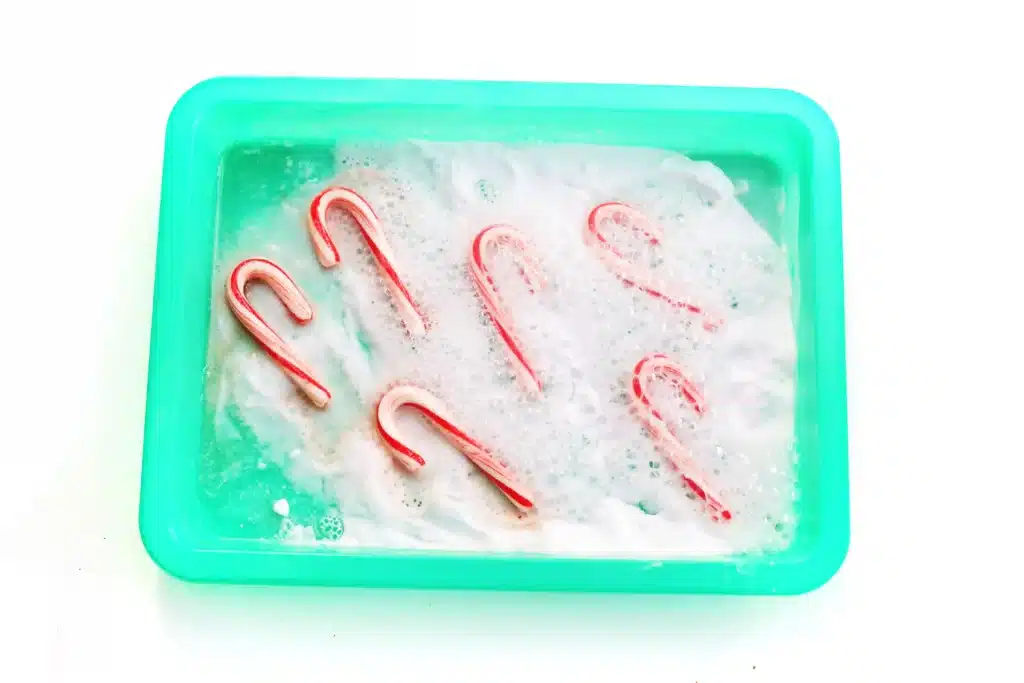
- Use multiple candy canes for comparison. Kids explore whether thicker or thinner candy canes fizz differently.
- Add a little red or green food coloring to the vinegar for colorful fizz effects.
- Keep extra baking soda on hand so kids can re-coat candy canes and repeat the reaction.
This project adapts easily for different ages and skill levels. Some children just enjoy simple fizzy fun; others go deeper into experimenting with quantities and patterns.
How This Christmas Science Experiment Supports Learning During the Holidays
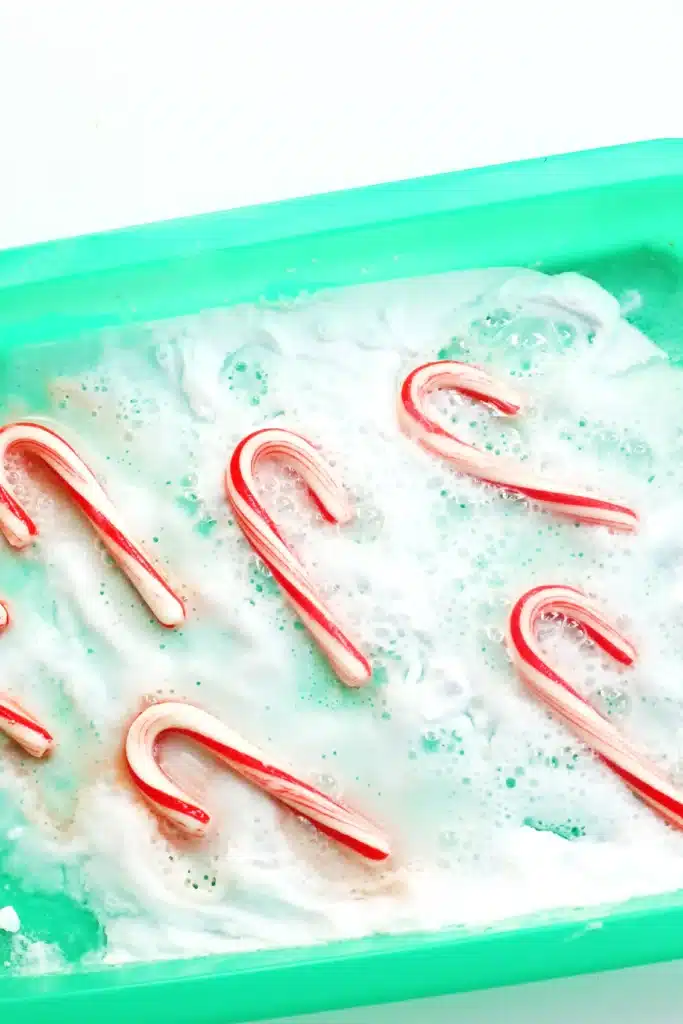
Hands-on activities often inspire deeper focus and longer engagement than worksheets or simple holiday crafts. The fizzy candy cane experiment blends STEM learning with seasonal fun, making it ideal for December learning themes. Kids retain more when projects involve excitement, movement, and multi-sensory exploration. A fizzy reaction checks all those boxes while staying safe and age-friendly.
Holiday-themed experiments also create positive associations between science and play. This sets the stage for future curiosity, exploration, and confidence in STEM subjects.
A Candy Cane Activity Filled with Holiday Wonder
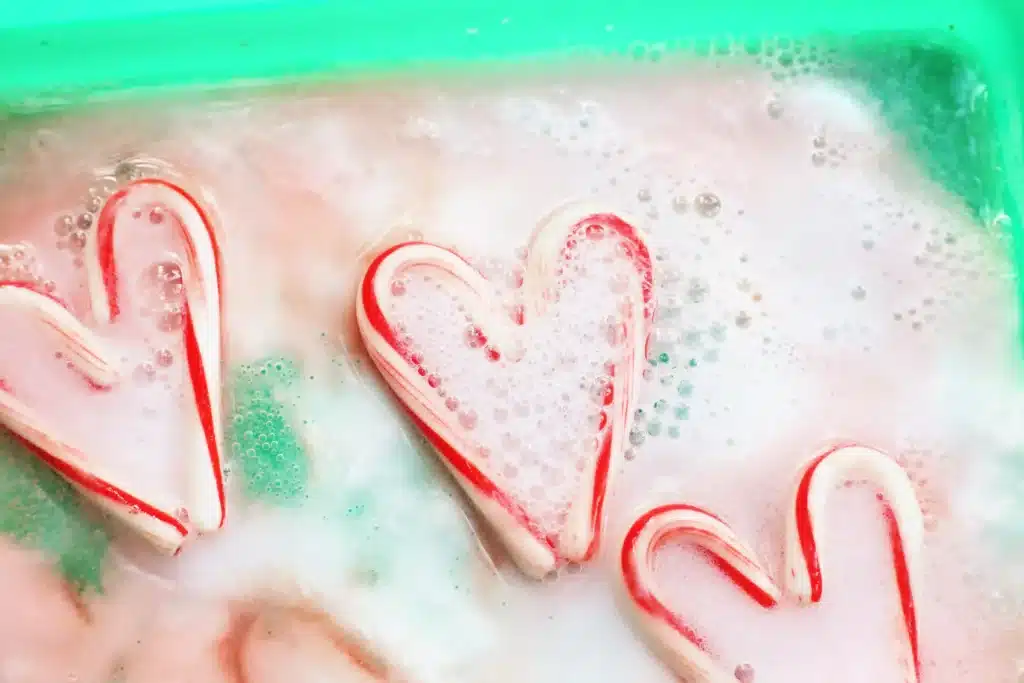
The fizzy candy cane experiment takes classic baking soda and vinegar science into new territory with flavor and texture. Candy canes act as both tools and treats, offering a fun twist that keeps kids excited about participating. This activity shines in homes, classrooms, and Christmas party settings, adding hands-on learning and fizzy action to the holiday season. With simple materials and big reactions, this Christmas science experiment transforms everyday items into bubbly magic that fills December with curiosity and joy.
Liked This? You May Also Like…
- Egg Carton Tree Sensory Bin: A Hands-On Winter Wonderland for Learning and Play
 Create a fun and educational winter activity with an Egg Carton Tree Sensory Bin! Perfect for toddlers and preschoolers to explore textures, colors, and imaginative play.
 - Spread Smiles All Year Long with These Adorable Seasonal Lunch Box NotesBrighten your child’s day with these seasonal holiday lunchbox notes—a fun and easy way to add joy, encouragement, and festive cheer to every meal! This collection of printable holiday lunchbox notes includes designs for Christmas, Valentine’s Day, Halloween, Easter, and more, making it perfect for school lunches, snacks, or surprise notes at home.
- Wooden Gingerbread Keepsake Craft: A Christmas Craft That Lasts for YearsCreate a wooden gingerbread keepsake craft that lasts for years. Paint a board measured to your child’s height and decorate for a Christmas craft to treasure.
- Gingerbread Dip Recipe: An Easy and delicious Christmas Dessert IdeaGingerbread dip offers a no bake Christmas dessert idea. It’s a simple gingerbread treat idea kids enjoy helping with and sharing during holiday celebrations.
- Reindeer Bait Sensory Bin: A Nature-Inspired Christmas Activity for KidsReindeer bait sensory bin creates a nature-inspired Christmas activity for kids. This setup encourages storytelling, scooping, and imaginative holiday play.
- Fizzy Candy Cane Experiment: A Fun and Easy STEM Christmas Activity for KidsFizzy candy cane experiment creates peppermint-scented bubbles that spark curiosity. A Christmas science experiment that adds excitement to holiday learning.
- Candy Christmas Trees: An Edible Holiday Activity for KidsStack Rolos, Reese’s, and Hershey’s Kisses to make adorable candy Christmas trees! It’s an easy and fun Christmas fine motor activity for kids.
- Snow Globe Sensory Bottle: A Sparkly Winter Calm-Down Craft for KidsCreate winter magic with this calming Snow Globe Sensory Bottle! Perfect for toddlers, preschool, and kindergarten, this easy DIY sensory bottle encourages sensory exploration, mindfulness, and calm-down time. Great for winter activities, Christmas sensory play, calm-down corners, and early childhood learning centers. A simple, sparkly craft kids will love!
- Gingerbread Literacy Activities for the Holiday SeasonBring holiday magic to your literacy block with these Gingerbread Literacy Task Cards! Kids will love the gingerbread theme while strengthening letter sounds, sight words, and early literacy skills. Great for December centers, guided reading groups, winter classroom activities, and hands-on Christmas phonics practice. Perfect for teachers and homeschoolers!


Leave a Reply