

Melting Snowman Sensory Activity: A Hands-On Winter Science Experiment
December 20, 2025

Cold weather invites curiosity, especially when ice, water, and simple materials meet little hands. The melting snowman sensory activity turns a familiar winter character into an interactive learning experience rooted in observation, cause and effect, and sensory play for kids. Using frozen snowmen made from everyday materials, children explore how ice reacts to salt and warm water in a playful, memorable way.
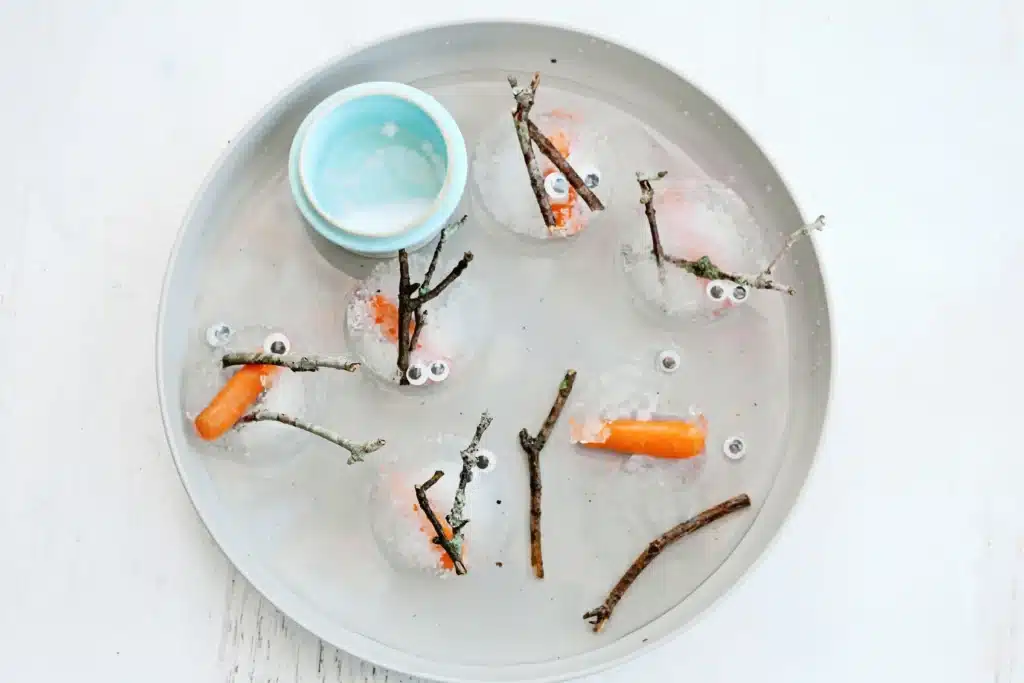
This winter activity for kids blends science, fine motor practice, and open-ended play into one simple setup that works well at home or in classrooms. With minimal supplies and high engagement, it supports early learning goals while keeping the focus on hands-on discovery.
What Is the Melting Snowman Sensory Activity?
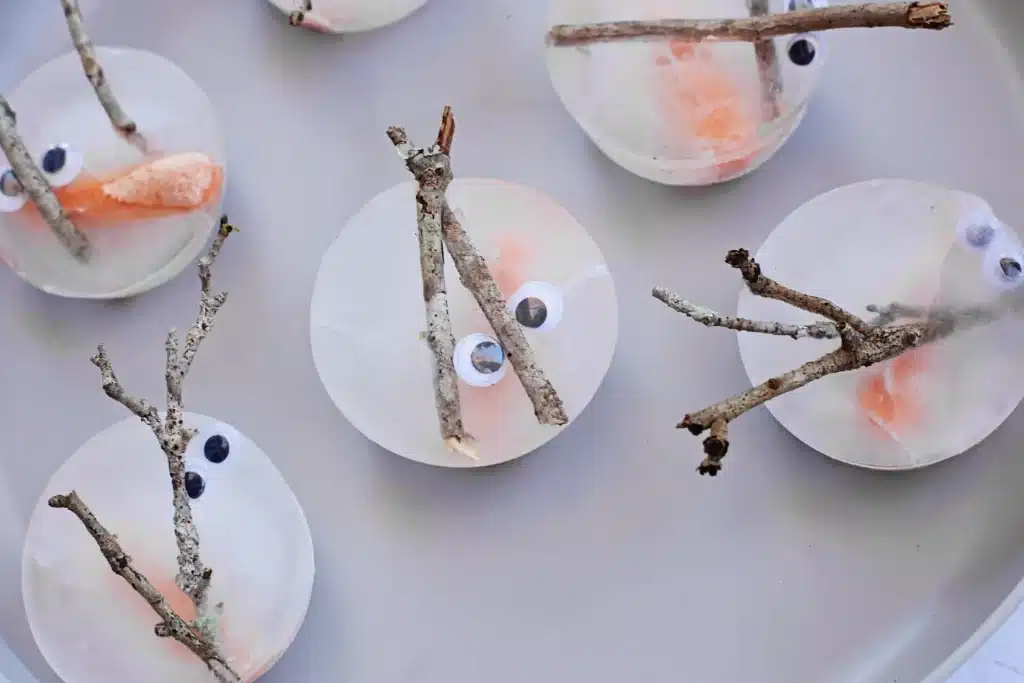
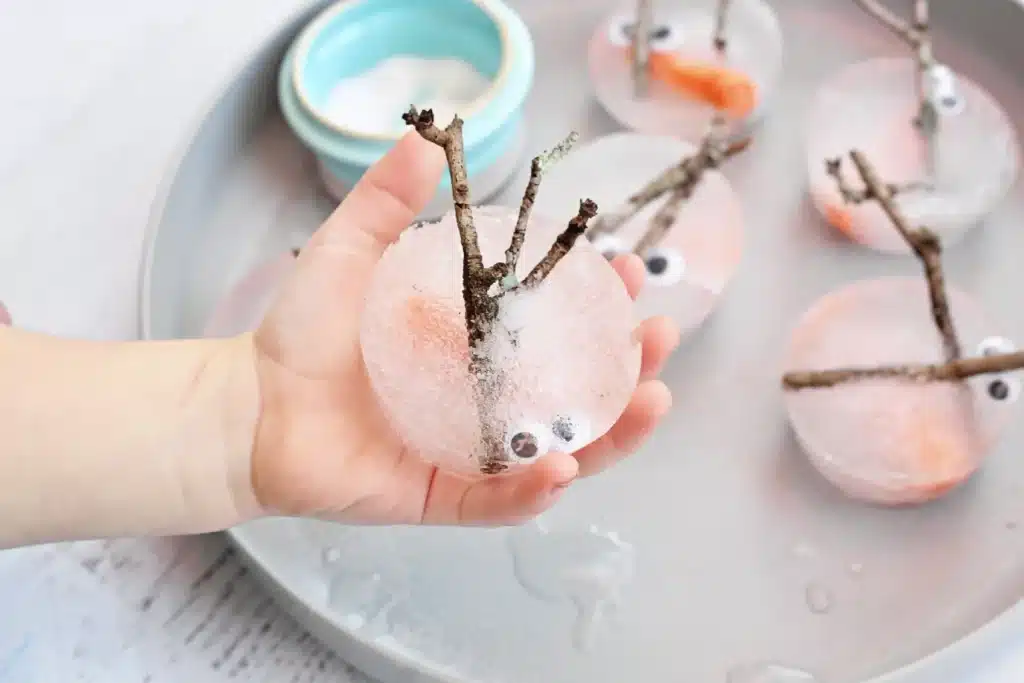
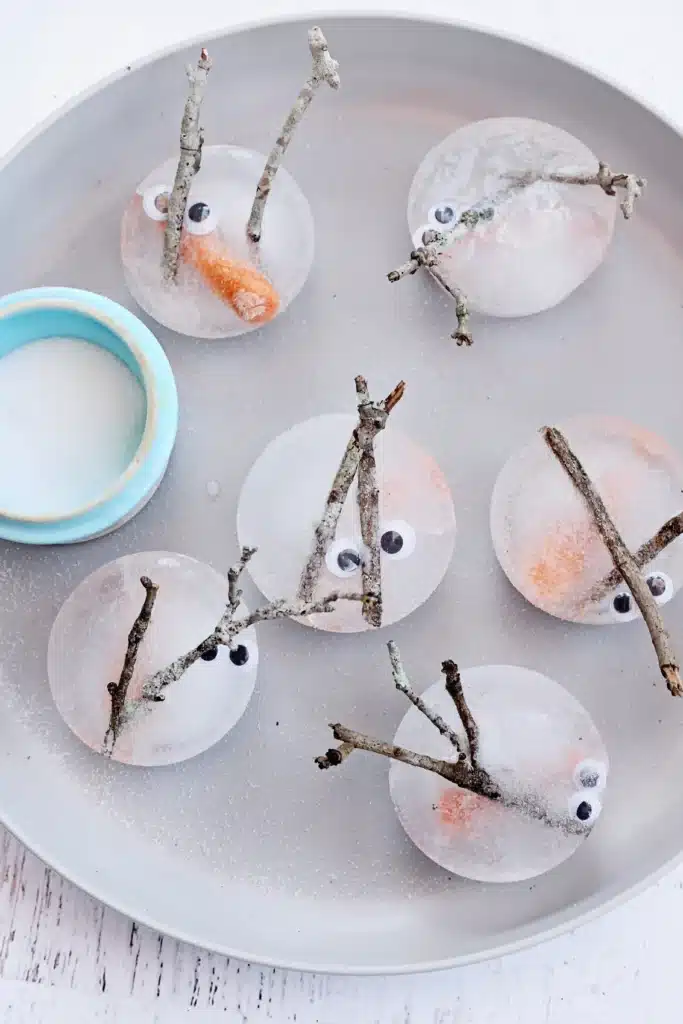
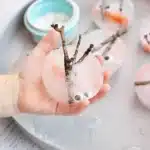
The melting snowman sensory activity centers on frozen ice “snowmen” created in a muffin tin. Each snowman includes a carrot nose, stick arms, and googly eyes frozen into ice. Children interact with the frozen snowmen by sprinkling salt to create a melting reaction or using droppers and squeeze bottles to apply warm water.
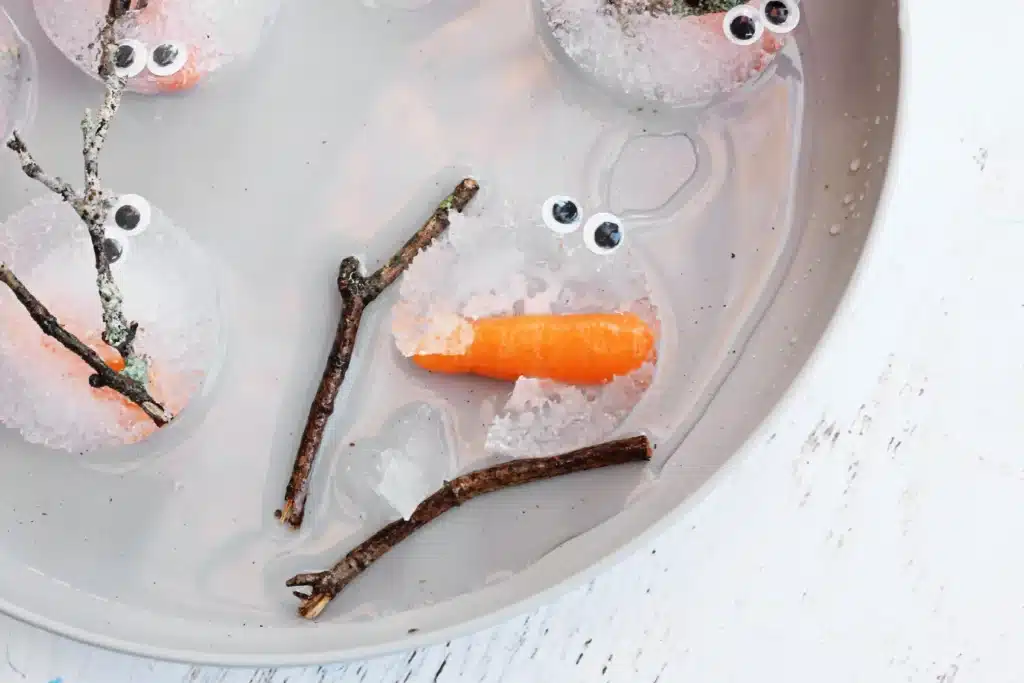
As the ice melts, the snowmen slowly change shape, uncovering their features and encouraging children to watch closely, predict outcomes, and experiment with different methods. This ice melting experiment offers a concrete way to explore physical change while keeping play inviting and accessible.
Supplies Needed
- Muffin tin
- Water
- Small carrots or carrot pieces
- Small sticks or twigs
- Googly eyes
- Freezer
- Salt
- Droppers or squirty bottles
- Warm water
- Tray or shallow bin for containment
How to Set Up the Frozen Snowmen
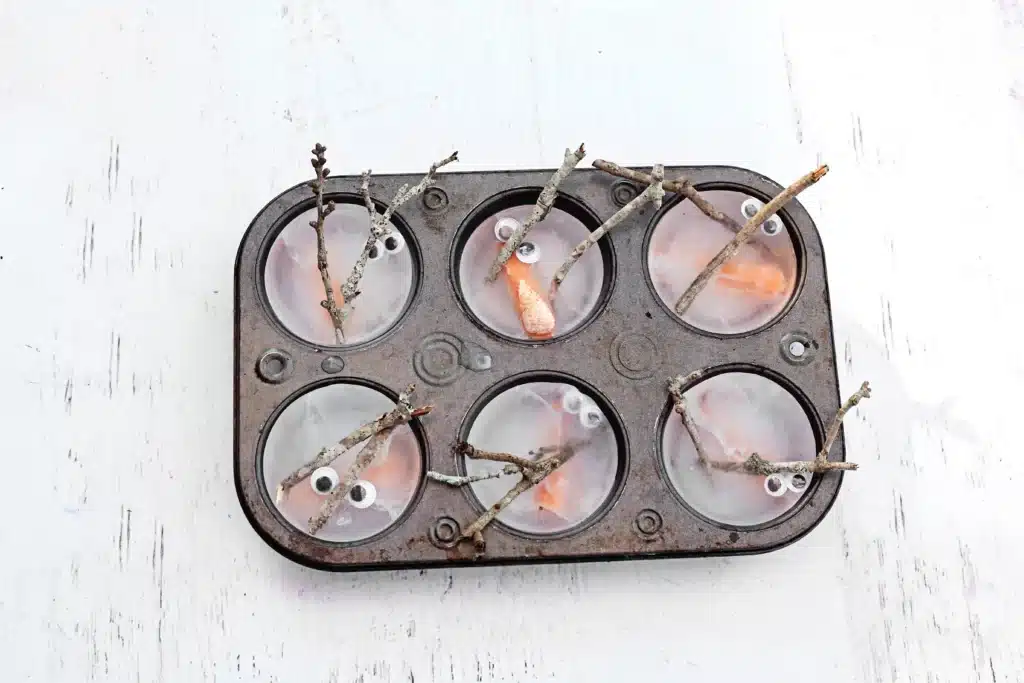
1. Place one carrot, two small sticks, and two googly eyes into each muffin tin slot.
2. Fill each slot with water, covering the materials fully.
3. Place the muffin tin in the freezer and allow it to freeze solid, ideally overnight.
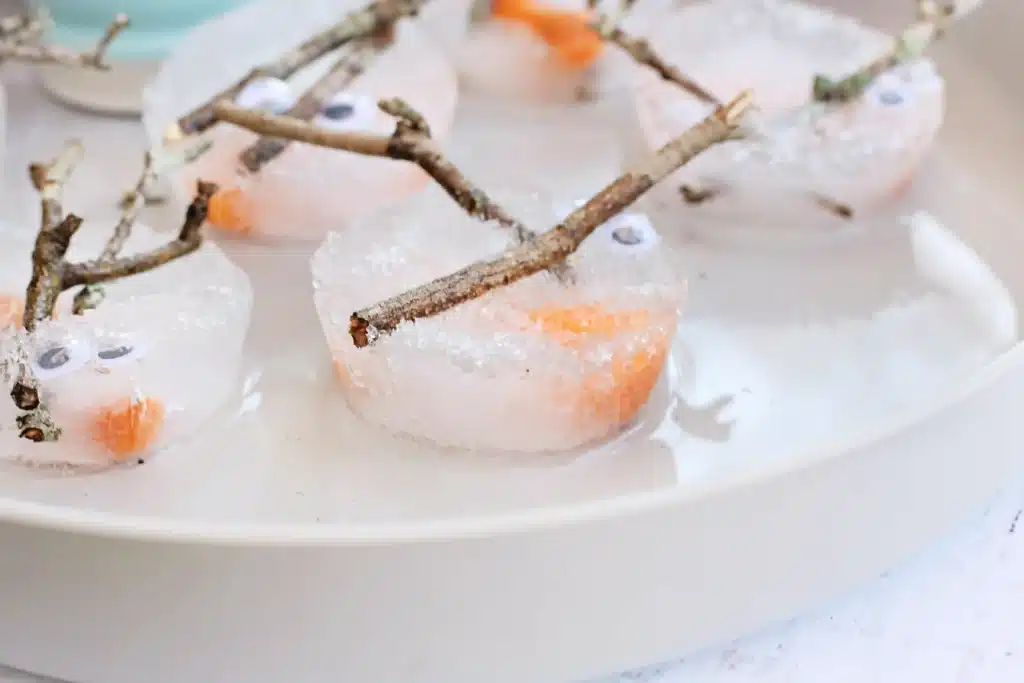
4. Once frozen, briefly run warm water over the bottom of the tin to release the ice snowmen.
5. Transfer the frozen snowmen to a tray or bin to contain melting water.
The snowmen are now ready for sensory play and exploration.
How Kids Play With the Melting Snowmen
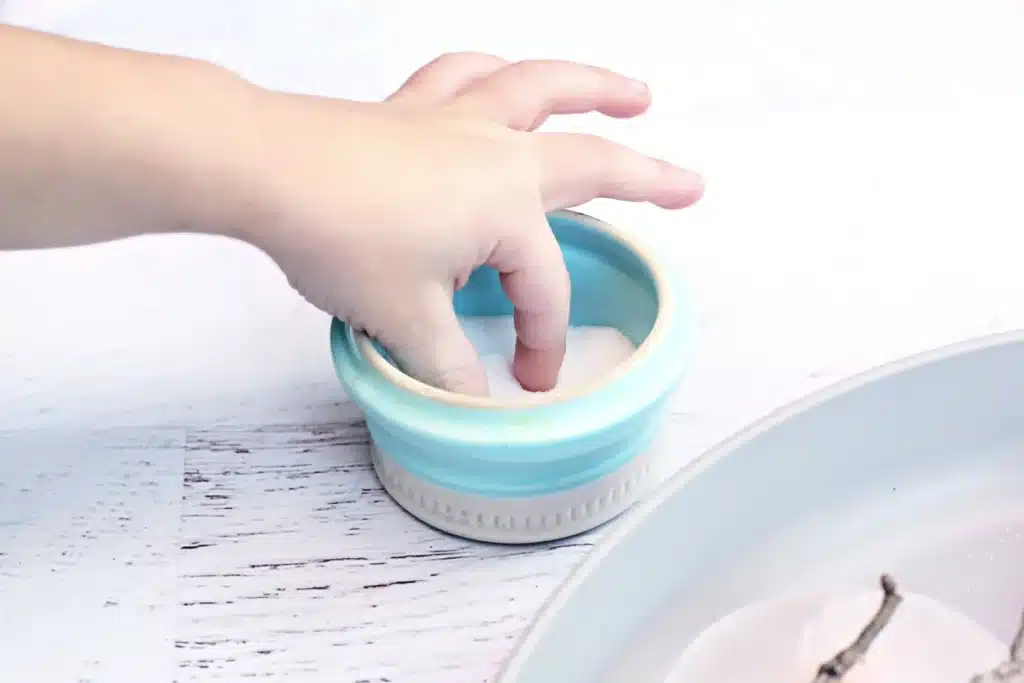
Children begin by sprinkling the pretend snow (salt) over the frozen snowmen. The salt reacts with the ice, lowering the freezing point and speeding up melting. This creates visible tunnels, cracks, and textures across the surface, making the reaction easy to observe.
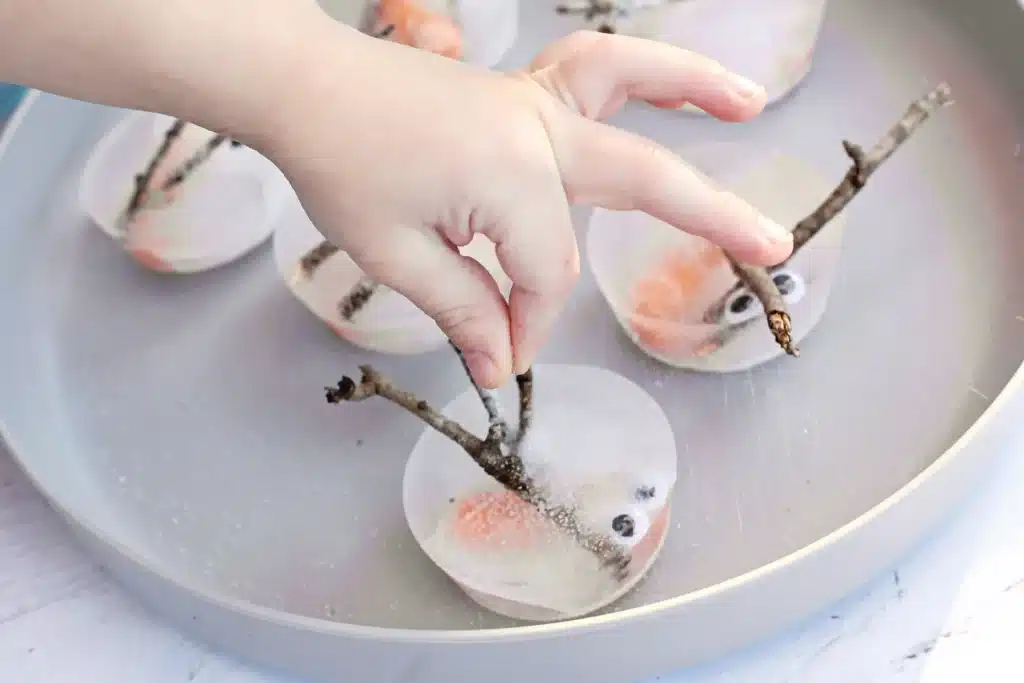
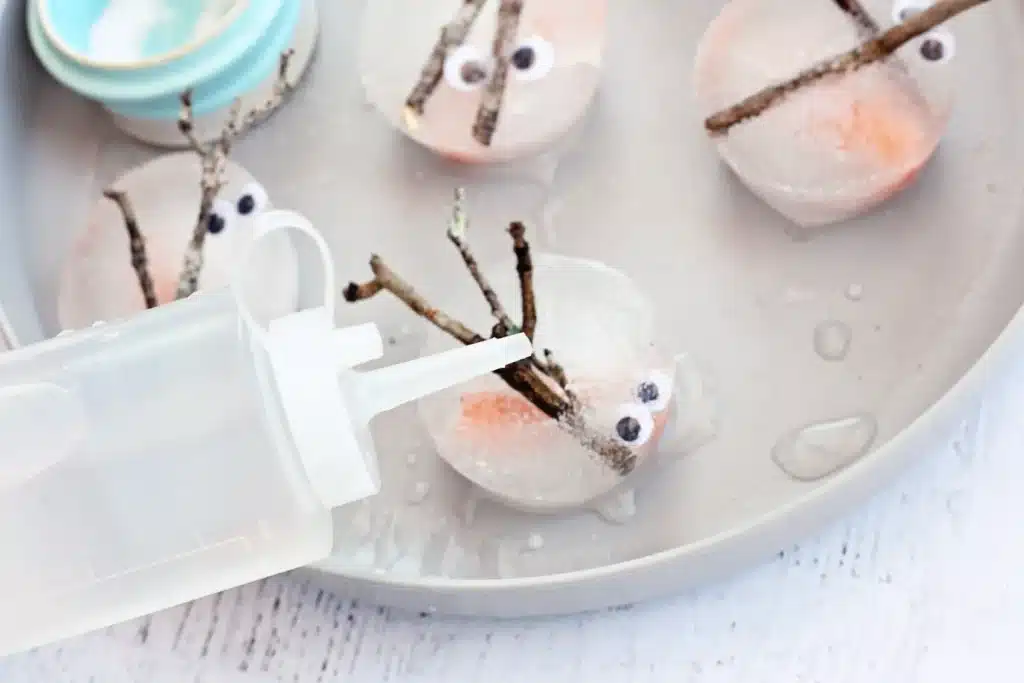
Droppers or squeeze bottles filled with warm water allow for more targeted exploration. Children can drip water onto specific areas, watching how the ice responds. Some may focus on freeing the carrot nose or releasing the stick arms, while others experiment with patterns or compare melting speeds.
This snowman activity for kids encourages curiosity-driven play. No two snowmen melt the same way, which invites discussion, hypothesis, and repeated experimentation.
Learning Benefits of the Melting Snowman Activity
Science and Early STEM Skills
This winter science experiment introduces foundational concepts in a concrete way. Children observe how temperature and materials affect ice, gaining early exposure to ideas connected to states of matter and chemical reactions. Watching ice change from solid to liquid supports scientific thinking through real-time observation.
Fine Motor Development
Using droppers, sprinkling salt, and squeezing bottles strengthens hand muscles and improves coordination. These actions support fine motor development, which plays an important role in writing, cutting, and self-care skills.
Sensory Exploration
The contrast between cold ice, gritty salt, and warm water engages multiple senses. Children experience changes in texture, temperature, and pressure while staying actively involved in the winter science experiment.
Focus and Patience
Melting takes time, and that waiting encourages sustained attention. Children practice patience while observing gradual changes, returning again and again to check progress.
Language and Communication
As children describe what they notice, vocabulary grows naturally. Words like melt, crack, drip, freeze, and cold enter conversation through meaningful context. This makes the activity valuable for both early learners and older preschoolers.
Ways to Extend the Activity
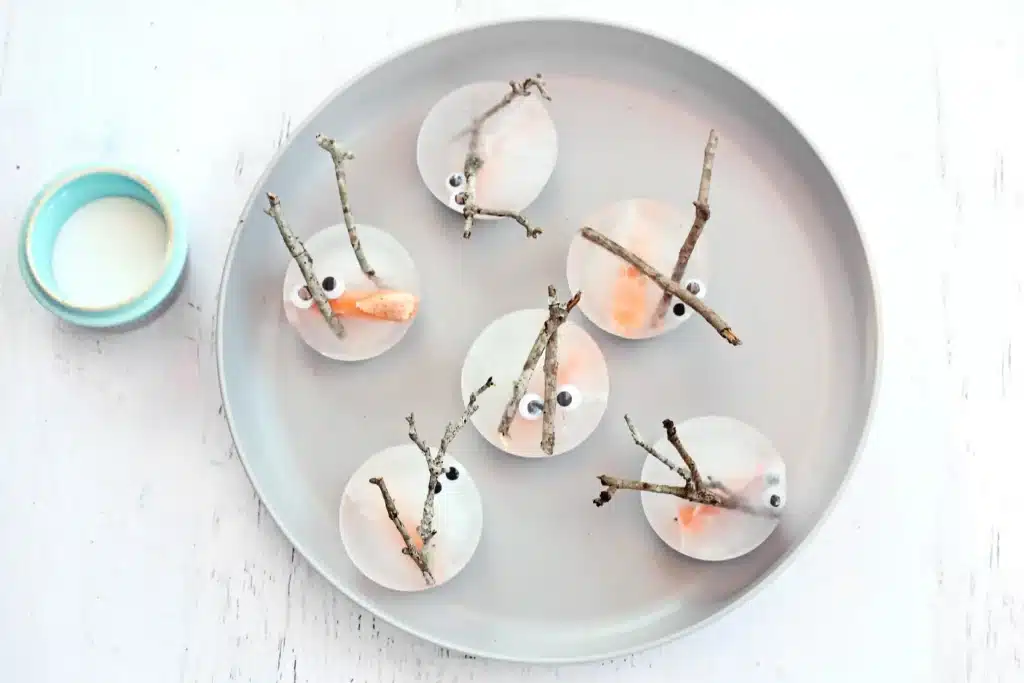
- Add food coloring to the warm water to create colorful melting patterns.
- Compare melting with salt versus plain water and talk about differences.
- Time how long different snowmen take to melt using different methods.
- Pair the winter science experiment with books about snow or snowmen.
- Encourage drawing what the snowmen look like before and after melting.
These extensions allow the winter activity for kids to grow alongside interest and developmental level.
Why This Winter Sensory Activity Works So Well
The melting snowman sensory activity stands out because it balances structure and freedom. The setup provides a clear starting point, while the play remains open-ended. Children control the pace, choose tools, and follow curiosity wherever it leads.
This ice melting experiment also uses inexpensive, familiar materials, making it easy to repeat or adapt. It works equally well in small groups or individual play and transitions smoothly between winter sensory activity and early science exploration.
The melting snowman sensory activity turns ice and simple objects into a meaningful learning experience. With science, sensory play, and fine motor practice woven together, it offers a rich winter activity that keeps children engaged while supporting essential early learning skills.
Liked This? You May Also Like…
- Ice Heart Suncatchers: A Valentine Activity for Kids Using Winter Nature Finds
 Ice heart suncatchers are a simple Valentine activity for kids using winter nature finds. Freeze icy hearts with leaves and twigs for glowing window art.
 - Melted Snowman Cheesecake Dip: A Snowman-Themed Winter Treat for KidsMelted Snowman Cheesecake Dip is a snowman-themed winter treat for kids made with cream cheese, whipped topping, and fun edible snowman details.
- Penguin Wafers: A Winter Snack for Kids That’s Almost Too Cute to EatPenguin wafers are a fun winter snack for kids made with chocolate wafers, candy eyes, and simple decorations. Perfect as a winter classroom snack!
- Strawberry White Hot Chocolate: The Best Winter Treat for KidsMake a creamy strawberry white hot chocolate recipe kids will love—sweet, cozy, and perfect for Valentine’s Day or chilly afternoons.
- Melting Snowman Sensory Activity: A Hands-On Winter Science ExperimentThis melting snowman sensory activity invites kids to explore cold ice, gritty salt, and warm water through hands-on winter sensory play and exploration.
- Savory Polar Bear Snacks: A Whimsical Winter Snack for KidsSavory polar bear snacks are a fun winter snack for kids made with crackers, cream cheese, and olives. It’s an easy winter recipe that kids will love.
- Egg Carton Tree Sensory Bin: A Hands-On Winter Wonderland for Learning and PlayCreate a fun and educational winter activity with an Egg Carton Tree Sensory Bin! Perfect for toddlers and preschoolers to explore textures, colors, and imaginative play.
- Snow Globe Sensory Bottle: A Sparkly Winter Calm-Down Craft for KidsCreate winter magic with this calming Snow Globe Sensory Bottle! Perfect for toddlers, preschool, and kindergarten, this easy DIY sensory bottle encourages sensory exploration, mindfulness, and calm-down time. Great for winter activities, Christmas sensory play, calm-down corners, and early childhood learning centers. A simple, sparkly craft kids will love!
- Snowman Alphabet match center: A Winter Literacy Activity for KidsBring winter learning to life with this Snowman Alphabet Match Center! Perfect for preschool, pre-k, and kindergarten, this hands-on literacy activity helps kids practice uppercase and lowercase letter matching, letter recognition, and phonics skills. Ideal for winter centers, small-group work, morning tubs, and homeschool activities. Easy prep, engaging, and fun for early learners!








Leave a Reply