How To Make A Letter L Craft for Preschoolers
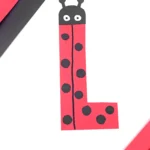
Learn the letter L with a fun ladybug craft for kids. This hands-on letter L craft for preschoolers builds phonics skills and fine motor development.
- Prep Time: 5
- Total Time: 15
- Category: Alphabet, Crafts, DIY
- Method: Assembly
Materials
● Red construction paper
● Black construction paper
● White construction paper
● Child-safe scissors
● Glue stick or school glue
● Black marker
Instructions
Draw a large uppercase L on red construction paper. The letter should be wide enough to allow room for spots and other details. Cut out the red L carefully.
This shape forms the ladybug’s body.
2. Draw the Center LineUsing a black marker, draw a straight vertical line through the middle of the long side of the L. This line represents the split between the ladybug’s wings.
Encourage kids to focus on steady hand movements. This will better support fine motor control.
3. Create the Ladybug HeadCut out a black half-circle sized to fit neatly on the top horizontal end of the L. This will serve as the ladybug’s head.
4. Cut and Attach the AntennaeFrom black construction paper, cut two thin strips for antennae. Small circles can be added to the tips if desired.
Glue the antennae to the back of the black half circle before attaching it to the L. This layering technique introduces simple construction skills.
5. Make the EyesCut two small white circles from white construction paper. Glue them onto the black half circle. Use a black marker to draw pupils inside each eye.
Placing the pupils slightly off-center can give the ladybug personality while encouraging attention to detail.
6. Add the Head to the LetterGlue the completed black half circle with antennae and eyes to the top of the red L. Press firmly to secure.
The letter L now clearly resembles a ladybug.
7. Add the Ladybug SpotsCut several small black circles from black construction paper. Glue them randomly along the red L.
Spacing the spots allows practice with visual balance and design decisions. Counting the spots aloud reinforces early math skills.
Allow the project to dry completely before displaying.